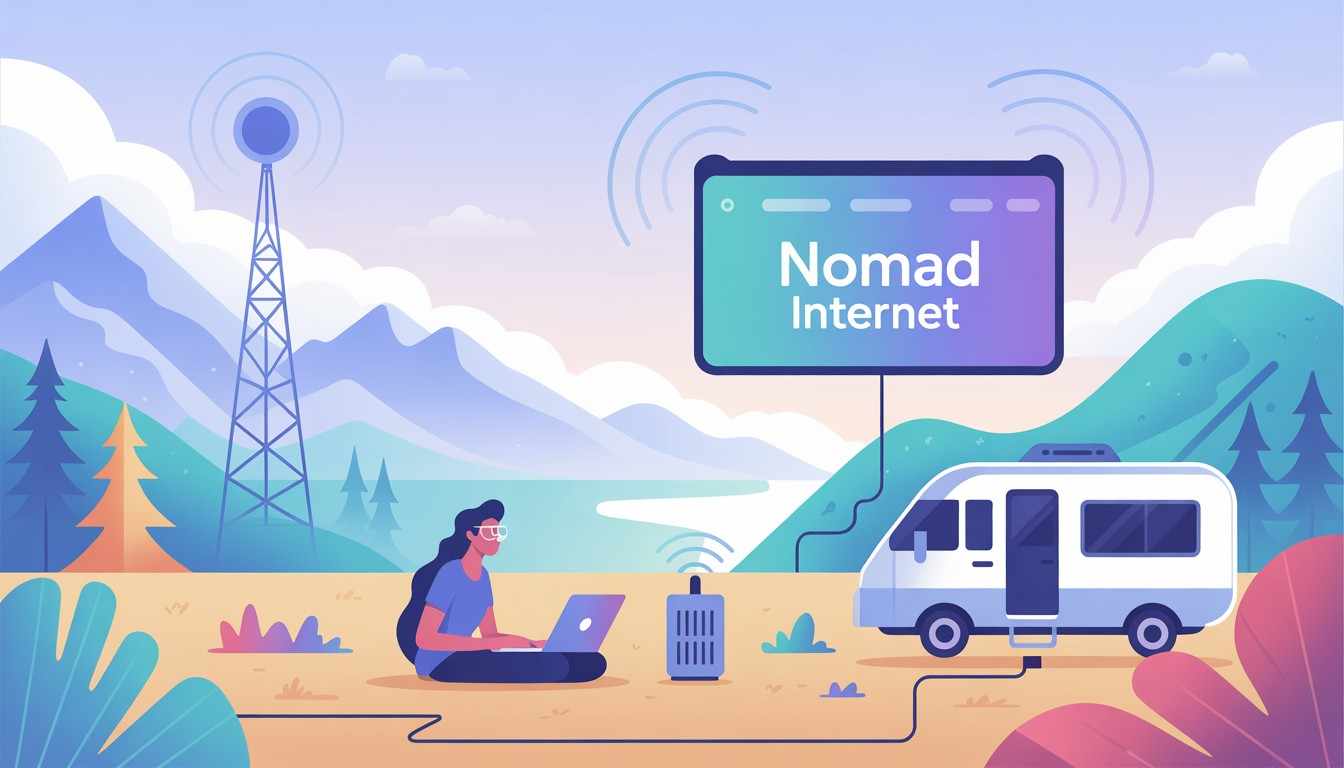
Struggling to Stay Connected While Traveling or Living Off-Grid?
Have you ever tried to join a Zoom call from your RV, cabin, or rural home, only to lose your connection at the worst time? Or maybe you’re frustrated with unreliable public Wi-Fi and slow rural broadband options. If you’ve been looking for a reliable way to stay online wherever you are, you might have heard of Nomad Internet.
But what is it, and is it worth it for your lifestyle? Let’s break it down simply.
What Is Nomad Internet?
Nomad Internet is a wireless internet service provider made for people who live, travel, or work outside of traditional urban areas. It uses cellular networks (4G/5G LTE) for internet access instead of relying on cables or fiber lines.
This means no digging trenches, no waiting weeks for installation, and no being stuck in one place.
In short, it’s like having a powerful mobile hotspot designed for home-level use and heavy data needs.
How Does Nomad Internet Work?
Nomad Internet connects you to nearby cellular towers, just like your smartphone does when it uses mobile data. It uses wireless technology to provide internet access no matter where you are. You get a modem/router device.
Here’s how it works step by step:
- You receive a modem/router device: A pre-configured device is shipped to you, ready to use right out of the box.
- It connects to the strongest available carrier signal: The device automatically finds and connects to the best nearby cellular network for the best performance.
- The device broadcasts Wi-Fi: Once connected, it creates a secure Wi-Fi network inside your home, RV, or workspace.
- You connect your devices: Just like any regular Wi-Fi network, you can link your phone, laptop, smart TV, and more.
Key technologies involved:
- 4G LTE networks – Widely available and reliable coverage
- 5G connectivity – Faster speeds in supported areas
- SIM-based connectivity – Similar to a mobile phone SIM card
- Plug-and-play routers – No technical setup required
Why it stands out: No cables, no landlines, no complicated installation. Just a simple, flexible internet wherever you go.
Who Is Nomad Internet Best For?
Not everyone is a “traditional internet user,” and that’s where Nomad Internet excels. It’s made for people who need reliable connectivity outside city limits or fixed setups.
This service is ideal for:
- RV travelers and van lifers can stay connected while always on the move.
- Remote workers and digital nomads can work from anywhere without relying on unstable public Wi-Fi.
- Rural homeowners can get internet access where cable or fiber is not available.
- Construction sites and temporary setups can enjoy quick, flexible internet without long-term contracts.
- Off-grid living enthusiasts can maintain connectivity even in remote areas.
If you’ve ever searched for:
- “internet for RV”
- “rural internet solutions”
- “Wi-Fi without cable”
If you fit any of these groups, this service is built for your lifestyle.
Key Features of Nomad Internet
Let’s look at what makes Nomad Internet stand out in today’s crowded connectivity market:
- Truly Wireless Connectivity: No cables, no fiber, no DSL; just reliable, cellular-based internet. You can skip complicated installations and still enjoy high-speed connectivity.
- Unlimited Data Plans: Many plans offer unlimited data, which is perfect for heavy users who stream videos, play online games, or work remotely without worrying about data caps.
- Portability: One of the biggest advantages is mobility. You can take your internet wherever there’s coverage. This is ideal for RV travelers, digital nomads, or anyone always on the move.
- Easy Setup: No technical expertise is needed. Most devices are plug-and-play, allowing you to get online within minutes of unboxing.
- Coverage Flexibility: Nomad Internet works in many rural and underserved areas where traditional ISPs often fall short, helping to bridge the connectivity gap.
Pros and Cons of Nomad Internet
Pros of Nomad Internet
- Works in remote areas
- No contracts (in many cases)
- Easy to set up
- Great for travel and mobility
- No reliance on cable infrastructure
Cons of Nomad Internet
- Dependent on cellular signal strength
- Speeds can vary by location
- May be more expensive than traditional broadband
- Network congestion can affect performance
Nomad Internet Speed: What to Expect?
Speed is a major concern with nomad internet, and for good reason. Your online experience relies on how fast and stable your connection is.
Typical Speeds:
- 4G LTE: 10 Mbps – 50 Mbps
- 5G: 50 Mbps – 200+ Mbps (under ideal conditions)
However, real-world performance can vary based on several factors:
- Distance from the nearest tower
- Network congestion (how many users are connected)
- Signal strength
- Time of day (peak vs. off-peak hours)
In areas with strong coverage, you can easily stream Netflix, join video calls, browse the web, and work remotely without interruptions. However, in rural areas or crowded places, speeds may drop, so it’s important to manage your expectations.
Nomad Internet vs Other Internet Options
Choosing the right internet option depends on your location, usage needs, and flexibility. Here’s how Nomad Internet compares with other popular choices:
Nomad Internet vs Satellite Internet
- Nomad Internet: Offers lower latency and faster response times, making it better for video calls, streaming, and remote work. It uses 4G/5G wireless networks, which usually provide smoother real-time performance.
- Satellite Internet: Works almost anywhere, especially in remote areas, but it typically has higher latency (400 to 600 ms), which can cause lag during video calls and gaming.
Nomad Internet vs Fiber/Cable
- Nomad Internet: Highly portable and flexible, making it ideal for RV travelers, rural users, or people who move often.
- Fiber/Cable: Offers much faster speeds (up to gigabit levels) and lower latency, which makes it the best option for stability and heavy use.
Nomad Internet vs Mobile Hotspots
- Nomad Internet: Designed for heavy, consistent usage, with plans that often include unlimited data and no throttling. This makes it suitable for streaming, work, and multiple devices.
- Mobile Hotspots: Typically come with data limits and slower speeds, especially after reaching usage caps.
Is Nomad Internet Worth It?
Here’s the honest answer: it depends on your needs.
It’s worth it if you:
- Live in a rural or underserved area
- Travel frequently (RV/van life)
- Need internet without installation hassle
- Want flexibility over speed perfection
It might NOT be ideal if:
- You have access to affordable fiber internet
- You need ultra-low latency for competitive gaming
- You’re in a weak cellular coverage area
Real-World Use Cases
1. Remote Work from Anywhere
Imagine working from a mountain cabin, a beachside RV, or a rural retreat without worrying about unreliable connectivity. Solutions like Nomad Internet make it possible to stay productive no matter where you are.
2. Backup Internet Solution
Many users rely on Nomad Internet as a backup connection. If their primary ISP goes down, they can easily switch and continue working, streaming, or staying connected without interruption.
3. Temporary Setups
Nomad Internet is perfect for short-term or mobile setups, like construction sites, outdoor events, or temporary housing. It provides quick, flexible internet access without the need for long-term contracts or complex installations.
Tips to Get the Best Performance
Want to get the most out of your Nomad Internet experience? A few simple changes can make a big difference in speed and reliability:
- Place your router near a window: This helps improve signal reception, especially in areas with weaker coverage.
- Use external antennas for weak signals: If you’re in a rural or low-signal area, external antennas can greatly boost performance.
- Avoid peak usage hours if possible: Network congestion during busy times can slow down speeds, so try to use data-heavy apps during off-peak hours.
- Check coverage maps before subscribing: Make sure your area has strong network support to avoid connectivity problems later.
- Restart your device occasionally: A quick reboot can refresh your connection and fix minor performance issues.
The Future of Nomad Internet
With the rapid growth of 5G networks, services like Nomad Internet are getting faster, more reliable, and widely available. What once felt like a niche solution is quickly becoming a mainstream way to stay connected.
We’re moving toward a world where:
- Location matters less – You can work, stream, and connect from almost anywhere.
- Remote work becomes the norm – Flexible lifestyles are no longer limited by internet access.
- The Internet is truly portable – Connectivity follows you, not the other way around.
Nomad Internet is part of this shift. It empowers people to live and work on their own terms, without relying on traditional broadband infrastructure.
Conclusion
Nomad Internet is changing how people think about connectivity. It’s not just an option; it’s a lifestyle choice for those who want freedom from traditional internet limits.
If you’re tired of being stuck with cables or struggling with poor rural connections, Nomad Internet offers a flexible, powerful, and increasingly reliable option.
It may not replace fiber for everyone, but for travelers, remote workers, and off-grid users, it can be a game-changer.
FAQs
1. Is Nomad Internet really unlimited?
Yes, many plans offer unlimited data, but speeds may vary due to network congestion and usage policies.
2. Does Nomad Internet work everywhere?
It works anywhere with strong cellular coverage. Remote areas with weak signals may have slower speeds.
3. Can I use Nomad Internet for streaming and gaming?
Yes, streaming works well. Gaming is possible, but latency may not be great for competitive play.
4. How much does Nomad Internet cost?
Pricing varies based on the plan and device, but it’s generally higher than standard home broadband.
5. Do I need professional installation?
No. Most Nomad Internet devices are plug-and-play and can be set up in minutes.