NDIS Providers Need Better Software Decisions

hellorotawiz
NDIS Providers Need Better Software Decisions

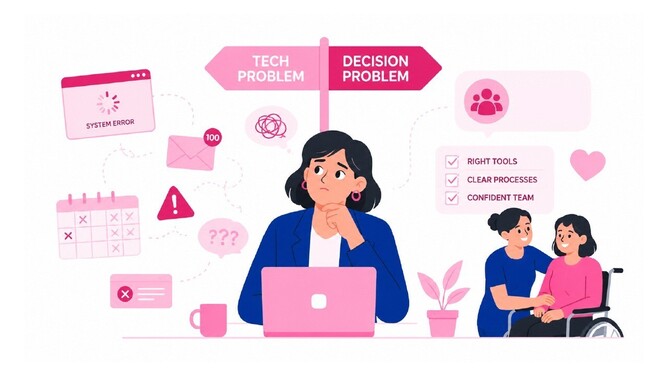
NDIS Providers Don’t Have a Tech Problem — They Have a Decision Problem

Many NDIS businesses believe their biggest challenge is technology. They often feel that outdated systems, disconnected tools, spreadsheets, manual processes, and slow communication are holding them back. On the surface, this may look like a technology problem. But in many cases, the real issue is deeper. The problem is not always the technology itself. The bigger problem is the delay in making the right decision at the right time.

For NDIS Providers, software is no longer just a digital tool used to complete basic tasks. It has become an important part of daily operations, workforce coordination, compliance, participant support, reporting, and service delivery. When providers delay the decision to move away from manual systems or disconnected tools, small operational issues can slowly turn into bigger business problems.

Why the Right Software Decision Matters

Choosing the right NDIS provider software is not only about replacing spreadsheets or reducing paperwork. It is about selecting a system that supports the way the organisation actually works. A good software decision should help teams manage rosters, understand staff availability, track participant needs, maintain accurate records, and respond quickly when changes happen.

In the NDIS sector, every decision affects people. A delayed roster update can affect a support worker’s schedule. A missed communication can affect participant care. An incomplete record can create compliance pressure. A disconnected system can make it harder for leaders to understand what is happening across the organisation.

This is why the right software decision matters. It gives providers more control, better visibility, and a stronger foundation for consistent service delivery.

Too Many Tools Can Create More Confusion

Today, NDIS Providers have access to many software options. There are tools for rostering, finance, participant management, communication, reporting, compliance, and workforce planning. Each platform promises to make work easier, faster, and more organised.

But having too many choices does not always create clarity. In many cases, it creates confusion. Providers may compare different platforms for months, ask for multiple demos, delay internal discussions, or continue waiting for the “perfect” solution. During this time, the organisation continues to depend on manual processes, spreadsheets, phone calls, emails, and disconnected systems.

The result is not progress. The result is more pressure.

Without a clear decision-making process, software selection becomes overwhelming. Teams may not know which features matter most. Leaders may focus only on cost instead of long-term operational value. Staff may continue working with systems that create extra work instead of reducing it.

The Hidden Cost of Delayed Decisions

Many providers delay software decisions because change feels difficult. They may worry about training staff, moving data, adjusting workflows, or choosing the wrong platform. These concerns are understandable. But delaying the decision also has a cost.

The hidden cost of delayed decisions often appears in everyday operations. It may show up as missed shifts, late roster updates, unclear communication, incomplete records, duplicated admin work, or poor visibility across teams. These issues may look small at first, but over time they can affect service quality, staff confidence, participant experience, and organisational performance.

Participants may experience inconsistent support or last-minute changes. Support workers may receive unclear shift details or updates too late. Coordinators may spend hours fixing roster problems instead of improving service delivery. Managers may struggle to make informed decisions because important information is spread across different systems.

This is where delayed decisions become expensive. The cost is not only financial. It also affects time, trust, care quality, compliance, and team productivity.

Manual Processes Can Limit Growth

Many NDIS businesses start with simple tools because they are easy to use in the beginning. Spreadsheets, shared documents, phone calls, and emails may work when the team is small. But as the organisation grows, these tools often become harder to manage.

More participants mean more care requirements. More staff means more availability changes. More services mean more records, funding categories, shift notes, and compliance responsibilities. What once felt manageable can quickly become complex.

Manual processes can slow down decision-making because information is not available in one place. Coordinators may need to check multiple files before confirming a shift. Admin teams may need to follow up manually for missing details. Leaders may need to wait for reports before understanding what is happening in the business.

This creates a reactive environment. Teams spend more time fixing problems than preventing them.

What Providers Should Expect From Better Software

Better software should not make operations more complicated. It should make them easier to manage. The right NDIS provider software should reduce manual work, improve visibility, support compliance, and help teams respond faster when changes happen.

A good system should help providers understand staff availability, participant needs, service delivery records, rostering requirements, and reporting information in one connected place. It should support the daily reality of NDIS operations, not just provide basic digital features.

Providers should expect software to improve coordination between teams. It should help reduce confusion, avoid duplicated work, and make important information easier to access. When the right system is in place, staff can work with more confidence, coordinators can make faster decisions, and leaders can manage operations with better control.

Why Rostering Is More Than Just Scheduling

Rostering plays a major role in NDIS operations. It is not just about assigning shifts to workers. In the NDIS sector, rostering connects workforce planning, participant care, funding categories, service delivery, compliance records, and staff communication.

If rostering is managed poorly, the impact can be felt across the entire organisation. A roster issue can affect participant support. A last-minute change can create stress for staff. Incorrect shift details can affect reporting accuracy. Poor communication can reduce trust between teams, workers, and participants.

This is why providers need to look beyond basic scheduling tools. They need systems that understand the importance of rostering in service delivery. A strong rostering system helps providers plan better, reduce errors, manage availability, and keep service information connected.

Moving From Reactive Management to Proactive Control

Many NDIS Providers operate in a reactive way because their systems do not give them enough visibility. They respond to problems after they happen. They fix roster gaps at the last minute. They chase missing information manually. They depend on staff to remember updates or communicate changes through different channels.

This approach creates pressure for everyone.

With the right software, providers can move from reactive management to proactive control. Instead of waiting for problems to appear, teams can plan ahead, communicate faster, and manage changes more effectively. They can identify gaps earlier, understand staff availability more clearly, and keep participant support more consistent.

Proactive control does not mean removing human decision-making. It means giving teams better information so they can make better decisions at the right time.

How RotaWiz Helps NDIS Providers Make Better Decisions

RotaWiz is designed to support smarter decision-making for NDIS Providers. It helps providers manage rostering with more clarity, reduce administrative pressure, and keep important service information connected.

By giving teams better visibility into shifts, staff availability, and care requirements, RotaWiz helps providers make confident decisions without depending on manual checks. It supports smoother coordination between teams and helps reduce the confusion that often comes from disconnected tools.

For providers managing daily service delivery, this kind of visibility is important. It allows coordinators to respond faster, staff to receive clearer information, and leaders to understand operations more effectively.

RotaWiz is not just about using technology for the sake of technology. It is about helping providers make better operational decisions that support care quality, compliance, and workforce coordination.

The Real Change Starts With Better Decisions

The main message is simple: technology alone is not the solution. The real change starts when providers make better decisions about the systems they use.

NDIS Providers do not only need more tools. They need the right tools, chosen at the right time, for the right operational reasons. When software supports real service delivery, compliance, rostering, communication, and workforce coordination, providers can spend less time managing chaos and more time improving care outcomes.

Delayed decisions can keep providers stuck in manual work, disconnected systems, and daily operational pressure. Better decisions can help them move toward clarity, control, and more consistent support.

For NDIS businesses, the question is not only whether they need better technology. The real question is whether they are ready to make the right decision before small problems become bigger challenges.


Leave a Reply
    Table of Contents
    Crivva Logo
    Crivva is a professional social and business networking platform that empowers users to connect, share, and grow. Post blogs, press releases, classifieds, and business listings to boost your online presence. Join Crivva today to network, promote your brand, and build meaningful digital connections across industries.