


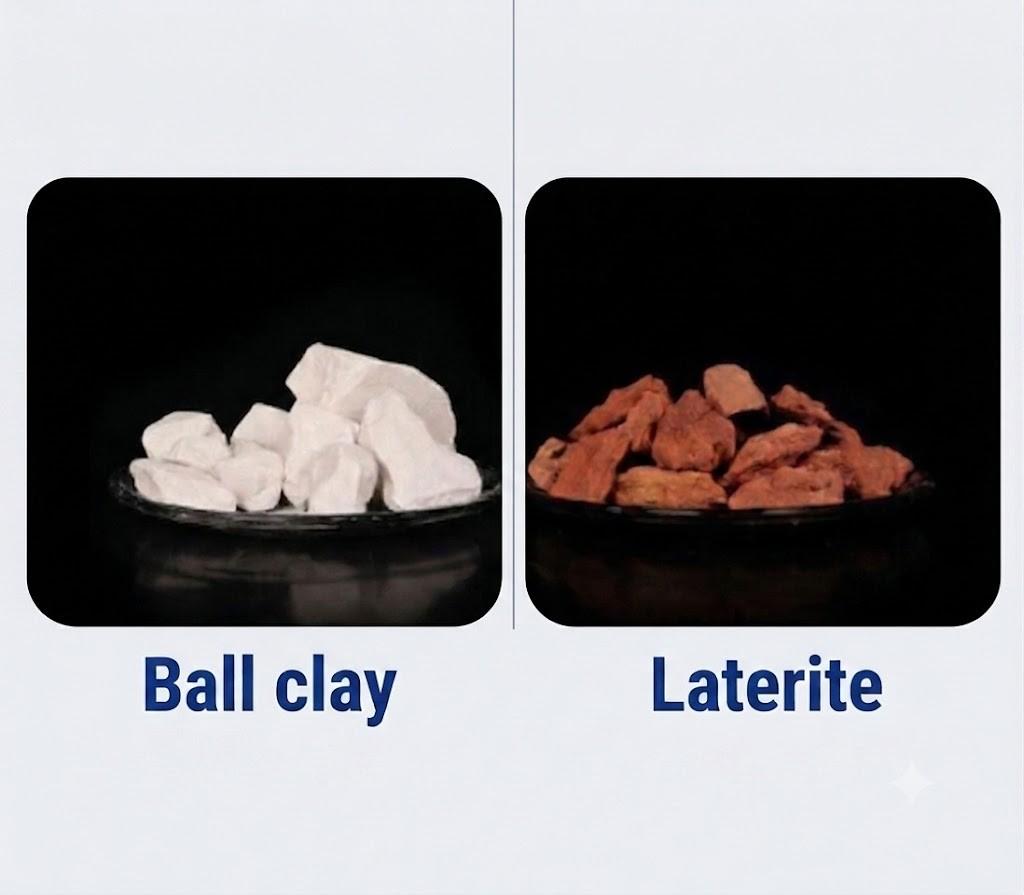
Natural clays have been part of human industry for centuries, yet many people working with finished products rarely think about where those materials originate or how their characteristics are shaped at the raw stage. Whether the end use is ceramics, construction, or industrial processing, the behavior of a material often traces back to subtle differences in mineral composition, particle structure, and formation environment.
This article looks at naturally occurring clays from a material behavior and industry perspective. Instead of focusing on buying decisions or product selection, it explores how these materials function, why consistency matters, and what professionals often overlook when evaluating clay-based inputs.
In manufacturing and construction, performance issues are frequently blamed on processing methods, equipment calibration, or environmental conditions. While those factors matter, raw material behavior sets the boundaries for what is possible.
Small variations in moisture retention, plasticity, or impurity levels can affect:
When these characteristics fluctuate, downstream adjustments become reactive rather than planned. Experienced manufacturers learn that stable output starts with predictable raw inputs.
Clays do not behave randomly. Their properties are the result of geological history-parent rock type, weathering intensity, transport distance, and deposition environment.
Materials formed through prolonged weathering tend to develop finer particles and higher plasticity. Others retain coarser structures, iron content, or mixed mineral phases that influence strength and color after processing.
Understanding this background helps explain why two visually similar clays can perform very differently under heat or pressure.
Plasticity is often treated as a desirable trait, but excessive plasticity can be just as problematic as insufficient plasticity.
Highly plastic clays allow easy shaping, but they can also increase drying shrinkage and cracking risk. Lower plasticity materials may improve dimensional stability but require blending or additives to improve workability.
This balance is especially important in ceramic formulations, where forming behavior must align with firing schedules and product tolerances.
In many cases, manufacturers blend multiple raw materials to fine-tune this balance rather than relying on a single source.
Organic matter present in natural clays is frequently overlooked during early evaluation. While it burns off during firing, it influences green strength, drying behavior, and gas release.
If not accounted for, organic content can cause bloating, pinholing, or surface defects in fired products. Skilled processors test for these characteristics early, adjusting firing curves or blending ratios to maintain control.
This is one reason experienced sourcing teams value consistency as much as headline specifications.
While ceramics receive the most attention, natural clays are widely used across other sectors:
In these contexts, chemical stability and long-term performance matter more than appearance. Minor impurities that are acceptable in one industry may cause failure in another.
Few modern products rely on a single raw material. Natural clays are typically part of multi-component systems, interacting with feldspars, sands, binders, or chemical additives.
In such systems, clays often act as modifiers rather than primary structural elements. Their role may be to improve cohesion, control moisture movement, or influence thermal expansion.
Because of this, sourcing teams often evaluate clays based on how they behave in blends rather than in isolation.
Geographical origin plays a role not only in material properties but also in supply reliability. Seasonal mining conditions, transportation constraints, and regulatory factors can affect availability.
Organizations that rely on consistent production schedules often prefer suppliers who understand both geological variability and logistical realities. Long-term relationships become important when material behavior needs to remain stable across years, not just batches.
For professionals researching clay characteristics and sourcing considerations, background information on materials such as ball clay can provide useful context without shifting focus away from formulation strategy.
Iron content is one of the most visually obvious but technically complex aspects of natural clays. It influences fired color, thermal behavior, and oxidation sensitivity.
Materials formed in highly oxidizing environments often develop stronger red or brown tones after firing. Others retain lighter shades depending on mineral balance and firing atmosphere.
Understanding these tendencies helps avoid unexpected color shifts or surface defects, particularly in architectural and exposed applications.
No natural material is perfectly uniform. Even within a single deposit, layers can vary in composition and particle distribution.
Quality-focused suppliers mitigate this variability through selective mining, controlled blending, and regular testing. From the user’s side, incoming material checks help catch deviations before they affect production.
Consistency is rarely accidental; it is the result of disciplined process control on both ends of the supply chain.
As sustainability becomes more than a compliance topic, attention has shifted toward responsible extraction and efficient use of natural materials.
Reducing waste, improving yield, and optimizing blends all contribute to lower environmental impact. Using materials efficiently often aligns with cost control, making sustainability a practical rather than purely ethical concern.
Information on region-specific materials such as laterite clay can help professionals understand how environmental formation influences usability and long-term performance.
Technical data sheets are essential, but they rarely capture the full behavior of natural materials. Experienced engineers and production teams rely on observation, testing, and historical performance to make informed decisions.
Over time, patterns emerge-how a material behaves during seasonal humidity changes, how it responds to slight firing adjustments, or how it interacts with other components in a blend.
This practical knowledge often determines success more than any single lab result.
Treating natural clays as interchangeable commodities creates risk. Treating them as systems with geological history, behavioral patterns, and interaction effects creates resilience.
When professionals invest time in understanding raw materials at this level, they reduce surprises, stabilize output, and improve long-term efficiency.
The most reliable operations are rarely those chasing the lowest input cost. They are the ones that understand their materials deeply and manage them with intention.

© 2025 Crivva - Hosted by Airy Hosting Managed Website Hosting.