Everything a founder needs to understand about how mobile apps are actually built — all 6 stages, real timelines, the tech decisions that cut costs, and what separates companies that launch from those that don’t.
The mobile app development process is widely misunderstood — most founders think it’s a two-step journey: “design it, then code it.” In reality, a professionally delivered app passes through six distinct stages — each with its own team, deliverables, timeline, and cost. Understanding these stages before you hire a mobile app development company is one of the highest-leverage things you can do. It helps you ask better questions, set realistic expectations, and spot exactly where agencies cut corners.
This guide walks through the complete mobile app development process that Primocys uses to deliver 650+ apps for clients across the USA, UAE, UK, and Southeast Asia — from the first discovery call to App Store approval.
⚡ The single biggest reason apps fail mid-project: It’s not bad code. It’s starting development without a proper discovery phase — building the wrong features, in the wrong order, for the wrong users. Stage 1 is the most important stage in this guide. Don’t let any agency skip it.
Every professional mobile app development project follows these six stages. Understanding the steps in mobile app development from the start — before you brief a single agency — puts you in a far stronger position as a buyer and a product owner. Each stage builds on the previous one, and skipping any stage increases risk exponentially. Here’s the bird’s-eye view before we go deep on each:
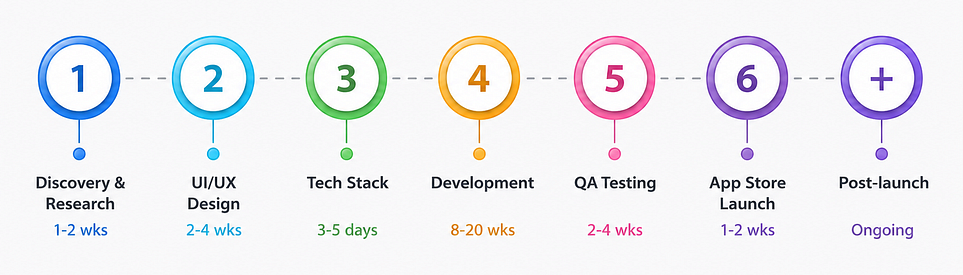
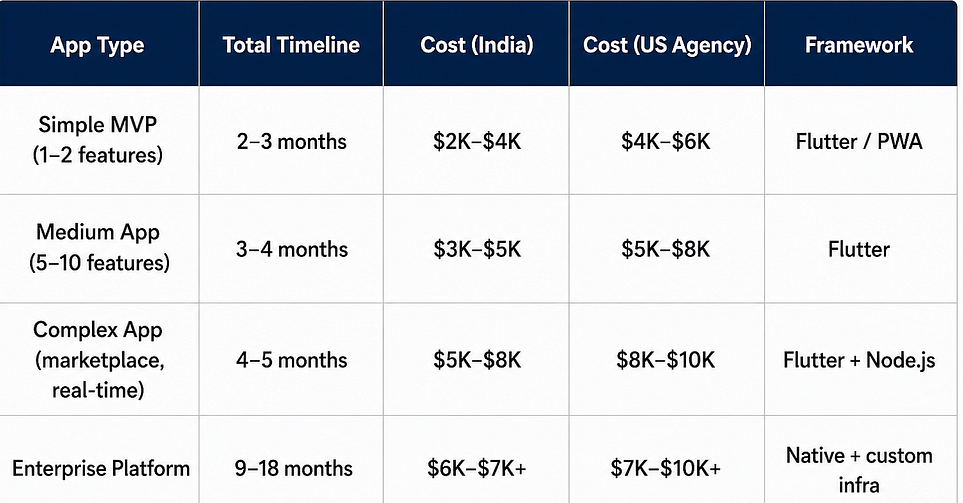
The cost of your app scales with complexity at each stage — not just the development stage. Understanding this helps you budget accurately from day one. Use our free App Cost Calculator for a personalised estimate →
Discovery & Market Research
1–2 weeks
$500–3K Timeline
Discovery is the most overlooked stage — and skipping it is the #1 cause of app project failures. Before a single wireframe is drawn, your team needs to answer three fundamental questions: Who exactly is your user? What problem does your app solve better than what exists today? What does a successful first version look like?
A proper discovery phase produces a scope document that becomes the project’s source of truth. Everything — design decisions, tech choices, sprint planning — flows from this document. Without it, you’re building on assumptions, and assumptions in software development cost real money to correct later.
At Primocys, our Discovery phase includes competitor analysis (we audit 5–10 comparable apps), user persona mapping, feature prioritisation using a MoSCoW framework, technical feasibility assessment, and a formal Project Requirements Document (PRD) with annotated feature specifications.
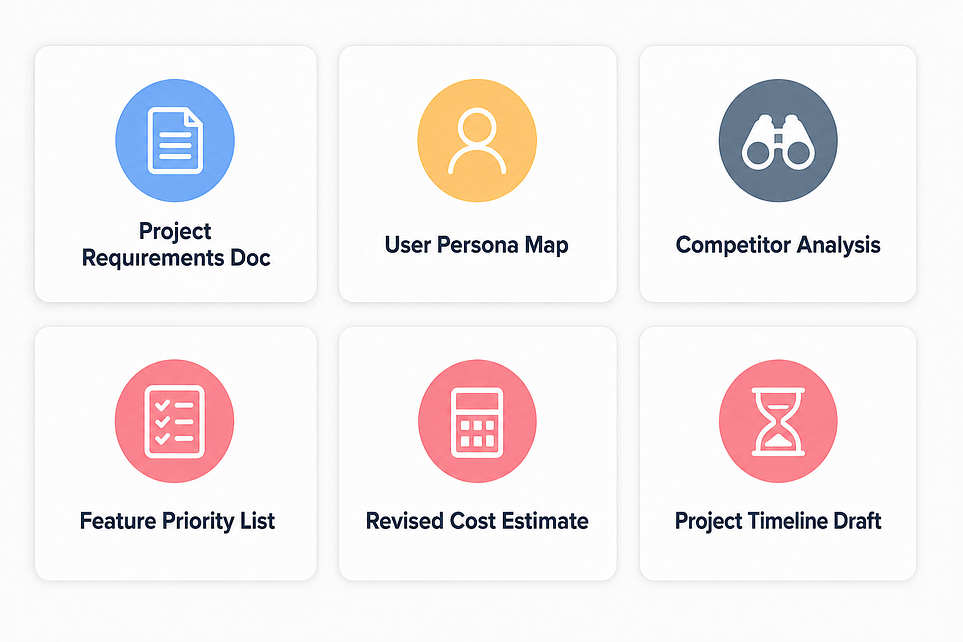
Miro (user journey mapping), Notion (PRD documentation), App Store research tools, Google Trends
💡 The ROI of Discovery: A well-executed discovery phase typically saves 25–35% of total project budget by eliminating features that don’t serve user goals and catching architectural issues before development begins. It is always worth the investment — even for small projects.
UI/UX Wireframing & Prototyping
2–4 weeks
15–25% of budget
Design is not about how your app looks — it determines how users feel when using it, what actions they take, and whether they return. Apps with strong UX design see 40% higher user retention in the first 30 days. More critically: design changes at this stage cost 10× less than equivalent changes during development. Every hour invested in design review now saves ten hours of developer rework later.
The design process runs in three phases: Wireframes (black-and-white structural layouts showing information hierarchy and user flows, no colors or branding), Interactive Prototype (clickable mockup in Figma so you can test the UX before any code is written), and High-Fidelity UI (final designs with brand colors, typography, icons, and micro-interactions — approved screen by screen before development begins).
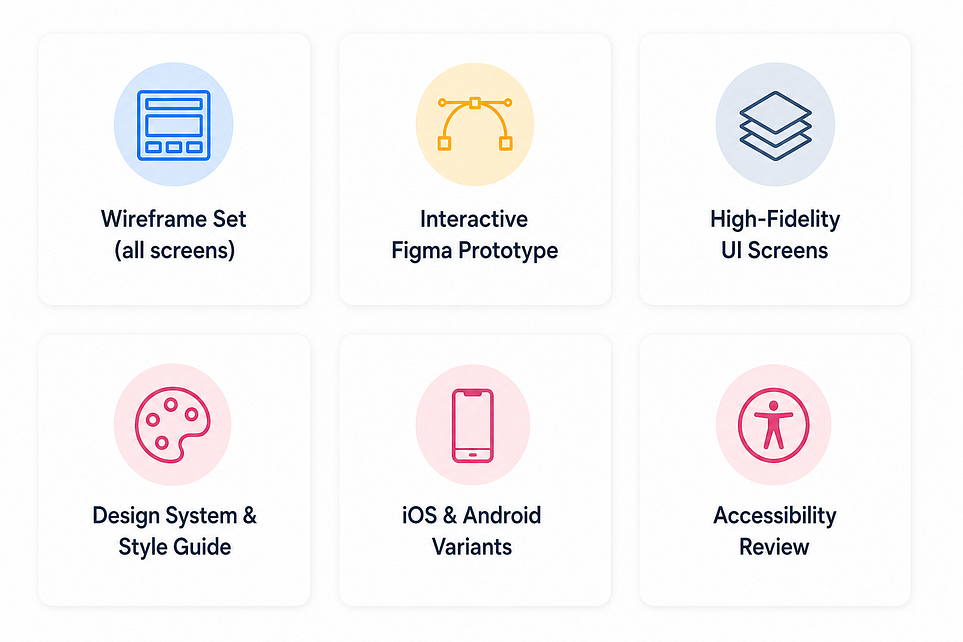
Figma, Principle (animations), Zeplin (dev handoff)
🔑 Never approve a quote before seeing wireframe: If a mobile app development company is quoting your project without producing wireframes first, they’re estimating without understanding your app. Any serious company will wireframe during or immediately after discovery — before locking in a price.
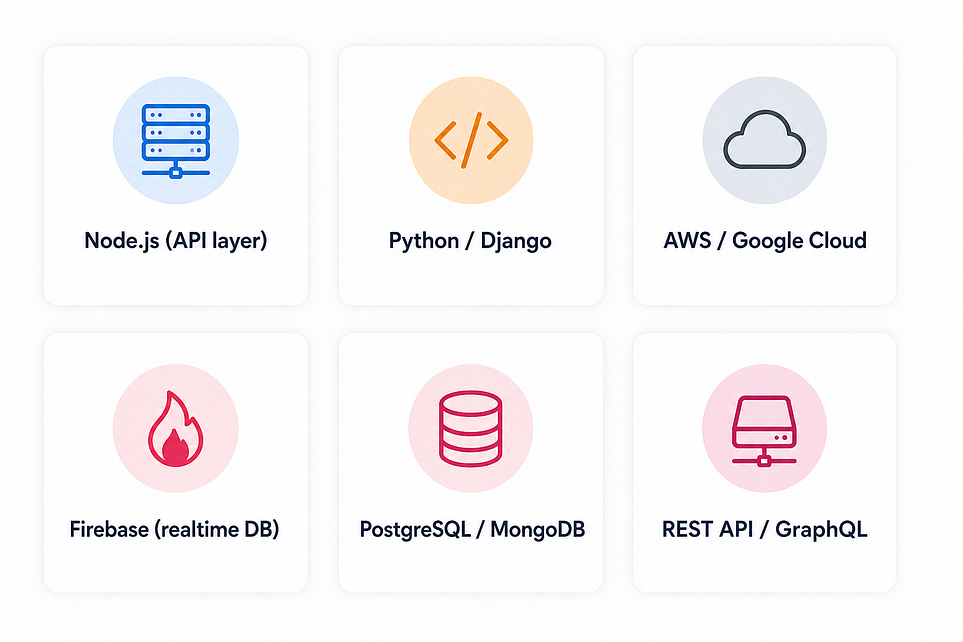
✅ Primocys: Clutch Top Flutter Developer 2024 & 2026: Flutter is our primary mobile framework — not a secondary offering. We have a dedicated in-house Flutter team with 6+ years of Dart expertise, delivering apps that consistently pass Apple’s review in the first submission. See our Flutter development services →
Primocys delivers the complete mobile app development process in-house — from discovery to App Store launch and beyond. No outsourcing. No gaps between stages. One accountable team.
Every project is different — but here are realistic timeline ranges for each stage by app complexity. These are based on real project data from 650+ apps delivered by Primocys:
Simple App (1–2 features): Steps to Develop a Mobile App on a Lean Budget
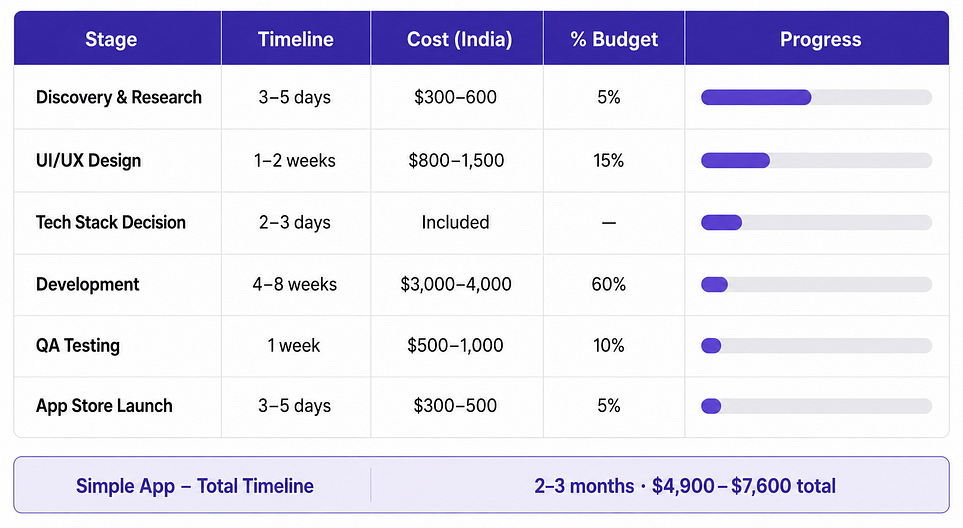
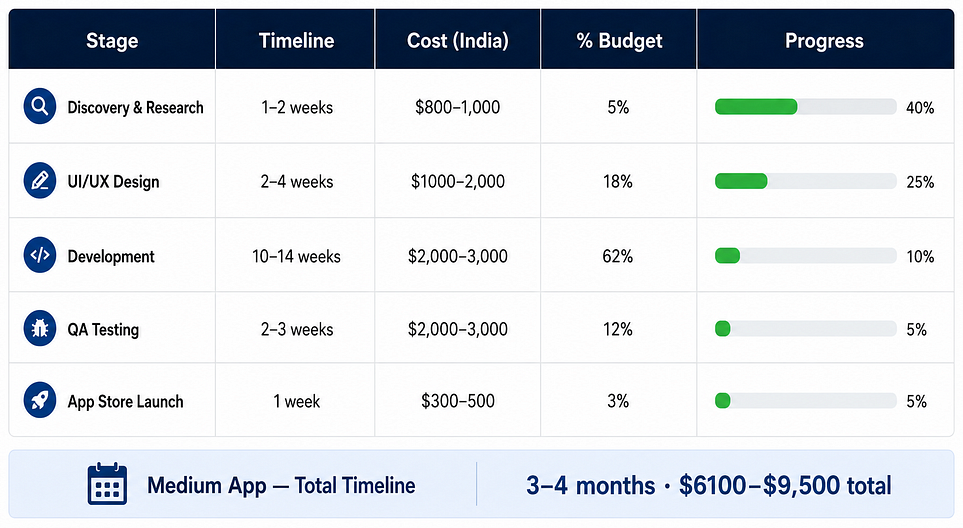
📊 Flutter saves 25–35% of timeline versus native development: A medium app built natively (separate iOS + Android teams) typically takes 2–3 months. The same app built in Flutter takes 3–4 months — because the frontend is built once for both platforms simultaneously. For most businesses, this time saving alone justifies the framework choice. Learn more about Flutter development →
Get a personalised cost estimate for your specific app →
The mobile app development process is not a single event — it is a structured, multi-stage journey that requires careful planning, disciplined execution, and ongoing investment after launch. From the first discovery session to post-launch maintenance, every stage in this mobile application development guide plays a critical role in determining whether your app succeeds or fails in a crowded marketplace.
Whether you are following this as an app development process for beginners or using it to audit an existing project, the principles remain the same: validate early, design before you build, ship in increments, and never stop iterating. The companies that win in mobile are those that treat their app as a living product — not a one-time project.
If you are ready to start your own mobile app development process, reach out to the Primocys team → Our in-house team of designers, Flutter developers, backend engineers, and QA specialists handles all six stages end-to-end. We have delivered 650+ apps and we are ready to help you build the next one.

© 2025 Crivva - Hosted by Airy Hosting Managed Website Hosting.