

Mardi Himal vs Poon Hill: Best Short Trek Pick

rockykauffman
Mardi Himal vs Poon Hill: Best Short Trek Pick

Key Takeaways

  • Poon Hill is the easier, beginner-friendly choice — it’s a shorter trek (4–5 days), tops out at 3,210m, and has well-developed trails with plenty of teahouses, making it ideal for families or first-time trekkers.
  • Mardi Himal offers a quieter, more adventurous experience — it climbs higher (around 4,500m), has fewer crowds, and rewards hikers with dramatic close-up views of Machhapuchhre (Fish Tail Mountain).
  • Views differ in style — Poon Hill gives you wide, panoramic sunrise views of multiple peaks, while Mardi Himal gives you a more intimate, up-close look at one or two iconic mountains.
  • Altitude and difficulty matter — Mardi Himal’s higher elevation means a slightly greater risk of altitude sickness and tougher trail sections, so it suits trekkers with some hiking experience or decent fitness.
  • Both treks are doable in under a week — making them perfect for travelers with limited time who still want a genuine Himalayan experience near Pokhara, just with different vibes (busy and classic vs. peaceful and remote).


Nepal is home to some of the tallest, most beautiful mountains on Earth. Just thinking about the Himalayas brings to mind snowy peaks, fluttering prayer flags, friendly villages, and views that seem to go on forever. The best part? You don’t need weeks of vacation time or expert climbing skills to experience this magic. Two of the most popular short treks in Nepal   Poon Hill and Mardi Himal   let regular hikers enjoy incredible mountain views in just a few days.

But which one should you pick? If you’re trying to decide between Mardi Himal vs Poon Hill, this guide breaks everything down in simple terms so you can choose the trek that’s right for you.

What Is the Poon Hill Trek?

The Poon Hill trek is one of the most famous short hikes in the Annapurna region of Nepal. It’s loved by first-time trekkers, families, and anyone who wants a taste of the Himalayas without too much effort.

Poon Hill Trek Highlights

  • A famous sunrise viewpoint at 3,210 meters (10,531 feet)
  • Sweeping views of Annapurna South, Machhapuchhre (Fish Tail Mountain), and Dhaulagiri
  • Walks through charming Gurung and Magar villages
  • Beautiful rhododendron forests (especially colorful in spring)
  • Well-marked trails with plenty of teahouses along the way

Poon Hill Trek Difficulty and Duration

  • Duration: Usually 4–5 days
  • Difficulty: Easy to moderate   great for beginners
  • Starting point: Nayapul, near Pokhara
  • Highest point: Poon Hill at 3,210 meters

Because the trails are well-developed and the trek is short, Poon Hill is often called the perfect “starter trek” for people visiting Nepal for the first time.

What Is the Mardi Himal Trek?

Mardi Himal is a bit of a hidden gem. While it’s becoming more popular, it still feels quieter and more peaceful than busier trekking routes. This trek takes you closer to the base of Mardi Himal peak, with jaw-dropping close-up views of the Annapurna and Machhapuchhre mountains.

Mardi Himal Trek Highlights

  • Incredible close-up views of Machhapuchhre (Fish Tail Mountain)
  • High viewpoint at High Camp, around 4,500 meters (14,764 feet)
  • Quiet trails through forests, ridgelines, and meadows
  • Fewer crowds compared to other popular treks
  • A real sense of wilderness and adventure

Mardi Himal Trek Difficulty and Duration

  • Duration: Usually 4–6 days
  • Difficulty: Moderate   a bit more challenging than Poon Hill
  • Starting point: Kande or Phedi, near Pokhara
  • Highest point: Mardi Himal View Point, around 4,500 meters

Because Mardi Himal goes higher and has steeper sections, it’s a great choice for trekkers who want a bit more of a challenge without committing to a long expedition.

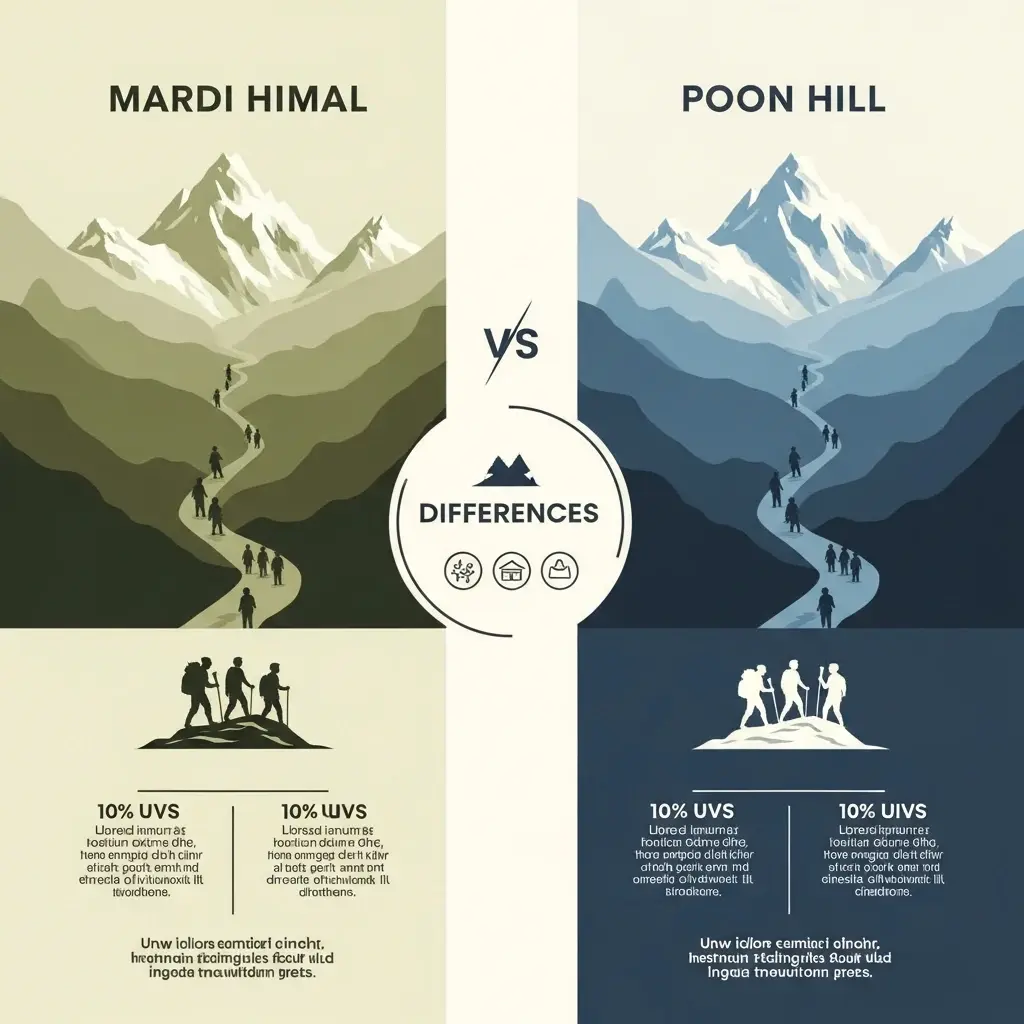
Mardi Himal vs Poon Hill: Key Differences

Now that you know the basics, let’s compare these two treks side by side. Here are the main differences between Mardi Himal vs Poon Hill:

  • Altitude: Poon Hill tops out at 3,210 meters, while Mardi Himal reaches around 4,500 meters.
  • Crowds: Poon Hill is busier and more popular, while Mardi Himal feels quieter and more remote.
  • Difficulty: Poon Hill is easier and better for beginners, while Mardi Himal involves steeper, longer walking days.
  • Views: Poon Hill offers wide panoramic mountain views, while Mardi Himal offers dramatic close-up views of Machhapuchhre.
  • Facilities: Poon Hill has more teahouses and lodges, while Mardi Himal has fewer but still comfortable places to stay.
  • Altitude sickness risk: Poon Hill has very low risk, while Mardi Himal has a slightly higher risk due to the higher elevation.

Which One Should You Choose?

Choosing between Mardi Himal and Poon Hill really depends on what kind of trekking experience you’re looking for. Here’s a simple breakdown to help you decide:

Choose Poon Hill if you:

  • Are a first-time trekker or traveling with kids or older family members
  • Want a short, easy trek with amazing sunrise views
  • Prefer well-established trails and plenty of teahouses
  • Have limited time (4–5 days) in Nepal
  • Want guaranteed views without going too high in altitude

Choose Mardi Himal if you:

  • Have some hiking experience or are reasonably fit
  • Want quieter trails away from the crowds
  • Are excited about reaching higher altitude (around 4,500 meters)
  • Want close-up views of Machhapuchhre and the Annapurna range
  • Are looking for a slightly more adventurous short trek

Tips for Either Trek

No matter which trek you choose, a few simple tips will help you enjoy your trip:

  • Pack layers of clothing, since mountain weather changes quickly
  • Bring sturdy, comfortable walking shoes or boots
  • Carry enough water and snacks for energy
  • Hire a local guide or porter to support local communities and make your trek easier
  • Plan your trek in spring (March–May) or autumn (September–November) for the best weather and clearest views

conclusion

Both treks offer something special, and you really can’t go wrong with either one. If you want an easy, classic introduction to Himalayan trekking with stunning sunrise views, Poon Hill is hard to beat. If you’re ready for a quieter path, a bit more elevation, and dramatic close-up mountain views, Mardi Himal could be your perfect match.

When it comes down to Mardi Himal vs Poon Hill: best short trek pick, the right answer is the one that fits your fitness level, your time, and the kind of experience you’re looking for. Whichever trail you choose, you’ll come home with incredible photos, a sense of accomplishment, and memories of the Himalayas that will last a lifetime. So pack your bags, lace up your boots, and get ready for an unforgettable short trek in Nepal!

FAQ

Which trek is better for beginners, Mardi Himal or Poon Hill?
Poon Hill is generally the better choice for beginners. The trail is shorter, well-marked, doesn’t go as high in altitude, and has plenty of teahouses along the way for rest and food.

How many days do I need for each trek?
Poon Hill usually takes 4–5 days, while Mardi Himal takes about 4–6 days. Both can fit into a short Nepal vacation without much trouble.

Is Mardi Himal harder than Poon Hill?
Yes, Mardi Himal is a bit more challenging. It climbs to around 4,500 meters compared to Poon Hill’s 3,210 meters, and the trails have steeper, less-developed sections.

Can I do these treks without a guide?
Poon Hill can often be done independently since the trails are well-marked and busy with other trekkers. Mardi Himal is quieter and less marked, so hiring a guide is recommended for safety and navigation.

What’s the best time of year to do either trek?
Spring (March–May) and autumn (September–November) are the best seasons for both treks, offering clear skies, mild weather, and the best mountain views.

Leave a Reply
    Table of Contents
    Crivva Logo
    Crivva is a professional social and business networking platform that empowers users to connect, share, and grow. Post blogs, press releases, classifieds, and business listings to boost your online presence. Join Crivva today to network, promote your brand, and build meaningful digital connections across industries.