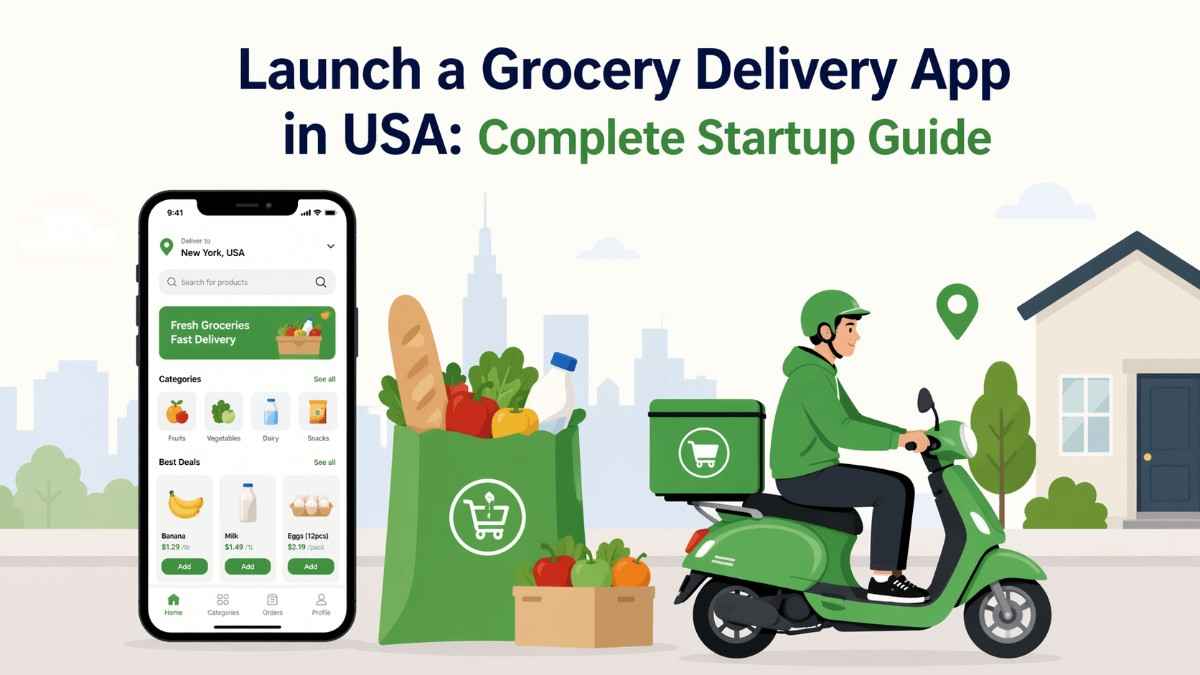
The grocery delivery industry in the USA has experienced remarkable growth in recent years, driven by changing consumer preferences and advancements in technology. As busy lifestyles increasingly demand convenience, launching a grocery delivery app presents an exciting business opportunity for entrepreneurs. This comprehensive startup guide will walk you through the essential steps for creating a successful grocery delivery app, covering everything from market analysis and defining your business model to navigating legal requirements and developing a robust marketing strategy. Whether you’re a seasoned entrepreneur or new to the startup world, this guide will provide valuable insights to help you launch and scale your grocery delivery service effectively.
The grocery delivery market in the USA is booming, with a noticeable shift towards online shopping. In 2023, consumers are increasingly looking for convenience, speed, and variety—all while lounging in their pajamas. Research shows that grocery delivery is no longer just for the busy bees; even families and millennials are hopping on this bandwagon. The pandemic gave this trend a turbo boost, with 60% of Americans now preferring to order groceries online rather than face the grocery aisle chaos.
The grocery delivery space is like a crowded buffet with big players like Instacart, Amazon Fresh, and Walmart Grocery offering a smorgasbord of services. While traditional grocery stores are picking up their game to carve out a slice of the pie, startups still have room to innovate. Differentiating your service—think unique partnerships with local farmers or niche organic offerings—can be the secret sauce to stand out in this competitive landscape.
Identifying your target audience can feel like finding a needle in a haystack. But fear not! Start with the basics: busy professionals, young families, seniors, and health-conscious consumers. Each of these groups has unique shopping habits and preferences. For instance, millennials might prioritize sustainability, whereas seniors could be more focused on ease of use and reliability. Understanding these nuances will help tailor your marketing efforts and service offerings.
When it comes to grocery delivery, there are several flavors to choose from: on-demand delivery (think Uber but with avocados), subscription models (like a regular box of fresh produce), and scheduled delivery (prepping for your week of meals). You can also explore partnerships with local stores for a more community-driven approach. Each model has its pros and cons, so pick the one that resonates most with your target audience.
Cash is king, and it’s crucial to have diverse revenue streams. Typical income sources in the grocery delivery realm include delivery fees, subscription plans, commission from grocery stores, and even advertising revenue from local businesses. Think of it like a buffet—more options mean a fuller plate (and wallet).
Pricing can be a tricky tightrope walk. You want to stay competitive without driving yourself into the ground. Consider a tiered pricing model with different levels of service, from a basic delivery to a premium one with perks like express service or exclusive discounts. You can also offer free delivery for orders over a certain amount to encourage bulk purchases—who doesn’t like a good deal?
Your app should be as easy to navigate as a well-organized pantry. A clean, intuitive design will keep users coming back like they do for their favorite snack. Ensure that categories are clearly labeled, and use large, inviting images that make grocery shopping feel like a fun game instead of a chore.
The shopping cart and checkout process should be slicker than a well-oiled shopping machine. Incorporate features like saved carts, easy item modification, and quick payment options. The fewer hoops your users have to jump through, the fewer abandoned carts you’ll see.
Nobody likes the suspense of waiting for a delivery. Incorporate real-time order tracking so users can see exactly where their groceries are—like a GPS for avocados. This transparency builds trust and keeps customers in the loop.
A seamless payment process is essential. Integrate popular payment gateways like PayPal, Apple Pay, and credit/debit cards. Make sure the payment process is secure—nobody wants to risk their financial data while ordering a week’s worth of snacks!
Even the best-laid plans go awry sometimes, so having reliable customer support features is vital. Consider chatbots for quick queries and a dedicated support team for more complicated issues. Customer satisfaction can make or break your business, so being there for them is a must!
To play in the big leagues, you’ll need to get your business registered and obtain the necessary licenses. This can include a business license, seller’s permit, and local health permits, depending on your state. The goal is to ensure you’re operating legally while keeping things above board—nobody likes surprise visits from the health inspector!
Food safety is no joke. Familiarize yourself with local health and safety regulations, like how to store perishable items and how to handle food deliveries. This is crucial to avoiding any nasty surprises (and lawsuits).
Keep your customers’ data safer than grandma’s secret cookie recipe. Comply with regulations like GDPR, CCPA, and any other local laws on data privacy. Ensuring your app has robust security measures in place will help protect sensitive customer information and build trust in your brand.
Before you hit that shiny launch button, make sure your pre-launch strategy is as robust as a fresh loaf of sourdough. Build anticipation with teasers on social media, engage potential users with sneak peeks, and consider a soft launch to test the waters. Gathering early feedback will be your secret ingredient to perfect your app before the big reveal.
Once your app is live, listen to what your users are saying. Feedback is like the seasoning that helps you adjust recipes to perfection. Create channels for users to share their experiences, whether through in-app surveys or social media engagement. Be willing to iterate based on this feedback—after all, the best apps evolve just like your taste in ice cream flavors!
Scaling your grocery delivery app means spreading your wings (or vegetables) far and wide. Analyze the data from your first users to identify growth opportunities—are there regions that need your service? Or perhaps new features users are clamoring for? Partnering with local grocery chains can extend your reach, while investing in tech improvements will ensure a seamless experience. The sky’s the limit when you’re ready to scale, so buckle up and enjoy the ride!In conclusion, launching a grocery delivery app in the USA is an exciting venture that requires careful planning and execution. By understanding the market, defining your business model, and focusing on essential features, you can position your app for success. Remember to stay adaptable and responsive to consumer needs as you grow your business. With the right strategies in place, you can tap into the burgeoning demand for convenience and meet the evolving needs of grocery shoppers across the country.
The startup costs can vary widely depending on factors such as app development, marketing, logistics, and operational expenses. A rough estimate can range from $20,000 to $100,000 or more, depending on the features and scale of your business.
To ensure success, focus on understanding your target audience, offering a user-friendly experience, providing reliable delivery services, and implementing effective marketing strategies to attract and retain customers.
You will need to consider business registration, necessary licenses, health and safety regulations, and compliance with data privacy laws. It’s advisable to consult with a legal expert to ensure all requirements are met.
Effective logistics management involves establishing strong relationships with suppliers, optimizing delivery routes, and investing in inventory management systems. Consider partnering with established grocery stores or wholesalers to streamline operations and enhance product availability.

© 2025 Crivva - Hosted by Airy Hosting Managed Website Hosting.