


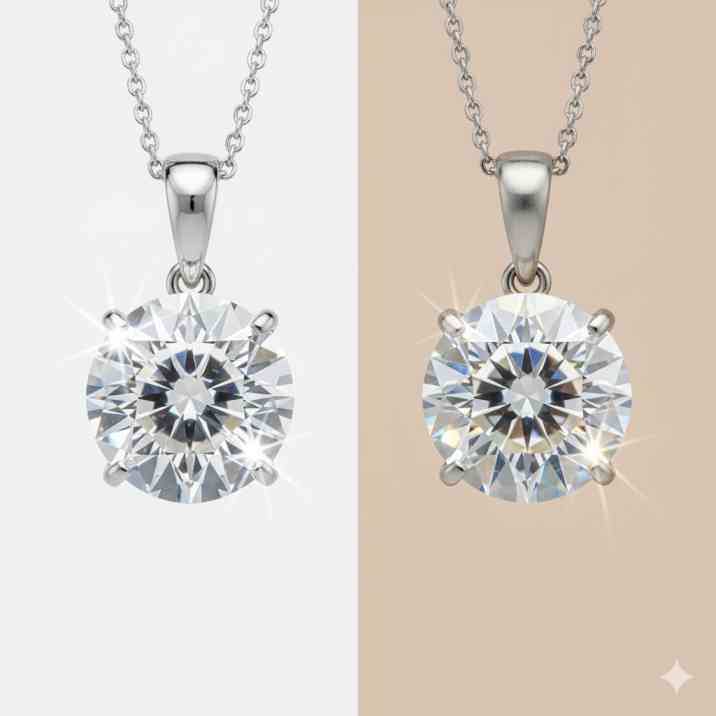
Imagine slipping on a lab grown diamond pendant that sparkles just like a mined one — but costs significantly less and carries a lower environmental footprint. Lab-grown diamond pendants are increasingly popular for engagement gifts, anniversaries, or simply as a sustainable fashion statement. But how do they really compare with natural diamond pendants when it comes to value, durability, ethics, and long-term worth? In this guide, we break down what you need to know to make an informed decision.
Lab-grown diamonds are created in controlled laboratory environments using technologies like High-Pressure High Temperature (HPHT) or Chemical Vapor Deposition (CVD). These methods replicate the natural conditions under which diamonds form, but in just weeks. The result: a genuine diamond with the same physical, chemical, and optical properties as a mined one.
Natural diamonds are forged deep in the Earth’s mantle over billions of years. Mining them requires large-scale excavation, which can disrupt ecosystems, consume vast amounts of water, and produce significant waste and carbon emissions.
As more consumers weigh budget, ethics, and long-term value, understanding the tradeoffs between lab-grown and natural diamonds is more important than ever. Your choice can influence not just how much you pay today — but also the impact on the planet and the resale value down the line.
HPHT: Simulates the tremendous pressure and temperature conditions deep in the Earth to grow diamond crystals.
CVD: Uses a carbon-rich gas that deposits layers of diamond onto a substrate over weeks.
While these methods need high energy, modern labs are increasingly using renewable power to reduce their carbon footprint. The Story Behind Natural Diamonds (Earth’s Geological Process)
Natural diamonds form when carbon is subjected to extreme pressure and heat deep within the Earth over billions of years. To mine them, large volumes of earth must be displaced — contributing to land disruption and ecological damage. Quick Comparison of Origins (Side-by-Side Overview)
Lab-grown: Manufactured in labs, no mining scars, controlled production.
Natural: Mined over decades, involves land disruption, heavy water use, and ecosystem changes.
Energy & Emissions: A lifecycle assessment estimates natural diamonds generate ~160 kg CO₂ per polished carat, while lab-grown (with clean energy) can go as low as ~6 kg.
Starting October 2025, GIA will stop using the traditional 4Cs grading for lab-grown diamonds. Instead, they’ll categorize them as “Premium” or “Standard,” based on combined metrics of color, clarity, and finish. “Premium” lab-grown diamonds are expected to meet high standards (for example, color D, clarity VVS, excellent cut) according to reports. GIA’s shift reflects their recognition that most lab-grown diamonds fall within a very narrow quality range.
Lab-grown diamonds are chemically and physically identical to natural diamonds, so they generally score a 10 on the Mohs hardness scale, meaning they are just as hard and durable.
However, because of the way they’re made, some lab diamonds may have inclusions (such as metallic inclusions in HPHT or graphite spots in CVD) — but these usually affect their grading more than their wearability.
Although I didn’t find a publicly documented “100-shopper blind test” for sparkle, many gemological experts argue that under normal lighting, lab-grown and natural diamonds are virtually indistinguishable, because they share the same crystal structure and refractive properties.
For lab-grown diamonds: with the new GIA system (Premium / Standard), buyers may also check for laser inscriptions that confirm it’s laboratory-grown.
Other labs, like IGI, still use traditional 4Cs for lab-grown diamonds, which some buyers prefer.
Always ask for a reliable third-party grading report, whether natural or lab-grown.
Lab-grown diamond pendants are generally much more affordable than their natural counterparts. Because lab-grown diamonds lack geological rarity, they come at a lower cost while offering comparable brilliance.
According to a 2025 resale guide, lab-grown diamonds retain about 20–40% of their original purchase price in the secondary market. Another source (Labrilliante) reports 30–40% retention, with CVD stones outperforming HPHT by 5–8%, and IGI-certified ones holding 3–7% more value than GIA-graded lab stones.
By contrast, natural diamonds, especially high-quality ones, tend to retain 40–60% of their retail price in resale markets.
Energy and origin: Lab-grown production can be more sustainable, but only if powered by clean energy — otherwise, the eco-benefits shrink.
Certification: More reliable or detailed grading reports may cost more, but they boost resale potential.
Market risk: Oversupply in lab-grown diamonds has already impacted wholesale prices.
If you’re buying a pendant for style or as a gift, lab-grown diamonds often give the best “sparkle for money.”
If you’re thinking long-term (resale or heirloom), natural diamonds may hold value better — though this depends heavily on the stone’s quality, certification, and market.
Water Use: Traditional mining uses a lot of water per carat; lab-grown production uses much less, often through closed-loop recycling.
Land Disruption: Mining can displace 250+ tonnes of earth to get just one carat, destroying habitats.
Carbon Emissions: Lab-grown diamonds made using renewable energy can emit as little as ~6 kg CO₂ per carat, while mined diamonds can emit ~160 kg.
Lab-grown diamonds are produced in labs — this means more transparent supply chains and fewer risks of conflict mining.
Natural diamonds may be “conflict-free,” but that depends heavily on mining practices, certifications, and traceability.
Many modern jewelers are promoting lab-grown diamond collections to appeal to eco-conscious customers. These brands highlight their use of green energy or carbon offset programs.
Ask your jeweler whether their lab-grown diamonds are made using renewable energy.
Insist on third-party certification and laser inscriptions.
For natural diamonds, check for responsible sourcing certifications (e.g., Kimberley Process, or better).
Lab-grown diamonds come in all the same shapes and carat sizes as natural ones. You can choose minimalist solitaires, halo designs, or bold statement pendants — without paying a premium just for size.
Lab-grown diamonds are especially popular among younger and environmentally conscious buyers. However, some in the industry are cautioning that oversupply and rapidly falling wholesale prices may hurt long-term perception of lab-grown stones.
For everyday wear: Lab-grown pendants offer great value and low-risk cost.
For heirloom or investment pieces: Natural diamonds might feel more “classic” and potentially retain more value, depending on quality.
Try both lab-grown and natural pendants in person under real lighting.
Ask for grading certificates — for lab-grown, prefer GIA or IGI; for natural, look for full 4Cs.
Decide on your priority: sustainability + savings vs legacy + resale.
Work out a budget factoring in potential resale values and certifications.
If you’re looking for a sparkly, budget-friendly, and more sustainable option, a lab-grown diamond pendant might be your best bet. On the other hand, if you value rarity, long-term value, or tradition, a natural diamond pendant makes a compelling case. There’s no one-size-fits-all answer — the “better” choice depends on your priorities.
Pro tip: Visit a trusted jeweler this week, ask to compare both pendant types side-by-side, and choose a piece that aligns with your budget and values — because the right diamond is the one that resonates with you.

© 2025 Crivva - Hosted by Airy Hosting Managed Website Hosting.








