

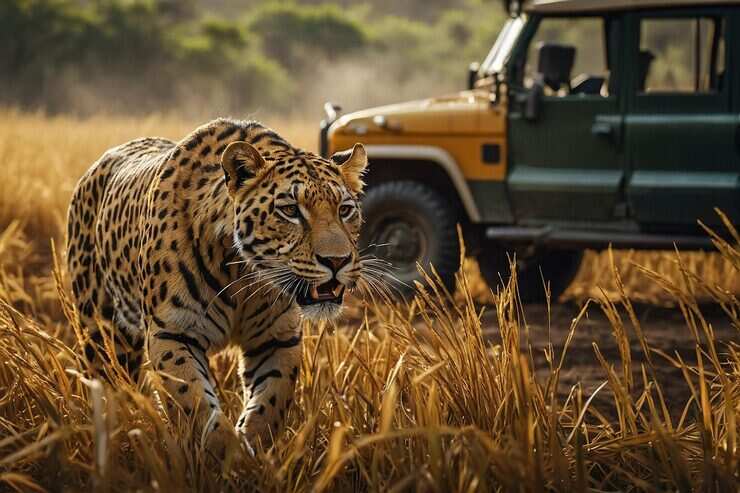
Tucked along the backwaters of the Kabini River in southern Karnataka, the Nagarhole Tiger Reserve holds a reputation that few Indian forests can match. A Kabini wildlife safari brings you face to face with one of the highest leopard densities in the country. Add regular tiger movement and elephant herds that gather by the hundreds during the dry months, and it is easy to see why. This stretch of forest was once a private hunting ground for the Mysore royal family. Today, it has become one of the most rewarding wildlife tours in India for photographers, families, and first-time safari travellers alike.
This guide walks you through everything you need to plan your trip. You will find the best season to visit, the safari options available, and what you can realistically expect to see once you are inside the park.
Kabini sits on the eastern edge of Nagarhole National Park. Here, the Kabini River widens into a reservoir that cuts through dense forest. The park itself forms part of the Nilgiri Biosphere Reserve. This vast, unbroken stretch of protected land links Nagarhole with Bandipur, Wayanad, and Mudumalai. Together, these reserves form one of the largest connected tiger habitats in the world. That connection is a big reason wildlife keeps moving freely through the Kabini landscape.
The nearest big city is Mysore, roughly 80 kilometres away. Bengaluru lies about four hours away by road. This easy access from two major southern cities is one reason a Kabini wildlife safari has become such a popular weekend escape for wildlife lovers across South India.
Most tiger reserves in India ask you to be patient and a little lucky. Kabini changes those odds in your favour, mainly because of the open backwaters that pull animals out of the thick forest cover.
A few things set this reserve apart:
Kabini stays open for most of the year, but timing changes what you will see.
October to February brings cooler weather, green forest cover, and active birdlife. This makes it a comfortable season for first-time visitors. March to May is the hottest stretch, and also the most dramatic. As waterholes shrink, elephants, deer, and predators move toward the remaining water along the Kabini backwaters. This is why summer is widely considered the best season for a Kabini jungle safari focused on big sightings and photography. The park typically closes for safaris during the monsoon months of June to September, when the forest floor is too wet for jeep movement.
If your priority is leopard and tiger activity near open water, plan your trip between March and May. If you prefer milder weather with a good chance of birdwatching, the winter months work just as well.
A Kabini wildlife safari is not limited to one format. Visitors can choose from three main options, each offering a different perspective of the forest.
Jeep Safari: The most popular choice, a jeep safari takes a small group deep into forest trails with a trained guide and naturalist. Limited seating means a quieter ride and a better chance of an undisturbed sighting.
Canter or Bus Safari: Run in larger shared vehicles, this option suits bigger groups or families travelling together. It covers similar routes as the jeep safari at a lower cost per person.
Boat Safari: Unique to Kabini because of its reservoir, the boat safari glides along the backwaters in the early morning or evening. It is the best way to watch elephants drinking at the water’s edge, along with crocodiles, otters, and a wide variety of waterbirds.
Most resorts and tour operators offer a mix of jeep and boat sessions across a two or three day stay. This gives you the benefit of both land and water perspectives within a single trip.
While no safari can guarantee a sighting, Kabini’s track record is among the best in the country. Keep an eye out for:
By Air: Bengaluru Kempegowda International Airport is the most well-connected option, roughly a four-hour drive from Kabini. Mysore Airport is closer but has fewer flight connections.
By Rail: Mysore Junction is the nearest major railway station, with regular trains from Bengaluru, Chennai, and other southern cities.
By Road: Kabini connects well to both Mysore and Bengaluru via state highways, and the drive itself passes through scenic farmland and forest patches. Travellers coming from Kerala can reach Kabini from Wayanad in under two hours.
Safaris generally run in two daily slots, an early morning session between 6:00 AM and 9:30 AM, and an afternoon session between 3:00 PM and 6:30 PM. Exact timings shift slightly with the season, so it is worth confirming with your lodge or the forest department before you travel.
A few practical points worth knowing before you book:
Staying inside or close to the buffer zone makes a real difference to your safari experience. Jungle lodges along the riverbanks allow you to step almost directly from your room onto a boat or jeep, cutting down travel time and giving you more hours in the field. Many of these properties also pair their stay packages with guided safaris and naturalist support, so first-time visitors do not need to navigate bookings on their own.
Going with an experienced naturalist changes the entire trip. A trained guide reads tracks, understands animal behaviour, and knows which part of the reserve is active on a given day, turning a routine drive into a genuinely memorable outing.
The Wild Terrain’s Kabini photography trip is built around exactly this idea. Spread across two nights on the riverbanks, the itinerary combines jeep and boat safaris with hands-on photography mentorship from naturalist Ankul Shetty, covering everything from camera settings to tracking technique in the field. It is one of several wildlife tours in India curated by the team, designed for travellers who want more than a quick drive through the forest.
A good safari often leaves you wishing you could hold on to the moment a little longer. The Wild Terrain’s wildlife collections offer framed prints of tigers, leopards, and elephants captured across reserves like Kabini, Bandhavgarh, and Corbett, giving you a way to carry a piece of the wild back home long after the trip ends.
What is the best time to visit Kabini for a wildlife safari?
The summer months from March to May offer the best chance of tiger and elephant sightings near the backwaters, while October to February is more comfortable for those who prefer cooler weather and birdwatching.
How much does a Kabini wildlife safari cost?
Jeep safaris typically cost between ₹2,500 and ₹3,500 per person, while canter or bus safaris are more budget-friendly. Guided packages that include stay, meals, and multiple safaris are priced separately and vary by resort.
How many days are enough for a Kabini jungle safari?
A single day covers one or two safaris, but most repeat visitors recommend two to three nights to fit in both jeep and boat safaris across morning and evening sessions for better sighting chances.
Can you spot tigers and leopards together on a Kabini safari?
Yes, Kabini is one of the few Indian reserves where both species are regularly seen on the same safari, thanks to its high prey density and varied terrain of forest, grassland, and water.
How do I book a Kabini wildlife safari?
Safaris can be booked directly through the Nagarhole Tiger Reserve’s official portal, through your resort, or as part of a guided tour package that includes stay, meals, and naturalist support for the entire trip.

© 2025 Crivva - Hosted by Airy Hosting Managed Website Hosting.