

Podcasting continues to grow rapidly, and 2026 is shaping up to be one of the best years to launch your own show. Whether you want to share expertise, build a personal brand, grow a business, or simply tell great stories, podcasting offers a powerful and accessible platform.
If you’ve been wondering how to start a podcast, this complete 2026 guide will walk you through every step—from planning and equipment to publishing and promotion. Plus, you’ll find a free podcast checklist at the end to help you stay organized and confident as you launch.
Podcast consumption is at an all-time high. With smarter recommendation algorithms, improved audio tools, and a global audience eager for niche content, podcasting is no longer limited to celebrities or media companies.
Here’s why starting a podcast in 2026 makes sense:
Low startup cost compared to video content
Ability to reach a global audience
Builds authority and trust in your niche
Flexible content format (solo, interviews, storytelling)
Monetization options continue to expand
If you’ve ever thought, “I should start a podcast someday,” 2026 is that day.
Before buying equipment or recording episodes, get clear on why your podcast exists.
Ask yourself:
What topic am I passionate about?
Who is my ideal listener?
What problem will my podcast solve?
Is my topic specific enough to stand out?
Instead of a broad topic like “business,” narrow it down to something like “freelance marketing for small business owners” or “faith-based leadership for entrepreneurs.” A clear niche helps attract loyal listeners faster.
One of the most important decisions when learning how to start a podcast is choosing the right format.
Popular podcast formats in 2026 include:
Solo podcasts – Great for thought leaders and educators
Interview podcasts – Ideal for networking and expert insights
Co-hosted shows – Engaging and conversational
Storytelling podcasts – Perfect for narrative-driven content
Educational or tutorial podcasts – Step-by-step learning content
Choose a format you can realistically maintain long-term.
Your podcast name should be:
Easy to remember
Relevant to your niche
Search-friendly
Unique
Avoid complicated or overly clever names that don’t explain what your podcast is about.
Next, write a podcast description that clearly tells listeners:
What the podcast is about
Who it’s for
What value they’ll gain
This description also helps with podcast SEO and discoverability.
You don’t need a professional studio to start a podcast in 2026, but good audio quality is essential.
Microphone (USB or XLR)
Headphones to avoid echo
Pop filter for cleaner sound
Quiet recording space
Many beginner podcasters start with a USB microphone and upgrade later as their show grows.
Modern podcast software makes recording and editing easier than ever.
Popular podcast tools in 2026 include:
Beginner-friendly recording platforms
AI-powered audio cleanup tools
Cloud-based editing software
Remote interview recording tools
Choose software that fits your skill level and budget. Start simple and improve as you gain experience.
Before launching, it’s smart to plan at least 3–5 episodes in advance. This helps you stay consistent and reduces pressure after launch.
Tips for recording your first podcast episodes:
Write a loose outline (not a full script)
Speak naturally and clearly
Keep episodes focused on one main topic
Aim for consistency, not perfection
Remember, your first episodes won’t be perfect—and that’s okay.
Editing helps remove mistakes, long pauses, background noise, and distractions.
Basic podcast editing includes:
Trimming awkward silences
Removing filler words
Balancing audio levels
Adding intro and outro music
Good editing improves listener experience and makes your podcast sound professional.
A podcast hosting platform stores your audio files and distributes them to podcast directories.
When selecting a host, look for:
Reliable uptime
Easy distribution to major platforms
Analytics and listener insights
Affordable pricing
Once uploaded, your podcast can be distributed to platforms like Spotify, Apple Podcasts, Google Podcasts, and more.
Your podcast cover art is often the first thing potential listeners see.
Effective podcast artwork should:
Be clear and readable at small sizes
Match your brand or theme
Use simple, bold visuals
Include your podcast name
Good design increases clicks and helps your podcast stand out in crowded directories.
Launching your podcast is more than just hitting “publish.”
Promotion ideas for 2026:
Share episodes on social media
Create short audio or video clips
Send episodes to your email list
Collaborate with other podcasters
Ask listeners to leave reviews
Consistency and patience are key. Most successful podcasts grow steadily, not overnight.
Once your podcast builds an audience, monetization opportunities open up.
Common podcast monetization methods include:
Sponsorships and ads
Affiliate marketing
Premium episodes or memberships
Selling your own products or services
Focus on delivering value first—monetization naturally follows.
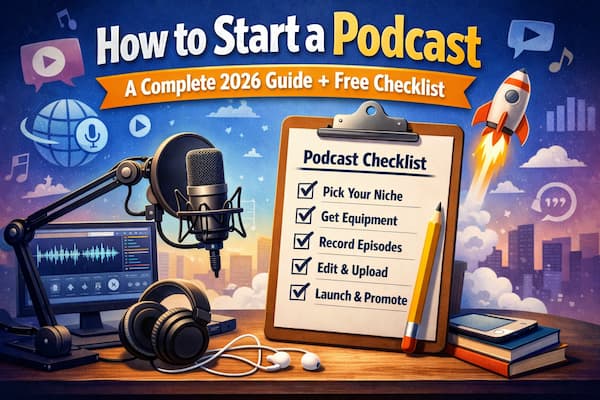
Use this free checklist to stay on track:
✔ Define your niche and audience
✔ Choose a podcast format
✔ Pick a podcast name and description
✔ Get basic recording equipment
✔ Select recording and editing software
✔ Plan and record first episodes
✔ Edit and polish audio
✔ Choose a podcast hosting platform
✔ Design podcast cover art
✔ Publish and promote consistently
Starting without a clear niche
Poor audio quality
Inconsistent publishing schedule
Trying to be perfect instead of authentic
Giving up too soon
Avoid these mistakes, and you’ll be far ahead of most beginners.
Learning how to start a podcast doesn’t have to be overwhelming. With the right planning, tools, and mindset, anyone can launch a successful podcast in 2026. This complete guide, combined with the free podcast checklist, gives you everything you need to go from idea to published show.
The most important step is simple: start. Your voice, story, and expertise matter. Record your first episode, share it with the world, and grow as you go.

© 2025 Crivva - Hosted by Airy Hosting Managed Website Hosting.