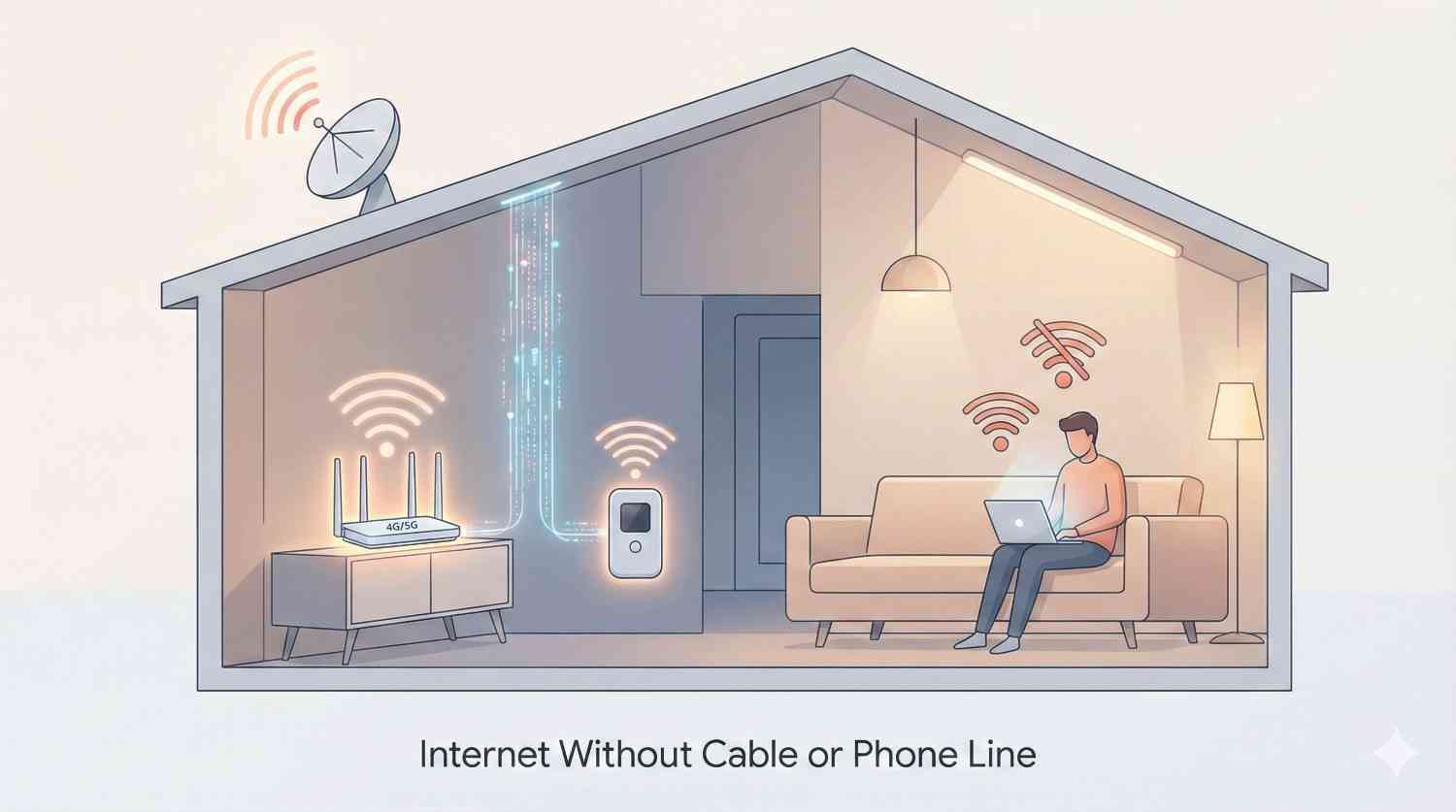
If you’ve ever moved into a new home, RV, cabin, or temporary rental and realized there’s no cable line or phone jack, you’ve probably felt a wave of panic. You want to stream movies, join Zoom meetings, play online games, or simply scroll social media. But without wired internet options, you’re left wondering.
“How do I get online without any cables or a phone line?”
Don’t worry; you’re not alone. Millions of people today need the internet without a cable or phone, whether they live in rural areas, travel full-time, or are choosing to give up traditional ISPs. The good news is there are now many ways to stay connected wirelessly, easily, and affordably.
In this guide, you’ll learn how to get internet without a cable or phone line, the technology options available today, and which one is best for your home, travels, or lifestyle.
Let’s dive in.
There was a time when you needed coax cables, DSL lines, or phone jacks to connect online. That time is now over. The rise of wireless technology means you can enjoy high-speed, reliable internet anywhere, even without a wired connection.
Here’s why more people are turning to wireless solutions:
Many rural homes simply don’t have cable lines, making wireless options the only way to get internet without a cable.
If you move around often or live in an RV, wired internet doesn’t make sense.
No technicians. No drilling. No long-term obligations.
Wireless options help you stay online when cable goes down.
Whatever your reason, wireless technology offers several ways to get internet and Wi-Fi without a cable or phone line. Many of these options are surprisingly fast.
Let’s explore the most reliable, easiest, and most widely available wireless solutions.
One of the easiest ways to get online is by using a mobile hotspot. It connects to 4G LTE or 5G networks and broadcasts Wi-Fi to your devices. This is a popular choice for people looking to get Wi-Fi without a traditional internet provider.
Why mobile hotspots are great
Ideal for
Hotspots give you wifi without internet from a wired ISP, using only cellular data to connect.
If you want a more powerful and stable setup, a cellular router is one of the best solutions available. Unlike smaller hotspots, cellular routers are designed for home or RV use. They provide strong, stable connections often better than phone hotspots making them ideal for working, streaming, and gaming.
Why cellular routers are the top alternative
If you’re trying to get internet without a cable or phone in a rural location, a cellular router is often the easiest and most reliable solution.
Fixed wireless internet uses radio signals instead of cables. A small antenna on your home connects to a nearby tower, which then brings internet into your home.
Benefits
Potential drawbacks
Still, if you want internet without cable and live close to a compatible tower, fixed wireless is a solid option.
If you live far from towns, towers, or cell coverage, satellite internet may be your only option.
Today, there are two types:
Traditional satellite
Modern low-earth orbit (LEO) satellite
This is often the go-to solution for remote cabins, boats, farms, and off-grid setups. It’s one of the best ways to get internet and Wi-Fi without a cable or phone line when you have no other options.
Public wi-fi in cafés, libraries, co-working spaces, airports, and hotels is free and convenient. But it’s not ideal for long-term home use.
Pros
Cons
Public wi-fi is okay for quick browsing but not a primary solution for internet without phone line or cable.
Your smartphone can serve as a hotspot when you need quick connectivity. While helpful in emergencies, it’s not ideal for long-term use.
Why tethering isn’t a permanent fix
Still, it’s handy if you temporarily need wifi without internet from a home provider.
Choosing the best option depends on your location and usage.
For rural homes
For RVs and travelers
For temporary living or rentals
For off-grid cabins
Each option lets you get the internet without a cable or phone, but the right choice depends on coverage, budget, and how you use the internet.
You don’t need cable lines, phone jacks, or wired ISPs to get online anymore. Thanks to modern technology, you can stay connected anywhere. This applies whether you’re at home, on the road, or far from infrastructure.
Wireless options like mobile hotspots, cellular routers, fixed wireless, and satellite internet make it easy to access the internet without cables. You can enjoy online services in places where cables will never reach.
Today, connectivity is flexible. It moves with you and works without the old limitations tied to landlines and cable networks.
You can connect using options like mobile hotspots, cellular routers, fixed wireless internet, satellite internet, or even public Wi-Fi. These solutions work wirelessly, so no physical cable or landline is needed. They’re great for homes, RVs, rural areas, and on-the-go connectivity.
For everyday home use, cellular routers and fixed wireless internet offer stable speeds and reliability. If you travel often, portable mobile hotspots provide flexibility. For completely remote locations with no towers, satellite internet remains the strongest option.
Yes, you can create your own connection using mobile hotspots, phone tethering, or SIM-based portable routers. These devices connect through cellular networks instead of using wired ISPs. It’s an easy way to get Wi-Fi without signing up for a traditional internet provider.
Public Wi-Fi is free, but it’s not reliable or secure enough for full-time use. Affordable alternatives include low-cost mobile hotspot devices or prepaid hotspot data plans. These let you pay only for the data you use, without installation fees.
Yes, satellite internet is made for remote areas where cable, fiber, or cell towers aren’t available. It beams the internet directly from satellites to a dish at your location, making it very accessible. While latency may be higher, it still provides reliable connectivity for everyday online tasks.

© 2025 Crivva - Hosted by Airy Hosting Managed Website Hosting.