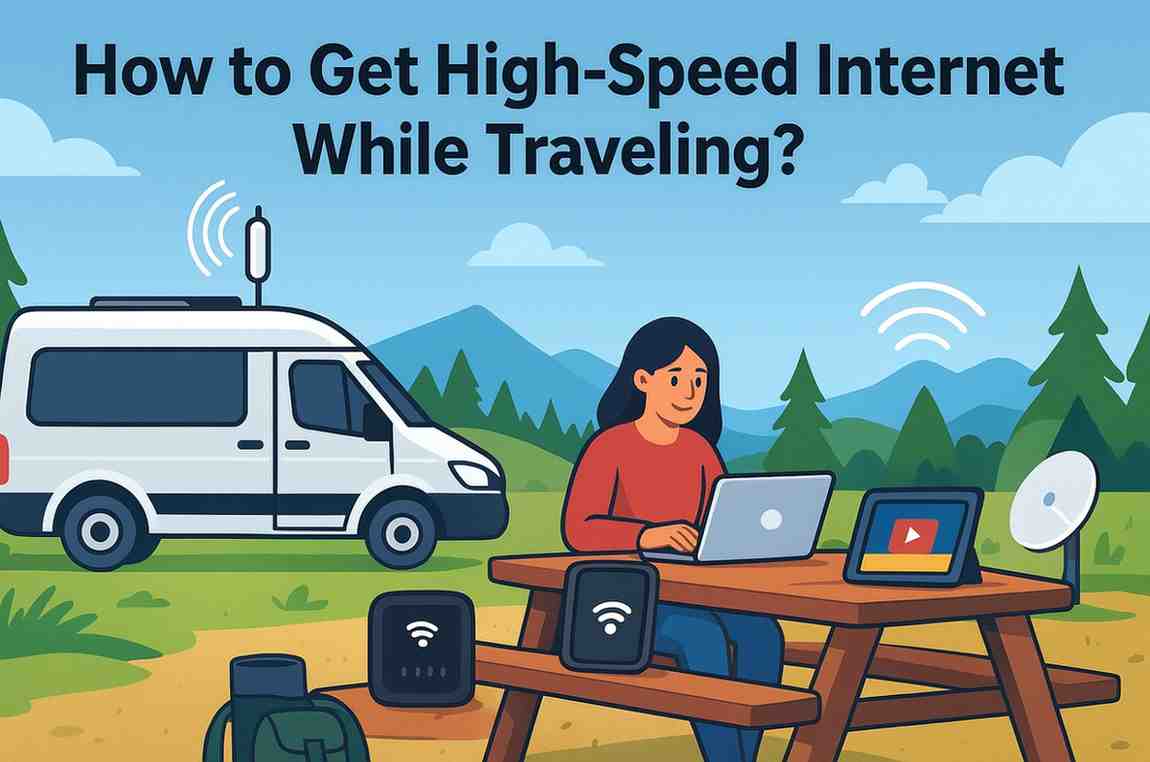
You’re halfway through a road trip. The scenery is perfect, and your playlist is great. Then, your internet drops. Your GPS stops updating, your emails won’t load, and your video call freezes. Whether you’re traveling for work, camping in a remote area, or exploring new states in your RV, staying connected can be unpredictable and frustrating.
If you’ve ever wondered how to get high-speed internet while traveling without relying on unreliable public Wi-Fi or waiting for your phone to find a signal, this guide is for you. Here’s how to stay connected no matter where the road takes you.
Travel often places you in areas with inconsistent coverage. Cities may have excellent 4G and 5G connections, but rural areas, deserts, mountains, and national parks often have weak or no signal at all. Campgrounds might provide Wi-Fi, but it usually ends up being slow and overcrowded.
Because of these challenges, figuring out the best internet options while traveling is crucial. The good news is that there are several solutions, each with different advantages, so you can create a setup that fits your travel style.
A mobile hotspot is one of the easiest ways to access high-speed internet on the road. By sharing your phone’s data connection or using a dedicated hotspot device, you can get internet access almost anywhere your carrier has coverage.
Dedicated hotspot devices usually perform better than phone hotspots because they come with stronger antennas and larger batteries.
Perfect For:
Short trips, casual browsing, city-to-city travel, and lightweight remote work.
For frequent travelers or RV owners, a cellular router offers more stability than a basic hotspot. Companies like UbiFi, Pepwave, and MOFI provide routers that capture strong 4G LTE or 5G signals and share them among multiple devices in your camper or RV.
This is one of the best internet options for traveling, especially for full-time RVers, digital nomads, and those on long road trips.
Perfect For:
Remote work, camping, long-term RV travel, and multi-device households.
Public Wi-Fi is common in cafés, airports, hotels, libraries, and RV parks. While it’s tempting to use because it’s free, it’s rarely reliable.
Public Wi-Fi should be a backup option, not a primary solution.
Perfect For:
Quick tasks like checking emails or downloading maps.
If you’re camping far from civilization or exploring areas without cellular coverage, satellite internet becomes essential. It allows you to connect in places where no tower signals reach.
Satellite is best when you’re truly off the grid and still need connectivity.
Perfect For:
Boondocking, remote wilderness camping, and extreme travel.
Sometimes, you may have a cellular signal, but it’s barely usable. A signal booster takes that weak connection and strengthens it to increase your internet speeds.
Boosters pair well with routers and hotspots, providing a smoother experience wherever you go.
Perfect For:
Rural highways, remote towns, forest areas, and RV camping.
Many campgrounds advertise free Wi-Fi, but don’t expect fast speeds.
If you need reliable internet daily, campground Wi-Fi shouldn’t be your main choice.
Perfect For:
Basic browsing or backups when other options fail.
There’s no perfect one-size-fits-all answer, but here’s a simple breakdown:
Mobile hotspot or dedicated hotspot device: Great balance of convenience and performance.
Cellular router + signal booster: Stable, strong, and ideal for long trips or remote work.
Satellite internet: Necessary when cellular networks aren’t available at all.
Phone hotspot: Simple and works well in urban or suburban areas.
Your choice depends on how often you need connectivity and where your adventures take you.
If you want to get Wi-Fi in a camper, here are your strongest choices:
Most travelers combine at least two of these options for more reliable connectivity.
Coverage is key when traveling long distances. The best networks for cross-country travel typically include:
Many cellular routers (including some used with UbiFi) support multiple networks for better reliability across the country.
To ensure you can always get high-speed internet on the road, try these simple strategies:
These small steps can make a huge difference during long-distance travel.
Staying connected while traveling doesn’t have to be stressful. With the right tools mobile hotspots, cellular routers, boosters, or satellite internet you can easily access high-speed internet wherever your travels take you. Whether you’re planning a weekend trip, driving cross-country, or living on the road, choosing the setup that fits your travel lifestyle is key for a smooth online experience.
With these strategies, you can work, stream, navigate, and stay connected, even in unexpected places.
The best way to get internet while traveling is to use a mobile hotspot or a dedicated cellular router. These options provide reliable speed and wide coverage using 4G or 5G networks. Adding a signal booster improves performance in low-signal areas.
You can get Wi-Fi in your camper by installing a cellular router, using a mobile hotspot, or adding a signal booster for extra stability. Many travelers also keep satellite internet as a backup option. This helps ensure you stay online, even when cellular signals fade in remote areas.
For long road trips, cellular-based internet, such as 4G/5G hotspots and routers, offers the best mix of speed, reliability, and coverage. These devices work along most major travel routes across the country and allow multiple devices to connect without slowing down your trip.
Yes, satellite internet works well for camping, especially in remote areas where cellular service is not available. It may not always be necessary for everyday road trips, but it’s a valuable backup. Keep in mind that setup time and equipment requirements can vary by provider.
AT&T, Verizon, and T-Mobile are generally regarded as the best networks for cross-country travel. Each provides strong nationwide coverage and fast data speeds, depending on your route. Checking a coverage map before you travel helps you choose the right carrier for your needs.

© 2025 Crivva - Hosted by Airy Hosting Managed Website Hosting.