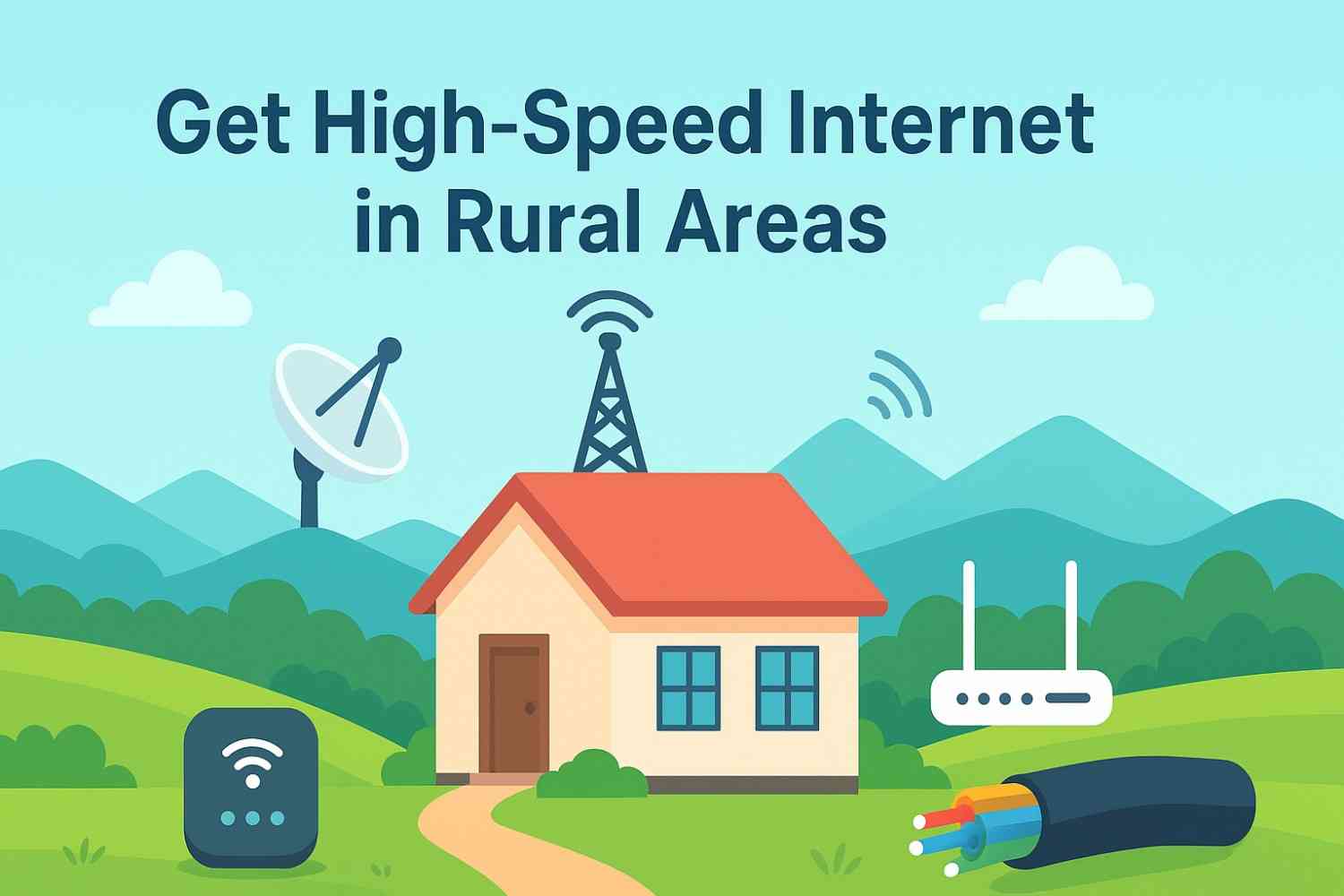
Living in a rural area has its advantages: peace, space, nature, and a slower pace of life. However, internet access can be a challenge. If you’ve ever tried to stream Netflix, upload work files, or join a video call only to see the loading wheel spin endlessly, you are not alone.
So, how can you get high-speed internet in rural areas where cable or fiber isn’t available? Thankfully, new technology and expanding coverage mean rural residents now have more choices than ever before.
Let’s look at how you can finally enjoy fast, reliable high-speed internet in rural areas, no matter how far you live from town.
Despite advancements in broadband and mobile technology, many rural communities still face slow or unreliable internet. The reasons are straightforward:
But here’s the good news. Solutions like 5G, LTE, satellite, and fixed wireless are bridging that digital gap more quickly than ever.
If you live in an area with 5G coverage, this might be the fastest and easiest option available.
How it works: 5G home internet uses nearby cell towers to deliver broadband directly to your router. It’s wireless, easy to install, and doesn’t require phone lines or underground cables.
What to expect:
Top providers:
Pro tip: If your phone already gets a solid 5G signal, your home internet likely will too.
Before 5G, 4G LTE was the backbone of rural internet, and it’s still one of the most dependable options.
How it works: It connects to 4G LTE cell towers with a specialized router and SIM card. It’s similar to mobile data but is optimized for home networks.
Why it’s great for rural areas:
Typical speeds: 25–100 Mbps depending on your distance from towers.
Popular LTE providers: UbiFi, Nomad Internet, and other regional ISPs that partner with major carriers like AT&T, Verizon, and T-Mobile to provide service to underserved areas.
Real-world tip: If your mobile phone gets a good LTE signal at home, chances are LTE internet will work well too.
Fixed wireless connects traditional wired and mobile broadband. It’s fast, reliable, and ideal for small towns or rural areas.
How it works: Your provider installs a small antenna on your home, which connects to a nearby tower. Unlike mobile LTE, this uses dedicated wireless frequencies for better stability.
Why it works well:
Average speeds: 25–250 Mbps, depending on your provider and terrain.
Top providers: Rise Broadband, Nextlink, and local cooperatives often serve rural regions.
Tip: Make sure your home has a clear line of sight to the tower for best results.
If you live off the grid, satellite internet can be a lifesaver. It’s available almost anywhere, even in places without cell coverage.
How it works: A dish on your roof communicates with satellites in orbit to provide broadband access.
Pros:
Cons:
Top satellite providers:
Best for: Remote homes, farms, or cabins where no other internet type is possible.
You may be surprised to learn that some rural communities already have access to DSL or fiber internet through local cooperatives or state broadband initiatives.
DSL (Digital Subscriber Line): Uses existing telephone lines, providing speeds of 10–100 Mbps. It’s reliable and affordable if it’s available near you.
Fiber: The best option for the internet offering ultra-fast, stable connections ideal for households with many users. Speeds can exceed 1 Gbps.
Tip: Check your ZIP code on provider websites like Frontier, CenturyLink, or Windstream to see if DSL or fiber is expanding in your area.
In some remote areas, the best setup combines multiple internet sources for redundancy. For example:
This approach ensures you’re always connected — even if one network goes down.
With so many choices, here’s how to find the best one for your needs:
Even the best connection can perform better with a few simple tweaks:
Getting high-speed internet in rural areas used to seem impossible, but that is changing. Thanks to 5G, LTE, fixed wireless, and improved satellite technology, rural homes can now enjoy fast, stable, and affordable internet.
Whether you’re working remotely, streaming movies, or staying in touch with family, there’s a solution that fits your lifestyle and location. The key is understanding your options, checking coverage, and choosing the technology that suits your needs.
With a bit of research and the right setup, you can stay connected anywhere from the countryside to the cabin.
The best rural internet options include 5G, 4G LTE home internet, fixed wireless, satellite, and DSL or fiber if available. The right choice depends on your location and signal strength.
Yes! Satellite services like Starlink offer coverage almost anywhere, while LTE and fixed wireless can deliver strong speeds if cell towers are within range.
Generally, yes. 5G has faster speeds and lower latency than satellite, making it ideal for streaming, video calls, and online gaming, assuming you are within 5G coverage.
You can add a signal booster or external antenna, reposition your router, or use Wi-Fi extenders. Upgrading to a higher-tier plan can also improve consistency and speed.
Reliable providers include T-Mobile Home Internet, UbiFi, Starlink, Rise Broadband, and Nextlink, depending on your region. Always check local coverage before choosing a plan.

© 2025 Crivva - Hosted by Airy Hosting Managed Website Hosting.