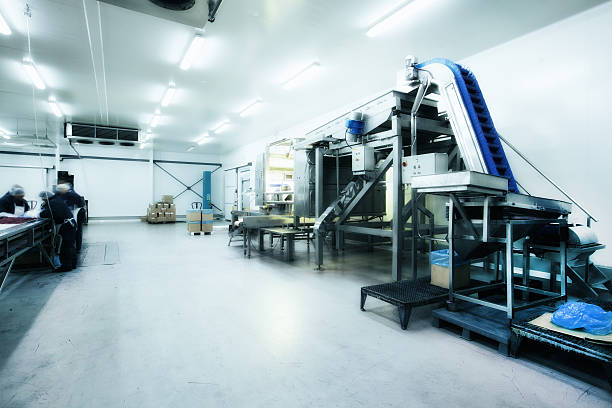
Getting a food factory layout right matters more than most people realise. Walk into a poorly planned facility and you’ll see it immediately. Staff moving in circles. Products sitting too long between stations. Cleaning crews struggling to reach every corner. Temperature zones bleeding into each other. These aren’t small problems that you fix with better management. They’re built into the walls.
A good factory layout does the opposite. Materials flow in one direction. Staff can do their jobs without getting in each other’s way. Cleaning happens fast and thoroughly. Equipment sits where it makes sense. Production runs smoothly because the building itself supports the work instead of fighting it.
This guide walks through the essential principles of food factory layout design and shows you what separates facilities that perform well from ones that create constant headaches.
Every food manufacturing facility has a basic flow. Raw materials come in one end. Finished products leave from another. Everything in between needs to happen in a logical sequence without materials or people crossing paths unnecessarily.
The biggest mistake in factory layout design is trying to fit the process into an available building instead of designing the building around the process. When you force a linear production process into a square room you end up with bottlenecks and backtracking.
Map your entire production process before you even think about walls and doors. Document every step from receiving raw ingredients through packaging finished goods. Note which steps require temperature control. Mark where quality checks happen. Identify points where materials wait between processes.
This process map becomes your foundation. The physical layout should make this flow as smooth and direct as possible.
Food safety regulations require clear separation between areas where raw materials arrive and areas where finished products are prepared. Cross-contamination happens when these zones aren’t properly isolated.
Your layout needs physical barriers between different hygiene zones. This usually means separate rooms with different access points and different air handling systems. Staff shouldn’t walk directly from raw material handling into finished product areas without changing clothes and going through hygiene stations.
Think about your specific products and processes when planning these zones:
Each zone needs its own traffic pattern. Ingredients move forward through the process. Staff access points should reinforce the separation rather than create shortcuts that bypass hygiene controls.
Cleaning a food factory isn’t an afterthought. It’s a daily requirement that takes significant time and labour. Your layout either makes this easier or makes it nearly impossible.
Floors need proper drainage with falls toward collection points. No flat areas where water pools. No corners that are hard to reach with hoses and squeegees. Equipment should sit on legs or plinths that allow cleaning underneath rather than flush against floors where dirt accumulates.
Wall and floor junctions need coved edges rather than sharp corners where bacteria can hide. Ceiling heights should accommodate the equipment and still leave room for proper ventilation and lighting without creating ledges where dust settles.
Think about where your cleaning equipment will be stored and where your wash-down points need to be. A well-designed facility has hose reels and cleaning stations positioned so staff can reach every area without dragging hoses across production zones.
Many food processes require specific temperatures at different stages. Your layout needs to account for this without wasting energy or creating food safety risks.
Group similar temperature zones together when possible. If you have three different cold storage areas keep them adjacent to each other rather than scattered across the building. The same principle applies to cooking areas and ambient storage.
Pay attention to what happens between temperature zones. Products moving from cold storage to ambient processing need a controlled transition. Staff moving between zones need airlocks or vestibules that prevent warm air from flooding into cold rooms every time someone opens a door.
Consider the external environment too. Loading docks that expose your facility to outside air need to be designed with fast-acting doors or air curtains. Cold rooms located on external walls need extra insulation. Cooking areas that generate heat need adequate ventilation so they don’t overwhelm your air conditioning in other parts of the building.
Your production volume today probably won’t be your production volume in five years. Your product mix might change. New equipment might become available. Food safety regulations might evolve.
A layout that’s perfectly optimised for today’s operation but has no flexibility becomes a constraint on your business. Build in some extra space where it matters most. This usually means making your main processing areas slightly larger than current needs require and ensuring your utility systems have capacity beyond today’s demand.
Think about where you might add equipment later. Leave space near production lines for additional stations. Make sure your electrical panels and water supplies can handle expansion without major reconstruction.
The cost of building a bit more space now is far less than the cost of trying to shoehorn new equipment into an already tight layout five years down the line.
Production space gets most of the attention in layout planning but support areas matter just as much. Staff facilities, maintenance workshops, quality control labs and storage all need proper space and positioning.
Your staff need adequate facilities. Changing rooms with enough lockers for peak shifts. Toilets positioned so workers don’t have to walk through production areas. Break rooms that actually give people a place to rest. These spaces affect morale and regulatory compliance.
Maintenance needs workshop space with tools and spare parts. Quality control needs lab space with proper benches and equipment. Offices need to be positioned where managers can see production without being in the way.
Storage areas often get squeezed into leftover space but this creates problems. Ingredients sitting in the wrong environment. Packaging materials getting damaged. Cleaning supplies mixed with food ingredients. Plan proper storage from the beginning with appropriate conditions for each material type.
People move through your factory in different patterns. Production staff follow the process flow. Maintenance workers need access to equipment. Quality inspectors need to reach sampling points. Visitors and auditors need to observe without disrupting production.
Your layout should accommodate all these traffic patterns without them interfering with each other. This usually means having separate circulation routes for different purposes.
Production staff need clear paths between their work stations and facilities. Forklift traffic needs wide corridors with good sight lines at intersections. Maintenance access to equipment shouldn’t require walking through active production areas.
Think about where deliveries arrive and where finished goods ship from. Can lorries access loading docks without blocking each other? Is there enough space for vehicles to manoeuvre? Do drivers have somewhere to wait that isn’t in the production area?
Many food manufacturers produce multiple products or run different recipes through the same facility. Your layout needs to handle this variety without requiring major changes every time you switch products.
Modular equipment arrangements work better than fixed installations when you need flexibility. Production lines that can be reconfigured for different products give you options that permanent installations don’t.
Consider how you’ll handle changeovers between products. Where will you store the equipment and ingredients for each product when they’re not in use? How will you clean and sanitise between runs? Do you need separate production lines for different allergen profiles?
The answers depend on your specific products and business model but these questions need to be asked during layout design rather than after construction is complete.
Food factory layout isn’t something you figure out as you go. Small decisions about room sizes, door placements and equipment positioning have long-term consequences that are expensive or impossible to fix later.
Professional designers who specialise in food manufacturing facilities understand the regulations, the operational requirements and the practical challenges. They’ve seen what works and what doesn’t across many different projects.
At Oakley Food Projects we’ve designed food manufacturing facilities for businesses of all sizes across different food sectors. The layout work happens before construction starts because that’s when you have the most freedom to get things right.
A well-designed food factory layout isn’t the most exciting part of starting or expanding a food business but it’s one of the most important. The layout determines how efficiently you can operate, how easy it is to maintain food safety and how much flexibility you have for future growth.
Take the time to plan properly. Map your processes thoroughly. Think through the details of how work will actually happen in the space. Consider cleaning, temperature control and traffic patterns from the beginning rather than trying to bolt them on later.
The factories that run smoothly aren’t lucky. They’re well designed. The investment in proper layout planning pays returns every single day through easier operations, lower costs and fewer headaches.
Whether you’re building a new facility from scratch or renovating an existing space, getting the layout right sets the foundation for everything else. Rush this part and you’ll spend years working around problems that could have been prevented. Do it properly and you’ll have a facility that supports your business instead of constraining it.
Visit Oakley Food Projects for: Food Factory Layout Design

© 2025 Crivva - Hosted by Airy Hosting Managed Website Hosting.