

Have you ever visited a website, looked at a product, and then suddenly started seeing ads for that same product on Facebook, Instagram, or YouTube? That is not a coincidence. It is called retargeting.
Retargeting is one of the most powerful strategies in digital marketing because it helps businesses reconnect with people who already showed interest in their products or services. Most website visitors do not buy something on their first visit. They may get distracted, compare prices, or simply need more time before making a decision.
This is where retargeting becomes important. It reminds people about your business and encourages them to come back. For beginners, learning how retargeting works in digital marketing can help increase conversions, sales, and brand awareness without spending huge amounts of money.
In this guide, you will learn exactly how retargeting works, why it matters, and simple ways to use it effectively.
Retargeting is a type of online advertising that shows ads to people who previously visited your website or interacted with your business online.
For example, imagine someone visits your online clothing store and checks out a pair of shoes but leaves without buying. Later, while scrolling through Instagram or reading a blog, they see an ad showing those same shoes. That is retargeting in action.
Retargeting works because it focuses on people who already know your brand. These visitors are often more likely to return and become customers compared to completely new audiences.
Most people do not buy during their first website visit. Studies often show that many visitors leave without taking action. Without retargeting, those visitors may never come back.
Retargeting helps businesses by:
Instead of constantly searching for new customers, retargeting helps you reconnect with people who already showed interest.
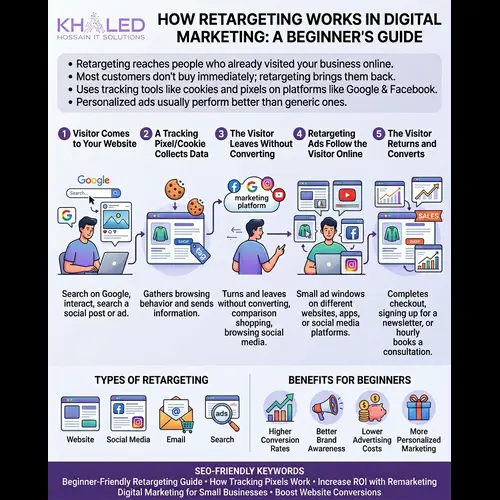
Understanding the process is easier than most beginners think. Retargeting follows a few simple steps.
A person may find your website through:
They visit your website and explore your products, services, or content.
When the visitor lands on your website, a small piece of code called a tracking pixel or cookie collects information about their visit.
Popular examples include:
This technology helps advertising platforms recognize visitors later.
Do not worry. Retargeting does not usually collect private personal details like passwords or credit card information. It mainly tracks browsing behavior.
This happens all the time. A visitor may:
Without retargeting, the business might lose that visitor forever.
Now the magic happens. The visitor starts seeing ads related to your business while browsing other websites or social media platforms.
These ads may appear on:
The goal is simple: remind the visitor to return.
After seeing the ads several times, the person may finally decide to:
This completed action is called a conversion.
Retargeting comes in different forms. Beginners should understand the main types.
This is the most common form. Ads are shown to people who visited your website but did not convert.
Platforms like Facebook and Instagram allow businesses to retarget users who interacted with posts, videos, or ads.
Sometimes people abandon shopping carts or stop during signup. Email retargeting sends follow up reminders encouraging them to return.
This strategy targets people based on search behavior and interests, even if they never visited your website directly.
Retargeting offers many advantages for small businesses and beginners.
People who already know your brand are more likely to buy than completely new visitors.
Even if users do not buy immediately, repeated exposure helps them remember your business.
Retargeting often costs less than finding brand new customers because the audience is already interested.
You can show ads based on products or pages visitors viewed before.
Retargeting gently guides people back to your website when they are ready to take action.
Using retargeting correctly makes a big difference.
Not all visitors are the same. Someone who visited your pricing page is different from someone who only read a blog post.
Create separate audiences for different behaviors.
Show products or services users already viewed. Personalized ads usually perform much better.
Showing the same ad too many times can annoy people. Keep your ads visible but not overwhelming.
Good retargeting ads clearly tell users what to do next.
Examples include:
Special offers can encourage visitors to return faster.
Simple examples include:
Beginners often make a few common mistakes.
Different visitors need different messages.
Many people browse on phones. Make sure ads and landing pages work well on mobile devices.
Boring ads get ignored. Use clear and engaging messages.
Too many ads can damage your brand image.
Always monitor clicks, conversions, and return on investment.
Yes, absolutely.
Retargeting is one of the best marketing strategies for small businesses because it focuses on people who already showed interest. This makes advertising more efficient and affordable.
Beginners can start with small budgets and still see good results. Even spending a few dollars per day can help bring back valuable visitors.
The key is to test different ads, audiences, and offers over time. Small improvements can lead to much better conversion rates.
Now you understand how retargeting works in digital marketing. It is a smart strategy that helps businesses reconnect with website visitors who left without taking action.
Instead of losing potential customers, retargeting reminds them about your brand across social media, websites, and online platforms. This increases visibility, builds trust, and improves conversions over time.
For beginners, retargeting is a powerful way to grow a business without needing a huge advertising budget. Start simple, track your results, and improve your campaigns step by step.
Sometimes people only need a small reminder before becoming loyal customers. Retargeting gives your business that second chance.
Retargeting in digital marketing is a strategy that shows ads to people who have already visited your website or interacted with your content online. It helps businesses reconnect with interested visitors and encourage them to return and take action.
Retargeting works by placing a tracking pixel or cookie on a visitor’s browser when they visit your website. After they leave, advertising platforms like Google or Facebook show your ads to them on other websites, apps, or social media platforms.
Retargeting is important because most visitors do not buy during their first visit. It keeps your business visible, builds trust through repeated exposure, and increases the chances of converting visitors into customers.
Popular retargeting platforms include Google Ads, Facebook Ads, Instagram Ads, LinkedIn Ads, and YouTube Ads. The best platform depends on where your target audience spends most of their time online.
No, retargeting can be very cost effective for small businesses because it targets people who already showed interest in your business. Since these audiences are warmer, retargeting campaigns often produce better conversion rates at lower advertising costs.
A digital marketer analyzing retargeting ads on a laptop screen, showing website visitors returning through Facebook, Google, Instagram, and YouTube ads, with customer journey arrows, conversion charts, and remarketing audience icons visible, modern office workspace, realistic style, bright lighting, clean professional atmosphere, beginner friendly digital marketing concept

© 2025 Crivva - Hosted by Airy Hosting Managed Website Hosting.