

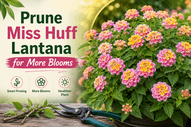
Miss Huff Lantana should be pruned in late winter or early spring before strong new growth begins. For established plants, cut old, dead, or woody stems back to about 6–12 inches from the ground to encourage fresh, bushy growth and more flowers. During summer, light tip pruning can help keep the plant compact and support repeat blooming.
Avoid heavy pruning in fall, as it may push tender new growth that could be damaged by cold weather. The goal is simple: remove old growth at the right time, shape the plant lightly during the growing season, and give it the sun, drainage, and care it needs to bloom well.
In this guide, you will learn when to prune Miss Huff Lantana, how much to cut back, how to prune for maximum blooms, summer trimming tips, common mistakes to avoid, and after-pruning care for healthier flowers.
Miss Huff Lantana is a hardy, woody perennial lantana known for its bright clusters of orange, yellow, coral, and pink-toned flowers. Gardeners love it because it brings long-lasting color to sunny landscapes and attracts butterflies, bees, and other pollinators.
Also called lantana miss huff, this plant grows quickly in warm climates and can become large, woody, and open if not pruned properly. Because of its colorful blooms and strong garden presence, it is often used in borders, sunny beds, slopes, pollinator gardens, and mixed landscaping.
Miss Huff Lantana is not usually considered a true native plant in the United States, but many gardeners searching for native plants near me or a colorful native shrub alternative may still consider it for sunny, pollinator-friendly garden areas. It works especially well when paired with regionally suitable plants that support local wildlife.
The best time to prune Miss Huff Lantana is late winter or early spring, before active new growth starts. This is the main pruning season, especially for established plants that have become woody or overgrown.
In late winter or early spring, remove dead, damaged, or woody stems. If the plant is mature, cut it back to about 6–12 inches from the ground. This helps the plant restart with fresh shoots when warm weather returns.
The danger of hard frost should have passed in colder areas. If you prune too early and cold weather returns, new tender growth may suffer damage.
Summer pruning should be light. If your lantana flowering plant becomes leggy, trim the soft tips to encourage branching. You can also remove spent flower clusters if the plant is producing berries or seed heads.
Do not cut too much during extreme summer heat. Heavy summer pruning can remove flowering tips and temporarily reduce blooms. A light trim is enough to keep the plant neat and encourage repeat flowering.
Avoid cutting Miss Huff Lantana hard in the fall. Heavy fall pruning can encourage tender new growth just before winter. That new growth may be damaged by frost or cold weather.
In colder zones, it is often better to leave the old stems through winter and do the main pruning in late winter or early spring. The remaining stems can help protect the plant’s crown.
For established plants, cut Miss Huff Lantana back to about 6–12 inches in late winter or early spring. This helps remove old woody growth and encourages new stems that can carry more flowers.
Always remove:
Before pruning, prepare your tools so the job is clean and easy.
You may need:
Before you start pruning, look closely at the plant. Check for dead stems, frost damage, new shoots, weak growth, and crowded branches.
Do not cut unthinkingly. A quick inspection helps you understand how much pruning the plant really needs.
Identify dead, broken, or frost-damaged stems and remove them. Cut these stems back to healthy wood near the base.
This step gives the plant more space for fresh spring growth and improves its overall shape.
For mature Miss Huff Lantana, cut old stems back to about 6–12 inches from the ground in late winter or early spring. If you can see healthy nodes or new shoots, make your cuts just above them.
This encourages strong new shoots. Since new growth usually produces the best flowers, this step is important for maximum blooms.
After cutting back the main stems, remove crossing or crowded branches. Open the center of the plant slightly so air can move through the stems.
Good airflow can help reduce disease problems and support healthier growth. Do not over-thin the plant. Lantana should still regrow into a full, rounded shape.
During summer, trim only when needed. If the plant becomes tall, loose, or leggy, lightly trim the tips.
Light shearing can encourage branching and help the plant stay compact. Avoid cutting deeply into old woody stems during summer, as this can slow blooming.
Deadheading is not always required, but it can help if your plant is producing many berries or seed heads. Remove old flower clusters just above the first healthy set of leaves.
This may help the plant allocate more energy to new flowers rather than to seed production. Some lantana varieties are more self-cleaning so that they may need less deadheading.
Pruning helps Miss Huff Lantana bloom better by removing old, woody stems and encouraging new growth. New shoots create more flowering tips, and more flowering tips usually mean more blooms.
Light pruning also keeps the plant bushy instead of tall and leggy. When the plant has a fuller shape, it can create a stronger flower display in the garden.
After pruning, water deeply if the soil is dry. Add mulch around the root zone to help conserve moisture, but keep it away from the plant’s crown.
Place or grow Miss Huff Lantana in full sun. For strong flowering, full sun is essential. Avoid soggy soil because lantana prefers well-drained conditions.
Do not use too much nitrogen fertilizer. Nitrogen can promote leafy growth rather than flower growth. A well-growing plant may not require much fertilizer.
Container-grown Miss Huff Lantana may need more frequent shaping than plants in the ground. Trim leggy stems during the growing season to keep a rounded shape.
Do not cut container plants too hard during the summer. A light trim is usually enough. After pruning, do not allow the potting mix to dry out completely, especially in hot weather.
Use this simple pruning schedule:
Pruning helps, but growing conditions matter too. For maximum blooms, give Miss Huff Lantana full sun and well-drained soil.
This plant is a strong option for gardeners seeking colorful outdoor plants, the best flowers for gardens in the USA, or a bright lantana for sunny spaces. It can handle heat better than many flowering plants once established, but young plants still need regular watering. If you are looking for lantana plants for sale, choose healthy plants with strong stems, fresh leaves, and no signs of pests or disease.
When pruned at the right time and afterward, Miss Huff Lantana blooms best. The main pruning should be done in late winter or early spring, while summer trimming should stay light. Remove dead stems, cut back old woody growth, shape leggy tips, and avoid heavy fall pruning.
With full sun, well-drained soil, careful watering, and smart pruning, Lantana miss huff can become a colorful, pollinator-friendly plant for sunny garden beds, borders, slopes, containers, and front yard landscaping.

© 2025 Crivva - Hosted by Airy Hosting Managed Website Hosting.