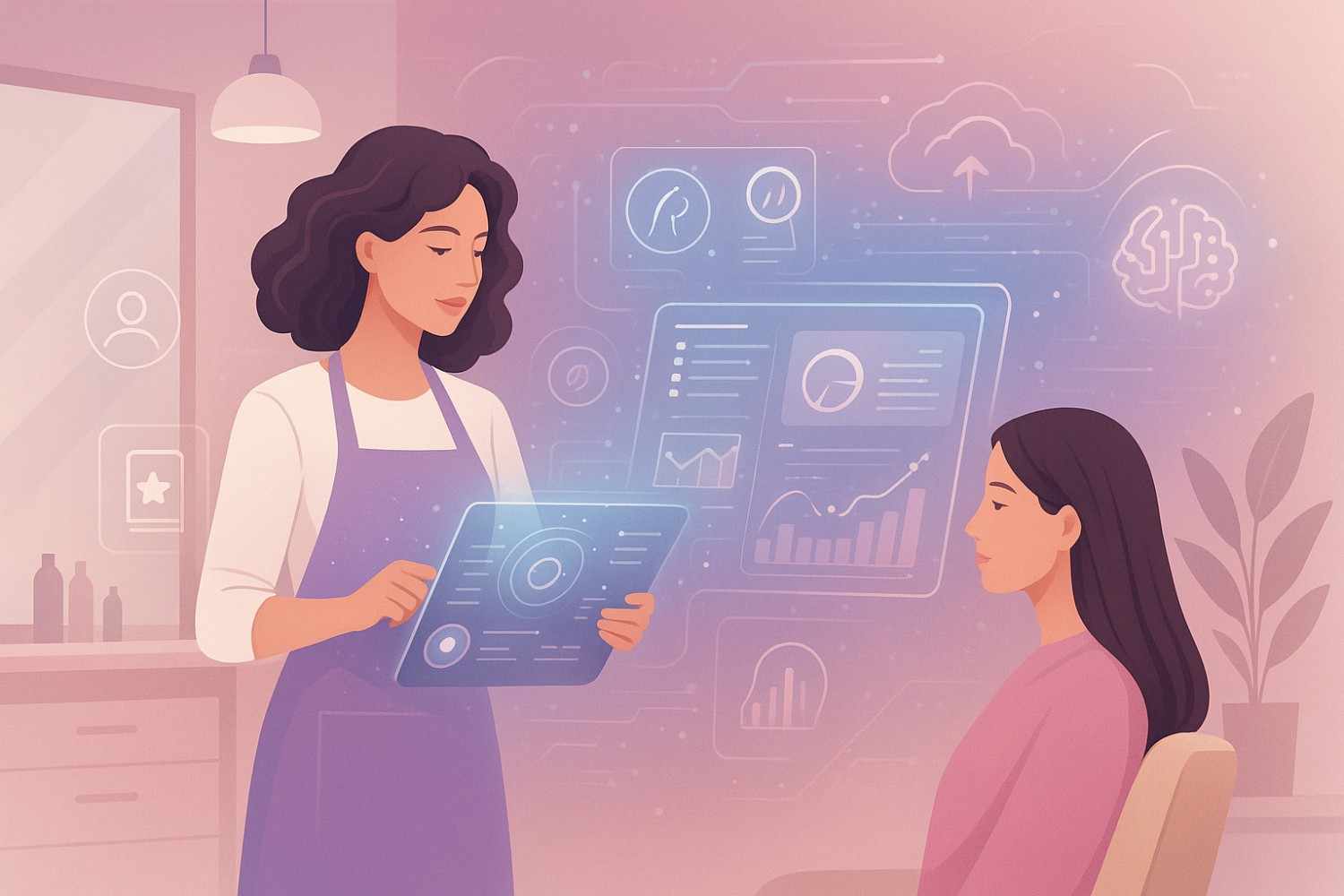
The beauty industry is changing. Clients no longer want the same service as everyone else. They expect personal care that fits their unique needs. This change is powered by data and smart technology. Now, salons of any size can offer personalized services to many clients at once.
Salon owners can use client information to improve their business. This information helps make clients happier, more loyal, and increases profits. This allows them to predict what a client will need next and offer very personalized services.
What Is Hyper-Personalization in the Beauty & Salon Context
Normal personalization means using a client’s name or suggesting a product they bought in the past. Hyper-personalization does more. It uses the client’s history, likes, details, and even what they are doing right now. This creates a special and unique experience for them.
For example, using a cloud-based CRM for salons to track a client’s information. It can remember their skin type, past treatments, and what products they buy. This lets stylists give better advice. They can recommend services and products that are perfect for the client. They can also suggest things at the right time. For example, they can suggest a hydrating facial before summer. Or they can recommend a keratin treatment just before the wedding season.
In beauty, hyper-personalization changes everything. It moves beyond standard service packages. Instead, it delivers unique services for each client. This makes clients feel understood and valued. It shows them you see them as an individual, not just another customer.
Data Types & Sources Salons Can Use
Personalization depends on the quality and range of data collected. Salons can tap into several key sources:
- Transactional Data – Looking at a client’s past services, how often they visit, and how much they usually spend helps you understand their habits.
- Behavioral Data – It helps to see how clients react to your emails, sales, and special offers..
- Demographic Data – A client’s age, gender, lifestyle, and where they live help you group them. This allows you to create marketing campaigns that are targeted to them..
- Feedback & Reviews – Online reviews, star ratings, and surveys after a service show what clients like. They also show what you can do better.
- Zero- and First-Party Data – You can get important information directly from clients. They tell you during consultations or when they sign up. This includes details like their allergies or what time they prefer for appointments.
A client management system helps salons keep all their client information in one place. It organizes client records so they are not lost or scattered. This helps the staff give every client a consistent and personalized experience..
The Technology Enabling Hyper-Personalized Experiences
This is a quick comparison to show how these solutions are different. Technology turns raw data into useful information. For salons, the most helpful tools are:
|
Tool/Feature
|
Primary Function
|
Personalization Benefit
|
Best For
|
|
Salon CRM Software
|
Centralized client management, history tracking
|
Tracks preferences, service history, and notes
|
Small to mid-size salons wanting detailed records
|
|
Online Salon CRM
|
Digital booking and client interaction
|
Captures real-time data at booking and feedback
|
Salons aiming for seamless client-facing experiences
|
|
Cloud-Based CRM for Salons
|
Data storage and access from anywhere
|
Enables multi-location personalization with secure access
|
Growing salons with multiple branches or remote teams
|
This table shows that all three tools help with personalization. However, they are each good at different things. They capture and use client data in different ways.
Use Cases: How Salons Are Applying Data for Personalization
Here are practical examples of how data-driven insights transform client experiences:
- Customized Service Recommendations – A stylist can use the salon software to see a client’s past treatments. This helps them suggest the right services. For example, if a client often colors their hair, the system can suggest a conditioning treatment. It can also recommend special products for Hair coloring.
- Predictive Scheduling & Loyalty Programs – Salons can use past data to guess when a client might want to book again. They can then send automatic reminders or special offers. This improves customer retention in salons. It helps salons keep their customers.
- Targeted Marketing Campaigns – Instead of sending the same promotion to every client, use data to send targeted messages. For example, send special facial offers to skincare clients. Send product discounts to clients who get hair treatments. This makes the messages more relevant to each person.
- Inventory Management – Salons can track which products sell best. This helps them stock items that clients actually want to buy. This reduces waste from unsold products. It also helps the salon make more money.
These are a few examples. They show how data can do more than just store information. It can be used to create better experiences for clients.
Benefits for Salons & Clients
For Salons:
- Keep more customers – Send personal messages and offers. This improves customer retention.
- Make more money: Suggest add-ons or products you know your client will like.
- Work more efficiently: Schedule appointments and staff time in a smarter way.
- Make better decisions: Use data to see which services are popular and which are not. This helps you
For Clients:
- A sense of being valued when services are tailored to their needs.
- Time saved by receiving only relevant recommendations.
- Improved results from treatments suited to their skin, hair, or lifestyle.
- A more enjoyable salon experience that strengthens loyalty.
Challenges & Best Practices
While the benefits are clear, implementing personalization comes with challenges:
- Data Privacy & Consent – Always ask for permission to use client data. Be clear about how you will use it. Make sure their information is safe.
- Data Quality – Keep client records complete and up to date. Train your staff to enter information correctly.
- System Integration – Connect all your tools like booking, payment, and emails, so they work together.
- Staff Adoption – Train your team to use the software. Without training, even the best system will not work well.
- Best Practice – Start by collecting basic information, like service history. Later, you can add more details, like predicting what a client might want next.
How AI and Data Are Redefining Personalized Beauty Experiences Globally
AI is changing how the beauty industry gives personalized services worldwide.
- Generative AI can create custom beauty advice for many clients at once.
- Virtual Try-Ons let clients see how a hair color or makeup will look on them before they buy it.
- AI skin and hair analysis checks a client’s condition to suggest the right treatments.
- Smart recommendations offer products and services that match client needs and trends.
Salons can add AI tools to their software. This allows for better personalization. For example, they can offer virtual consultations or smart product suggestions. Big beauty brands already use these tools. Salons can use them too to meet client expectations.
Future Trends: What’s Coming Next in Personalized Beauty
Looking ahead, several trends will continue reshaping personalization:
- Real-Time Personalization: Using live data from wearables or instant feedback during services.
- Deeper Hyper-Personalization: Go beyond basic details like age or location. Use real-life triggers instead. For example, consider a client’s habits or the time of year. You can suggest a hydrating treatment in the summer or a protective style for a client who swims often. This makes your offers more helpful and personal.
- Predictive Analytics: Use data to predict upcoming beauty trends. This helps you guess what your clients will want before they ask for it.
- Wellness Integration: Connect beauty services with wellness information. This covers a client’s diet, sleep, and stress levels. With this, salons can give full care for both beauty and well-being. This approach makes the service more personal and effective for the client.
Salons that use this technology early will stand out. They will use salon software and data analysis to offer better service. This will help them compete successfully
Conclusion
The beauty industry is changing quickly. Personalization is now very important. Data helps salons offer more than just basic services. It helps them create special experiences for each client. Using the right tools, like salon software, salons can gather and use information. This improves how happy clients are and helps the business grow.
Software like Salonist helps salons use data. It makes their work easier and lets them offer personal service. Salon owners should focus on keeping client data safe and investing in good technology. Using data wisely helps build loyal clients, make more money, and create beauty services that clients truly love.