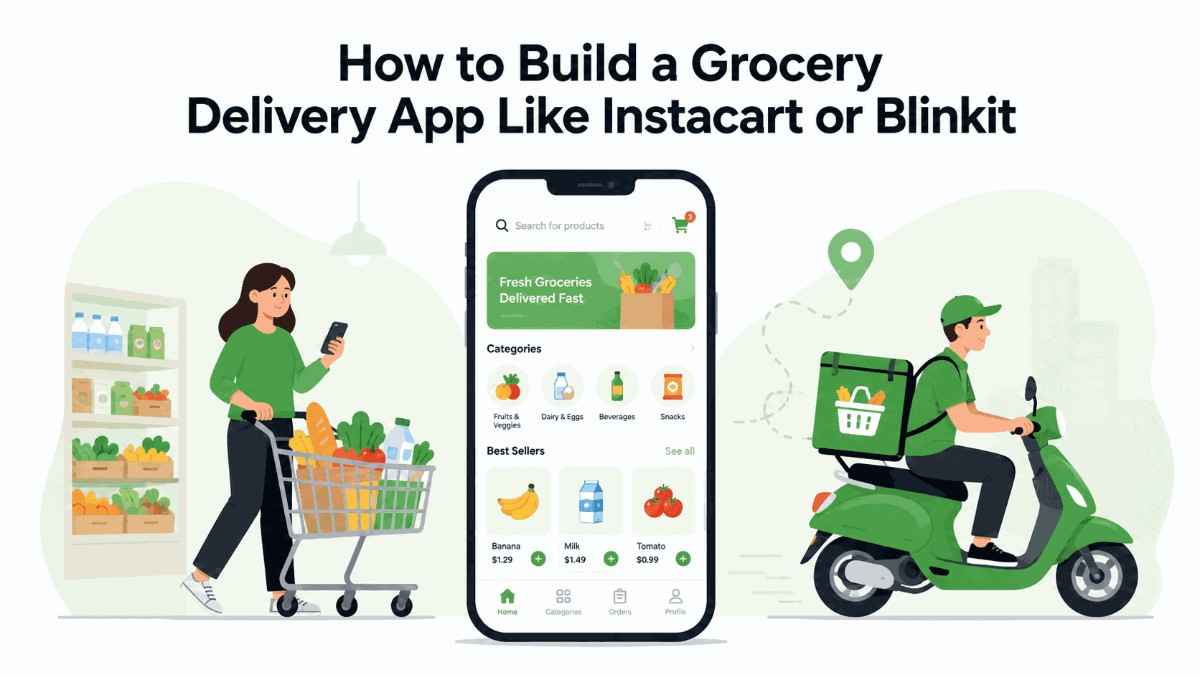
In today’s fast-paced world, grocery delivery apps like Instacart and Blinkit have revolutionized the way consumers shop for their groceries, providing convenience and efficiency at the click of a button. With the increasing demand for online shopping and home delivery services, entrepreneurs are eager to tap into this lucrative market. However, building a successful grocery delivery app requires careful planning, strategic feature selection, and an understanding of user needs. This article will guide you through the essential steps to develop a grocery delivery app that stands out in a competitive landscape, covering everything from market analysis and feature design to technology choices and effective marketing strategies.
The grocery delivery app market is hotter than a jalapeño on a summer day! With more people opting for the convenience of online shopping—thanks in part to the pandemic—this sector is expected to soar in the coming years. Trends show an increasing reliance on mobile apps for grocery shopping, with consumers craving the ability to browse, compare, and purchase from the comfort of their couch. If you’ve been considering entering the grocery delivery arena, now might just be the golden opportunity you’ve been waiting for.
Understanding your audience is crucial—after all, you wouldn’t serve steak at a vegan potluck! Your primary users include busy professionals, parents juggling kids and careers, and tech-savvy millennials who value convenience. Each group has distinct needs, such as quick delivery times, eco-friendly packaging, and a wide selection of products. Cater to these preferences, and you’ll have a loyal customer base faster than you can say “add to cart.”
In the blue corner, we have Instacart, the heavyweight champion that partners with major grocery chains to offer an extensive selection and speedy delivery. And in the red corner stands Blinkit, the nimble contender known for lightning-fast deliveries in urban areas. Instacart boasts a vast network of retail partners and a user-friendly interface, while Blinkit takes pride in its ultra-quick delivery times. Analyzing these competitors can provide valuable insights into what works and what doesn’t, giving you a leg up in this competitive ring.
To keep users coming back, your app should include must-have features like easy product search, personalized recommendations, and a smooth checkout process. Don’t forget about the ability to create shopping lists, filter products by dietary needs, and save favorite items. And for the cherry on top? A mobile-friendly design that keeps the experience seamless across all devices!
Behind every successful grocery delivery app is a robust admin panel that’s as organized as a perfectly stacked pantry. Admins need to track orders, manage inventory, and analyze user behavior like Sherlock Holmes analyzing a crime scene. Additionally, capabilities for customer support, payment management, and promotions can help keep everything running smoothly and your users happy.
Who doesn’t love knowing exactly when their pizza—or in this case, groceries—will arrive? Real-time tracking is no longer just a nice-to-have; it’s a necessity! Integrating GPS tracking allows users to follow their order from the store to their doorstep, reducing those “Where’s my stuff?” anxieties. Plus, it adds a touch of excitement to the waiting game!
Your app’s frontend is where the magic happens—the window through which users will experience your grand vision! Consider using React or Vue.js for a slick, responsive interface. These frameworks are popular, easy to work with, and perfect for creating a seamless user experience. Toss in some CSS frameworks like Bootstrap for styling, and you’ll have an app that looks as good as it works.
When it comes to backend technologies, think of it as the app’s beating heart. Node.js can pump life into your app with its speed and efficiency, while Python or Ruby on Rails can elegantly manage server-side logic. Pairing these with cloud platforms like AWS or Google Cloud can ensure scalability and reliability, keeping your app ready for sudden surges in orders (hello, Friday night pizza rush!).
Choosing the right database is crucial—after all, you need to keep your users’ data safe and accessible without turning into a data hoarder! Relational databases like PostgreSQL or MySQL are great for structured data, while NoSQL options like MongoDB can handle unstructured data with aplomb. As for hosting, consider cloud services like Heroku or DigitalOcean for their flexibility and ease of deployment. It’s like having a cozy home for your app without the chores!
User experience (UX) and user interface (UI) design are the peanut butter and jelly of app development—together, they create something delightful! A well-designed app enhances usability, reduces frustration, and keeps users engaged. Prioritizing intuitive navigation, appealing visuals, and responsive design can turn first-time users into loyal fans who just can’t get enough of your app.
Not all users are created equal—some are busy shoppers, while others are diligent admins! Crafting tailored experiences for different user roles ensures convenience for all. Shoppers benefit from straightforward browsing and purchasing, while admins need a dashboard packed with analytics. Designing with these roles in mind will create a smooth experience that leaves no user behind.
Never underestimate the power of accessibility in app design! A stunning app means nothing if it shuts out users with disabilities. Implementing accessible design features—like screen reader compatibility, keyboard navigation, and adjustable text sizes—ensures everyone can join in on the grocery shopping fun. Remember, inclusivity is just as important as aesthetics, and it broadens your user base. Plus, it’s the right thing to do!
Every developer has faced that dreaded bug that feels like it’s just playing hide-and-seek. Scalability is another common hurdle as you grow; ensure your app architecture can handle user surges, especially during peak hours like weekends or holidays. Good documentation and a strong tech team are your armor against these foes. Embrace cloud services for flexibility and consider implementing analytics tools to monitor performance.
Acquiring users is one thing; keeping them is an entirely different ball game. Utilize push notifications for personalized offers and reminders, and make sure your app remains user-friendly. Regularly introduce new features based on user feedback, and don’t underestimate the power of exceptional customer support. A swift response to queries can turn a one-time user into a faithful shopper!
The grocery market is as unpredictable as your roommate’s late-night snack choices. Stay on top of trends, such as sustainability or subscription services, and adapt your offerings accordingly. Monitor your competitors – not in a stalker way, but to see what they’re doing right (and wrong). Being agile in your approach will keep your app relevant and ahead of the curve. After all, no one wants to be the flip phone in a smartphone world!In conclusion, developing a grocery delivery app like Instacart or Blinkit presents both exciting opportunities and unique challenges. By understanding the market, incorporating essential features, and focusing on user experience, you can create an app that meets the needs of today’s consumers. As you navigate the development process, remember that continuous improvement and adaptability will be key to your app’s long-term success in this dynamic industry. With the right strategies and dedication, your grocery delivery app can thrive and make a significant impact in the market.
The cost of developing a grocery delivery app can vary widely based on factors such as the complexity of features, the technology stack used, and the location of your development team. On average, you can expect costs to range from $20,000 to $200,000 or more.
Essential features typically include user registration and profiles, product search and filtering, shopping cart functionality, secure payment gateways, real-time order tracking, and customer support options. Consider adding features like personalized recommendations and loyalty programs for enhanced user engagement.
To ensure user data security, implement strong encryption protocols, comply with data protection regulations, and use secure payment gateways. Regularly update your app to address vulnerabilities and conduct thorough testing to identify potential security risks.
Effective marketing strategies include leveraging social media advertising, collaborating with influencers, optimizing your app store listing for visibility, and offering promotions or discounts to attract new users. Building a strong online presence and engaging with your community can also enhance brand awareness.

© 2025 Crivva - Hosted by Airy Hosting Managed Website Hosting.