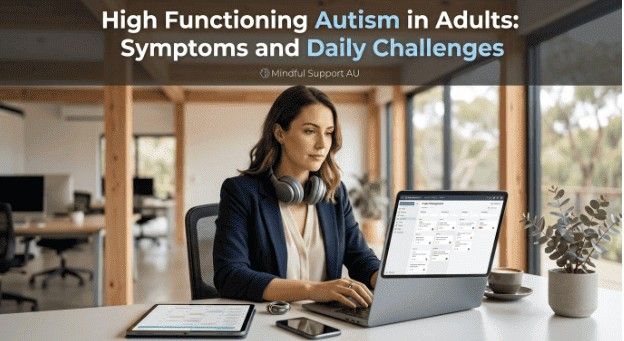
High functioning autism is a commonly used term to describe individuals on the autism spectrum who can live independently but still face meaningful social, emotional, and sensory challenges in everyday life. While not a formal medical diagnosis, it typically refers to people with Autism Spectrum Disorder (ASD Level 1) who require some level of support, particularly in social communication and behavioural patterns.
In Australia, awareness around adult autism especially in telehealth settings is growing rapidly. Many adults go undiagnosed for years, often masking their symptoms or attributing their struggles to personality traits. Understanding high functioning autism is essential for improving quality of life, accessing support, and building meaningful connections.
High functioning autism falls under the broader umbrella of Autism Spectrum Disorder (ASD). It describes individuals who generally have average or above-average intelligence and can manage daily responsibilities such as work and independent living. However, this doesn’t mean they are free from challenges.
In fact, many adults with high functioning autism experience internal struggles that are not always visible to others. These challenges often revolve around communication, emotional regulation, sensory processing, and adapting to change.
It’s important to note that autism is a spectrum, meaning experiences vary widely. What may seem “mild” externally can still be deeply impactful internally.
One of the most prominent signs of high functioning autism is difficulty with social interaction. Adults may struggle to interpret non-verbal cues such as facial expressions, tone of voice, or body language.
They might:
These challenges can lead to misunderstandings and social fatigue, even when the individual genuinely wants to connect with others.
Adults with high functioning autism often interpret language literally. Idioms, metaphors, or indirect communication can be confusing.
For example:
This communication style can sometimes be perceived as blunt or overly direct, especially in workplace or social environments.
A defining trait of high functioning autism is deep, focused interest in specific topics. These interests can be incredibly detailed and long-lasting.
While this can be a strength leading to expertise and career success it may also:
Many adults find comfort and identity in these interests.
Routine plays a crucial role in maintaining emotional stability. Adults with high functioning autism often prefer structured environments and predictable schedules.
Common behaviours include:
Unexpected disruptions can lead to stress or overwhelm, even if they seem minor to others.
Many individuals experience heightened sensitivity to sensory input. This can include:
These sensitivities can make everyday environments like offices or public transport overwhelming and exhausting.
Adults with high functioning autism may experience intense emotional reactions or difficulty managing stress.
This can look like:
Emotional responses may be stronger or last longer than expected, impacting daily functioning.
While symptoms describe traits, daily challenges highlight how those traits affect real life.
In professional settings, challenges often arise due to:
However, many individuals excel in structured roles, especially those requiring focus, accuracy, or technical expertise.
Building and maintaining relationships can be challenging due to communication differences.
Adults may:
Despite this, many desire meaningful connections and benefit from supportive, understanding relationships.
A significant but often overlooked challenge is “masking”the act of suppressing autistic traits to appear neurotypical.
Masking may involve:
While helpful in short-term situations, masking can lead to:
Over time, this can contribute to burnout and mental health concerns.
Executive functioning refers to skills like planning, organising, and time management.
Adults with high functioning autism may find it difficult to:
This can affect productivity and daily life, even in otherwise capable individuals.
Many adults with high functioning autism also experience co-occurring conditions such as:
These challenges often stem from years of misunderstanding, social difficulties, or lack of support.
It’s essential to highlight that high functioning autism is not just about challenges, it also comes with unique strengths.
Many individuals demonstrate:
These strengths can be highly valuable in both personal and professional settings.
Many adults are diagnosed later in life, often after years of feeling “different” without understanding why.
Diagnosis typically involves:
Receiving a diagnosis can be life-changing, providing clarity and access to appropriate support.
Psychological therapies, such as cognitive behavioural therapy (CBT), can help manage anxiety, improve communication, and develop coping strategies.
In Australia, telehealth services have made accessing support more convenient than ever, especially for adults balancing work and personal commitments.
Creating consistent daily routines can reduce stress and improve productivity. Tools like planners, reminders, and digital apps can support organizations.
Simple adjustments can make a big difference:
Learning and practising social communication skills can improve confidence and relationships over time.
Many workplaces in Australia now support neurodiversity by offering:
If symptoms of high functioning autism are affecting your daily life, relationships, or mental health, seeking professional support is essential.
A qualified psychiatrist or mental health professional can:
Platforms like HelloDoc offer convenient telehealth services across Australia, making it easier to access expert care from the comfort of your home.
High functioning autism in adults is often misunderstood because the challenges are not always visible. While individuals may appear independent, they frequently navigate complex social, emotional, and sensory difficulties behind the scenes.
Understanding these experiences is the first step toward creating a more inclusive and supportive environment whether at home, in the workplace, or through healthcare services.
With the right support, self-awareness, and strategies, adults with high functioning autism can lead fulfilling, successful, and meaningful lives.

© 2025 Crivva - Hosted by Airy Hosting Managed Website Hosting.