If you’ve ever tried to build a website and felt lost in a sea of code, plugins, and developer jargon, you’re not alone. For years, the only real option was to invest in custom web design services. While these services were powerful, they weren’t always practical for bootstrapped founders, lean marketing teams, or businesses just starting out. No-code and low-code platforms emerged to change this situation completely. Right now, they’re not just changing it; they’re rewriting it from scratch.
From AI-generated layouts to visual logic builders that compete with real programming environments, these platforms are evolving faster than most people realize. Whether you’re a solo founder, a seasoned marketer, or a developer curious about where the industry is heading, this breakdown will give you a clear and honest look at what’s happening and what’s coming next.
Before looking ahead, it’s important to understand the current situation.
This difference matters because each platform targets a different audience with unique expectations. As the future of web design develops, both types are moving toward something more powerful and more user-friendly than either one can achieve on its own.
The future of no-code web designing platforms is not just about making drag-and-drop easier. It aims to improve the entire process of building for the web, making it smarter, faster, and more responsive to real-world business needs. Here’s what is shaping that future:
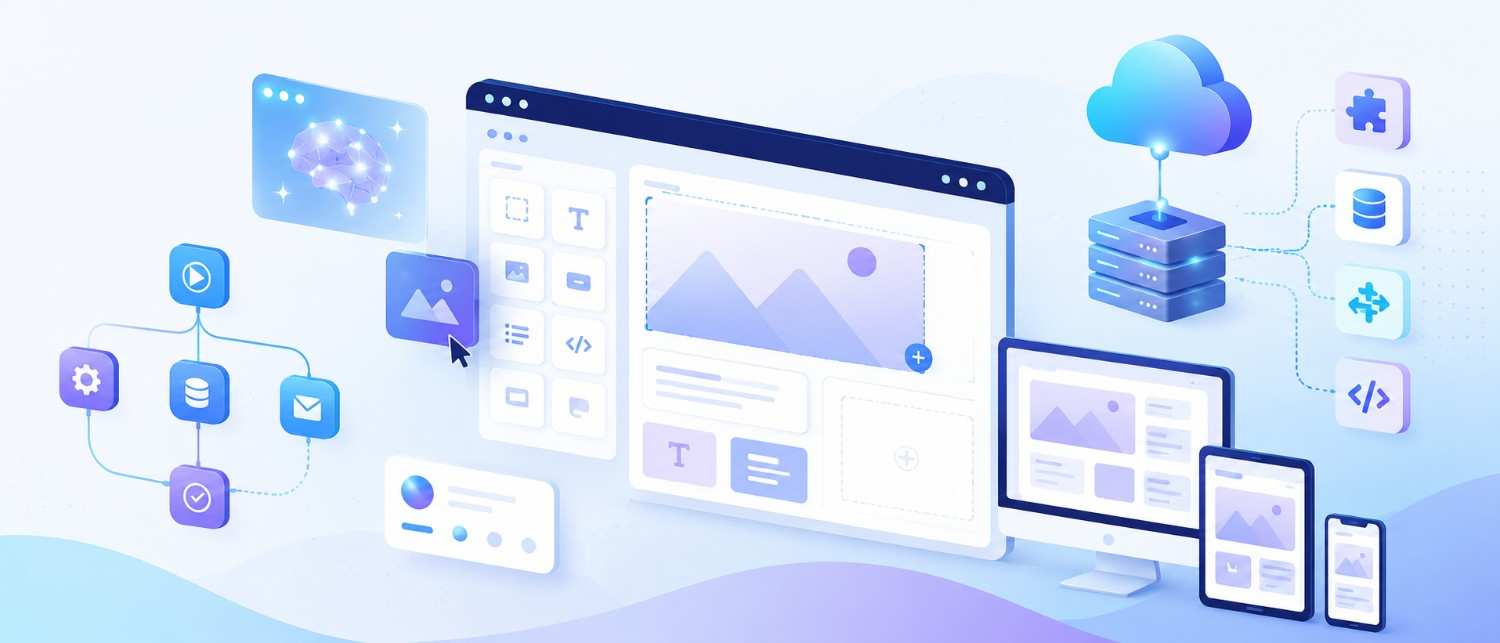
Generative AI has transformed the no-code space, embedding AI into design. It suggests layouts, generates copy, recommends colors based on branding, and writes conditional logic. Tools like Framer AI and Wix ADI allow users to describe their needs in plain language and get a ready-to-publish page fast. This trend will grow, with AI handling responsive design, accessibility, and SEO, while users review and approve.
Modern no-code platforms are evolving from page-level to component-based systems, akin to frameworks like React. Users can create reusable components, set global styles, and manage design systems visually. This shift results in cleaner, more maintainable outputs, addressing a previous weakness compared to hand-coded sites.
Low-code, once seen as a startup shortcut, is now used by large enterprises to build tools and automate workflows. Gartner predicts it will handle most new application development mainly due to developer shortages, helping companies meet demand while maintaining control over governance and security.
No-code platforms now include logic features like conditional visibility, user authentication, database relationships, API integrations, and dynamic content, once only possible with coding. This blurs no-code and real development, freeing developers to focus on complex problems.
An honest conversation is essential here. Despite advancements, custom web design services are evolving, not disappearing. No-code and low-code tools offer speed and accessibility but have limitations like template lock-in, platform dependency, performance issues, and challenges in brand differentiation. For businesses where the website is a key revenue or branding tool, fully custom solutions offer unmatched advantages. The role of designers is shifting; more professionals now use no-code tools within their workflow, prototyping quickly in Webflow or building sites faster without losing quality. These platforms are tools of the trade, not replacements.
No technology is a perfect solution, and no-code platforms are no different.
These challenges don’t make no-code platforms a bad choice; they just mean they are the right choice for some situations, not all.
The ideal users for no-code and low-code platforms are broad but not universal:
If you fit into one of these groups, these platforms likely provide real, meaningful value right now, not just in the future.
No-code and low-code platforms are now mature, changing how the web is built, especially with AI integrating into design. They promise more intelligence, better customization, and broader business use while making web creation accessible. Still, these tools complement professional development, not replace it. The key is understanding each tool’s strengths and limits to collaborate effectively. The future isn’t no-code versus code; it’s about leveraging both wisely.
No-code platforms use visual builders and don’t require coding, which makes them great for beginners. Low-code platforms provide greater flexibility and allow users to add some code for further customization.
Yes. Platforms like Webflow create SEO-friendly code, but rankings still depend on content quality, site speed, structure, and overall SEO practices.
Low-code platforms are popular among enterprises for automation and internal tools. Some no-code platforms also offer enterprise features like collaboration, CMS, and scalable hosting.
No. They make it easier to create basic websites and apps, but complex and custom projects still need skilled developers. Many developers use no-code tools to speed up their work.
Wix and Squarespace are beginner-friendly. Webflow gives more design control, while Bubble is well-liked for building advanced no-code apps.

© 2025 Crivva - Hosted by Airy Hosting Managed Website Hosting.