Expanding or refurbishing a food production facility is one of the most significant investments a UK food manufacturer will ever make. Get it right and you unlock capacity, efficiency, and compliance. Rush it or hand it to the wrong team, and you are looking at costly delays, rework, and disruption to your core operations.
This guide walks through everything you need to consider when planning a warehouse fit out for food or drink manufacturing — from regulatory requirements to choosing a specialist contractor. If you have been searching for practical, experience-led advice rather than generic content, you are in the right place.
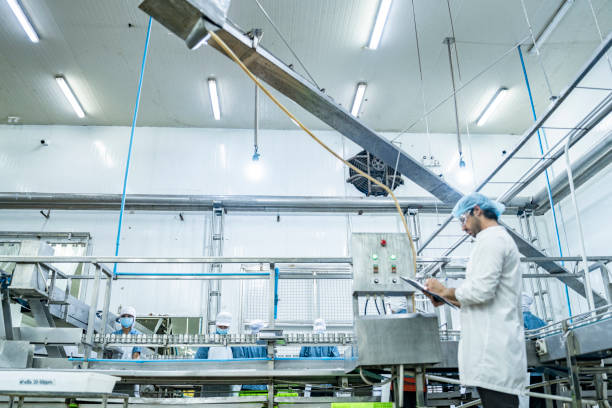
A warehouse fit out refers to the process of transforming a shell or partially built space into a fully operational production or storage environment. In food manufacturing, this goes well beyond standard commercial fit outs. Every element — walls, floors, drainage, refrigeration, lighting, ventilation — must meet strict hygiene and safety standards.
Whether you are moving into a new unit on a business park, expanding an existing facility, or completely refurbishing an ageing production line, the scope of a food-grade warehouse fit out typically covers:
Many food manufacturers make the mistake of appointing a general building contractor for a food factory fit out, only to discover mid-project that the team lacks the specialist knowledge required. This often results in non-compliant finishes, additional costs, and unwanted attention from Environmental Health Officers (EHOs).
A food-grade fit out must consider:
Experienced specialists like Oakley Food Projects understand these requirements from day one. That means less back-and-forth, fewer surprises, and a facility that passes its first inspection.
The table below summarises the core components of a food manufacturing warehouse fit out, the relevant UK regulations, and whether a specialist turnkey contractor covers each element:
|
Fit-Out Element |
Typical Scope |
UK Regulation |
Oakley Handles It? |
|
Hygienic Walling |
White wall panelling, coved skirting |
Food Standards Agency guidance |
✔ Yes |
|
Resin Flooring |
Anti-slip, chemical-resistant finish |
HSE slip-resistance standards |
✔ Yes |
|
Drainage |
Channel drains, grease traps |
Building Regs Part H |
✔ Yes |
|
Cold Room Installation |
Refrigerated storage units |
HACCP temperature controls |
✔ Yes |
|
M&E Works |
Electrical, ventilation, plumbing |
Building Regs Part L/F |
✔ Yes |
|
Staff Welfare Areas |
Changing rooms, canteens, offices |
Workplace (Health, Safety & Welfare) Regs 1992 |
✔ Yes |
A well-structured project avoids the two biggest pain points food manufacturers report: unexpected costs and production downtime. Here is how a professional, specialist-led project typically unfolds.
Before any design work begins, a good contractor will spend time understanding your production processes, your growth plans, and any existing site constraints. This is not just a sales meeting — it shapes every decision that follows.
Once the scope is agreed, a site visit and detailed survey takes place. The design team then translates your requirements into concept layouts, factoring in process flow, hygiene zoning, regulatory compliance, and future scalability.
After concept sign-off, the team produces a full set of construction drawings alongside a comprehensive scope of works. Crucially, you should receive a fixed-price proposal at this stage — not an estimate. Cost certainty matters when you are running a live production business.
Work begins with pre-agreed milestones. A reputable contractor will schedule around your operations where possible, minimising disruption to your team and your output. Regular progress meetings keep you informed without requiring your daily involvement.
On completion, all warranties, guarantees, compliance documentation, and as-built drawings are handed over. You should leave the project with full confidence that the facility is ready for production and ready for audit.
Awareness of common issues helps you ask the right questions before you commit to a contractor:
Oakley Food Projects is a specialist food factory fit out contractor with a track record of delivering turnkey projects for UK food and drink manufacturers. From small-scale refurbishments to full ground-up factory builds, the team manages every stage — design, planning, build, and handover — under one roof.
What sets Oakley apart:
Clients including well-known names in the UK food sector have trusted Oakley to expand, refurbish, and future-proof their production facilities. To explore Oakley’s factory fit out services in more detail, visit: https://oakleyfoodprojects.com/services/factory-fit-outs/
Timelines depend on the scope of work. A detailed design phase usually runs over six to eight weeks, followed by a structured build programme with pre-agreed milestones. Smaller refurbishments may complete in weeks; larger ground-up projects can take several months. A specialist contractor will give you a realistic programme from the outset.
Yes, in many cases it can. A skilled project management team will phase the works carefully, maintaining compliant separation between construction activity and food production areas. This requires careful planning from day one, but it is achievable and is something specialist food factory contractors routinely manage.
Key frameworks include the Food Safety Act 1990, Food Hygiene Regulations 2006, Building Regulations (Parts F, H, L), HSE workplace guidance, and HACCP principles. Your contractor should demonstrate familiarity with all of these before work begins.
Look for a contractor with verifiable food industry experience, accreditations relevant to the sector, a fixed-price proposal process, and references from comparable projects. Avoid generalist builders who claim to understand food compliance but cannot evidence it.
A warehouse fit out typically works within an existing shell or partially built structure, converting it into a functional production or storage space. A full factory build involves construction from the ground up, including groundworks, structural steelwork, and the building envelope, as well as the internal fit out. Many specialist contractors, including Oakley Food Projects, offer both.
This depends on the extent of the works and any change of use. Internal refurbishments within an existing food factory may not require planning permission, but external alterations, extensions, or changes of use usually do. A specialist contractor can advise and manage the planning process on your behalf.
A food-grade warehouse fit out is a significant undertaking, but with the right specialist partner it does not have to be stressful. The key is planning early, choosing a team with genuine food industry expertise, and locking in cost certainty before work begins.
To discuss your project and find out how Oakley Food Projects can deliver your expansion on time, on budget, and with minimal disruption, get in touch with the team today.
Visit for Warehouse fit out

© 2025 Crivva - Hosted by Airy Hosting Managed Website Hosting.