


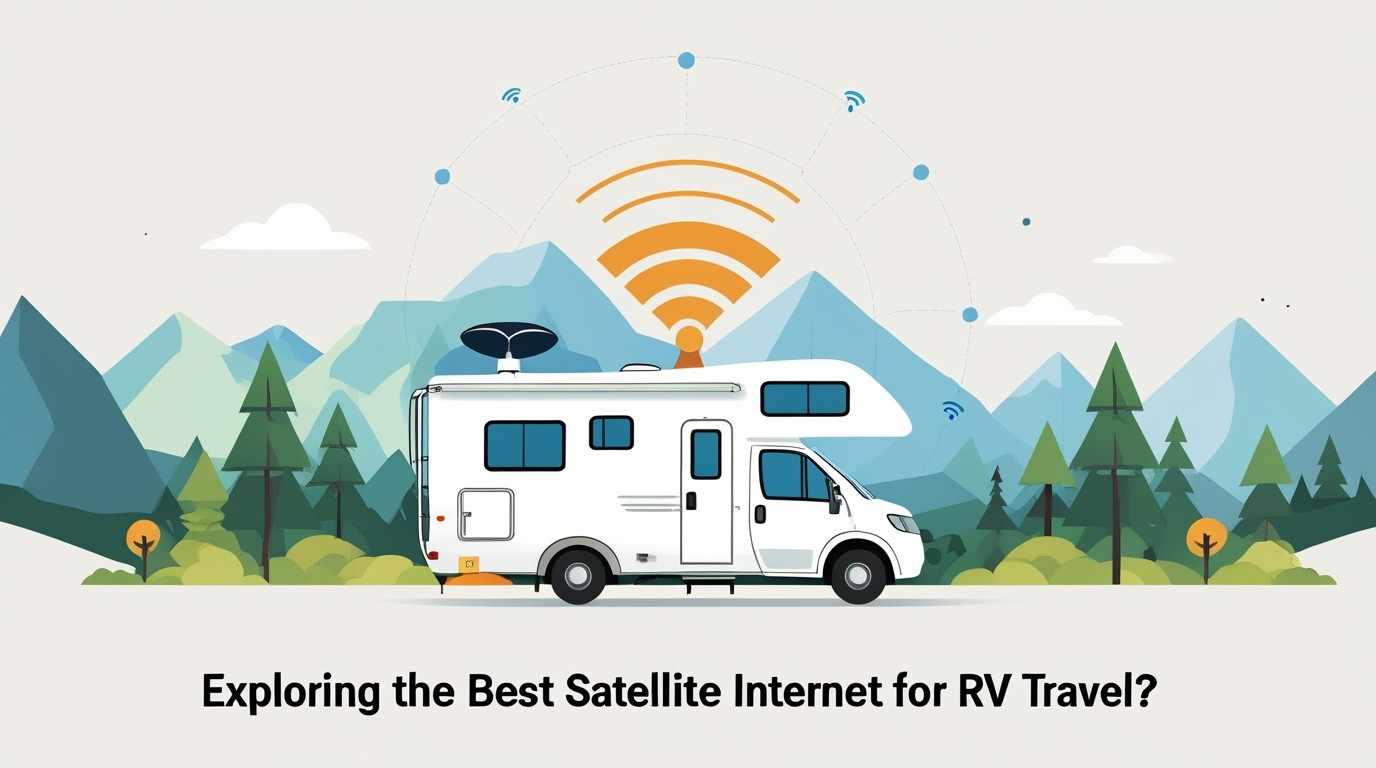
Ever tried working, streaming, or checking maps while parked in the middle of nowhere, only to see “No Signal”? That’s what many RV travelers experience. Whether you’re chasing sunsets, living the van life, or working remotely on the road, staying connected can feel like a constant challenge.
So the big question is: what’s the best way to get reliable internet while traveling in an RV?
For many travelers today, the answer lies in satellite internet for RV travel. It’s a strong solution that works almost anywhere, even well beyond the reach of traditional cell towers.
Let’s break it down in a simple, practical way so you can choose the best setup for your journey.
RV travel offers freedom. Connectivity, however, is often lacking.
Here’s the problem:
If you rely on internet for:
Then unreliable connectivity can quickly become frustrating.
That’s where satellite internet for RV travel comes in.
RV Satellite internet connects your device to satellites orbiting Earth instead of using ground-based infrastructure like cables or cell towers.
The biggest advantage is coverage almost anywhere with a clear view of the sky.
This makes it ideal for:
Not all satellite internet options are equal. Here’s what really matters when choosing the best one:
When choosing satellite internet for RV travel, portability is important. Look for systems designed for mobility, with lightweight equipment that’s easy to carry and store. A simple installation process matters too; ideally, no permanent mounting is needed so you can set up and pack down quickly. The best systems allow for fast setup at each stop. This saves time and makes it easier to stay connected wherever you go.
Modern satellite internet has improved a lot in speed and performance. Many systems now offer fast download speeds that work well for streaming videos, browsing, and remote work. A stable connection is crucial, especially for video calls and online meetings, where interruptions can be frustrating. Choosing a provider that reliably delivers good speeds ensures a smoother and more productive experience on the road.
Latency affects how responsive your internet connection feels. It impacts activities like video calls, online gaming, and real-time communication. High latency can lead to delays, lag, and poor call quality. Luckily, newer satellite technologies are made to reduce latency significantly, making them better for remote workers and anyone who depends on real-time interactions.
Flexibility in data plans is vital for RV travelers with different internet needs. Look for providers that offer unlimited plans or high data caps so you don’t have to worry about running out of data. Options with no long-term contracts are best, as they allow you to change plans as your travel needs change. Pay-as-you-go plans can also be helpful, especially for occasional users who don’t need constant connectivity.
Reliable coverage is one of the main advantages of satellite internet. Make sure the service works well in rural and remote areas where traditional networks may not be available. It should also perform in environments like forests, as long as there is partial visibility of the sky. For RV travelers covering long distances, consistent connectivity on cross-country routes is key to avoid interruptions and stay connected no matter where the journey takes you.
Understanding your options helps you make a smarter decision.
Best for flexibility:
Best for convenience:
Best for performance:
Even the best satellite internet setup needs a little optimization.
If you’re a casual traveler who only checks emails now and then, you might manage with mobile data.
But if you are:
…then satellite internet becomes a game-changer.
It gives you:
Finding the best satellite internet for RV travel isn’t only about staying online; it’s about gaining real freedom on the road.
Instead of planning your route around signal strength, you can finally:
With the right setup, your RV turns into more than just a vehicle; it transforms into a fully connected mobile lifestyle hub.
The best choice depends on your needs. Look for providers that offer high speed, low latency, and portable equipment designed for RV use.
Yes, as long as you have a clear view of the sky. It works in most remote and rural areas where cellular networks fail.
Modern satellite services provide speeds that are suitable for streaming, video calls, and remote work, though performance can vary based on location and weather.
Some advanced systems support connectivity while you’re in motion, but most portable setups are meant for use when parked.
It’s a good idea. Combining satellite internet with a mobile hotspot increases reliability in different environments.

© 2025 Crivva - Hosted by Airy Hosting Managed Website Hosting.