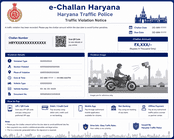
With traffic enforcement becoming increasingly digital across India, the Haryana government has adopted an advanced e-challan system to improve road safety and reduce manual enforcement delays. Whether you drive daily through Gurugram, Faridabad, Panipat, Karnal, or use major highways such as NH-48, understanding how the e challan Haryana system works is important for every vehicle owner.
Today, traffic violations are commonly detected through CCTV surveillance, automatic number plate recognition (ANPR) cameras, speed monitoring systems, and handheld devices used by traffic police officers. Once a violation is recorded, a digital challan is generated automatically and linked to the vehicle registration number.
Ignoring pending challans can create problems during vehicle-related services such as RC renewal, ownership transfer, insurance claims, or even routine traffic checks. Fortunately, Haryana e-challans can now be checked and paid online within minutes.
An e-challan is an electronically generated traffic violation notice issued by traffic authorities when a driver breaks traffic rules. Instead of issuing handwritten receipts, the system records the offence digitally and stores it in a centralized database.
Common traffic violations that may generate a Haryana e-challan include:
In many cities across Haryana, smart traffic cameras continuously monitor roads and automatically capture violations. Once verified, the challan is sent to the registered mobile number associated with the vehicle.
There are multiple ways to check pending e challan Haryana notices online. Vehicle owners can use national portals, mobile apps, or state-specific platforms.
The most commonly used platform is the national Parivahan e-challan portal managed by the Ministry of Road Transport and Highways.
Steps to check challan status:
The portal usually displays:
This system works for vehicles registered in Haryana as well as vehicles from other states.
Some Haryana traffic departments and transport platforms also provide challan-related services. Depending on the district or traffic unit, drivers may find state-level services useful for additional verification.
These portals may include:
State platforms may occasionally provide detailed violation images captured by cameras.
The mParivahan mobile application is another convenient option for checking challans. The app is especially useful for drivers who want quick access to vehicle details and transport services from their smartphones.
Features include:
Users only need to enter the vehicle registration number to retrieve challan information.
Paying pending challans online is a simple process and usually takes only a few minutes.
Most platforms support:
Always save the digital receipt after payment. It can help resolve future disputes if payment records are delayed in system updates.
The national challan database is not limited to Haryana-registered vehicles. The system supports car challan check services for vehicles across India.
This is useful for:
Users can simply enter each vehicle registration number separately to check pending challans.
Before purchasing a used vehicle, checking pending challans is strongly recommended because unpaid penalties may remain linked to the vehicle even after ownership transfer discussions begin.
Traffic monitoring has become stricter in cities like Gurugram and Faridabad due to increasing congestion and accident concerns.
Some commonly recorded offences include:
Highways such as NH-48 are heavily monitored using speed detection cameras. Vehicles exceeding speed limits may receive automatic challans without direct police interception.
AI-enabled cameras at major intersections can automatically detect signal jumping incidents.
Improper parking near markets, metro stations, and commercial zones often leads to digital challans.
Traffic cameras in many urban areas can identify riders without helmets and drivers without seat belts.
Driving without valid insurance, pollution certificates, or registration documents can also attract penalties.
Ignoring pending challans can lead to more serious administrative and legal complications over time.
Pending challans may create issues during Registration Certificate renewal or fitness certificate processing.
Serious violations or repeated non-payment may result in legal notices or traffic court summons.
Vehicles with multiple unpaid challans can sometimes be stopped and detained during enforcement drives or highway inspections.
Delays in payment may result in additional penalties or late settlement complications depending on the violation category.
Because of these risks, it is always advisable to clear challans promptly after receiving notifications.
Drivers can significantly reduce the chances of receiving e-challans in Haryana by following basic traffic rules consistently.
Helpful practices include:
Using navigation apps with speed alerts can also help drivers remain aware of changing highway speed limits.
Sometimes vehicle owners do not receive SMS alerts because of outdated mobile numbers or technical delays. Regularly checking challan status online helps avoid unnoticed penalties.
Monthly challan checks are especially useful for:
Staying updated ensures that no pending violations accumulate unexpectedly.
The e challan Haryana system has made traffic enforcement faster, more transparent, and more efficient. Whether the violation is detected by highway speed cameras, city surveillance systems, or traffic officers using handheld devices, all records are now digitally maintained and easily accessible online.
Checking and paying challans through the Parivahan portal or mParivahan app is simple and convenient. Vehicle owners should regularly monitor their challan status and clear pending dues quickly to avoid legal complications, RC renewal issues, or vehicle detention.
By following traffic rules responsibly and settling penalties on time, drivers can ensure smoother journeys and contribute to safer roads across Haryana.
© 2025 Crivva - Hosted by Airy Hosting Managed Website Hosting.