

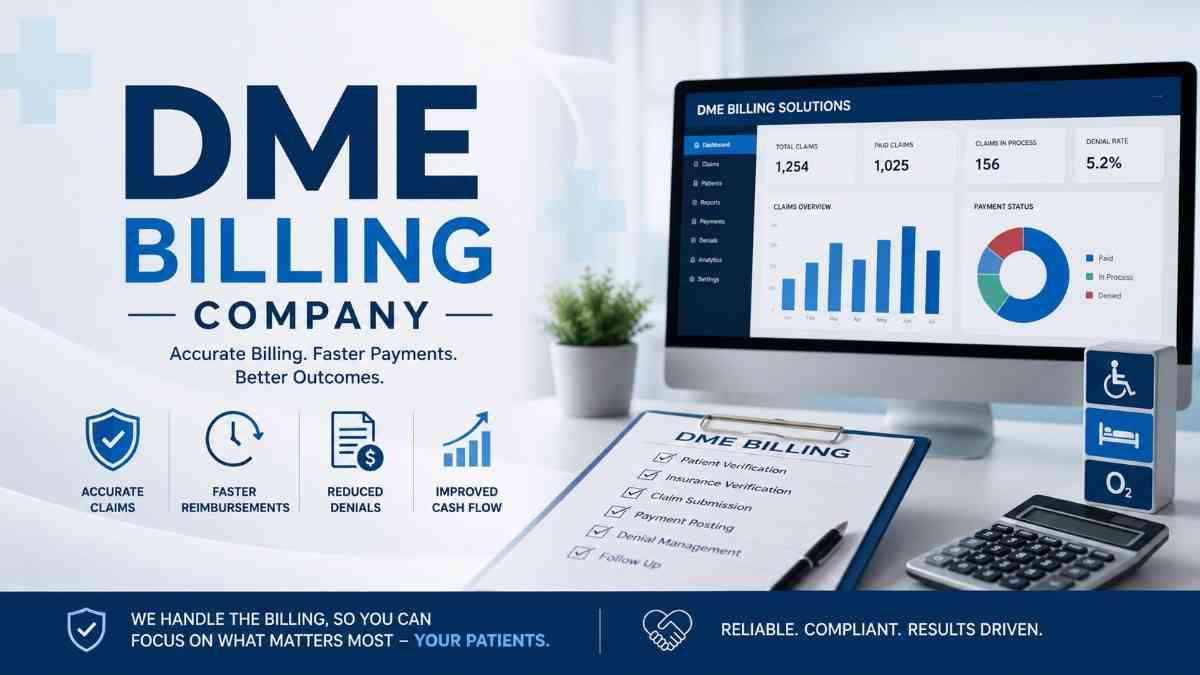
Durable Medical Equipment (DME) providers play a critical role in patient care by supplying essential medical products such as wheelchairs, oxygen equipment, hospital beds, CPAP machines, walkers, and prosthetic devices. While delivering these products is vital, managing the billing process can be one of the most challenging aspects of running a DME business.
Insurance requirements, prior authorizations, documentation standards, coding updates, and claim denials can quickly create administrative burdens that affect cash flow and operational efficiency. This is where a reliable dme billing solution becomes essential.
A well-designed DME billing solution helps providers streamline billing operations, improve claim accuracy, reduce denials, and accelerate reimbursements. In today’s competitive healthcare environment, investing in the right billing strategy can make a significant difference in revenue performance and patient satisfaction.
Unlike standard physician billing, DME billing involves additional layers of documentation and compliance requirements. Providers must often prove medical necessity, obtain prior authorizations, and maintain detailed records to support reimbursement claims.
Several factors contribute to the complexity of DME billing:
Insurance companies require thorough documentation before approving payment for durable medical equipment. Missing physician orders, incomplete medical records, or inaccurate patient information can lead to claim rejections.
Government and commercial payers regularly update their coverage policies, reimbursement guidelines, and coding requirements. Keeping up with these changes demands constant monitoring and staff training.
Many DME products require pre-approval before delivery. Delays or errors in authorization requests can impact both patient care and provider revenue.
DME claims are particularly vulnerable to denials due to documentation deficiencies, coding errors, eligibility issues, or unmet payer requirements.
These challenges highlight the need for an effective dme billing solution that can manage complex workflows while ensuring compliance and accuracy.
Not all billing systems are designed to handle the unique needs of DME providers. A specialized solution should include features that address industry-specific challenges and improve operational efficiency.
Verifying patient insurance coverage before equipment delivery helps reduce claim denials and unexpected payment issues. Automated verification tools provide real-time information regarding benefits, deductibles, and coverage limitations.
An efficient DME billing solution should streamline authorization workflows by tracking requests, managing documentation, and monitoring approval status. This reduces delays and minimizes administrative workload.
Proper coding is essential for successful claim submission. Billing software should support HCPCS codes, modifiers, and payer-specific requirements to ensure claims are submitted correctly the first time.
Maintaining complete and organized documentation is critical for reimbursement. Advanced billing solutions can store physician orders, medical records, proof of delivery, and authorization documents in one centralized location.
Claims scrubbing tools automatically identify errors before submission. By catching missing information and coding inconsistencies early, providers can significantly reduce denial rates.
Comprehensive reporting tools provide valuable insights into claim performance, denial trends, reimbursement rates, and overall financial health. These insights help organizations make informed business decisions.
The right billing solution does more than automate administrative tasks. It directly contributes to financial stability, operational efficiency, and business growth.
Clean claims submitted correctly the first time move through the reimbursement process more quickly. Reduced claim errors lead to shorter payment cycles and improved cash flow.
Automated claim reviews and compliance checks help identify issues before claims reach payers. This proactive approach significantly reduces costly denials and rework.
Manual billing processes consume valuable staff time. Automation allows employees to focus on patient support and higher-value tasks rather than repetitive administrative work.
Healthcare regulations continue to evolve. A specialized DME billing solution helps providers stay compliant with payer policies, Medicare requirements, and industry regulations.
Accurate billing and timely processing reduce confusion for patients. Clear communication regarding coverage, costs, and payment responsibilities contributes to a more positive healthcare experience.
As DME businesses grow, billing demands increase. Modern billing solutions support expansion by handling larger claim volumes without requiring significant increases in administrative staff.
Selecting the best billing solution requires careful evaluation of organizational needs and long-term goals. Providers should consider several important factors before making a decision.
Choose a solution designed specifically for DME providers rather than a generic medical billing platform. Industry-specific expertise ensures better support for unique billing requirements.
The billing system should integrate seamlessly with electronic health records (EHRs), inventory management systems, and practice management software. Integration reduces duplicate data entry and improves workflow efficiency.
Every DME organization operates differently. Flexible solutions allow providers to customize workflows, reports, and billing processes according to their specific needs.
The platform should offer ongoing updates to accommodate regulatory changes, payer requirements, and coding modifications.
Reliable technical support is essential. Look for vendors that provide responsive customer service, training resources, and implementation assistance.
Evaluate both upfront costs and long-term return on investment. A solution that reduces denials and accelerates reimbursements often delivers significant financial benefits over time.
Even with advanced technology, billing errors can still occur if proper processes are not followed.
Some common mistakes include:
Addressing these issues through a comprehensive dme billing solution can help providers maintain consistent revenue and reduce administrative headaches.
A DME billing solution is a specialized system or service that manages billing processes for durable medical equipment providers. It helps with coding, claim submission, documentation management, authorization tracking, and reimbursement optimization.
DME billing involves unique requirements such as HCPCS coding, proof of delivery documentation, prior authorizations, and payer-specific rules. Specialized software is designed to handle these complexities more effectively than general medical billing systems.
By automating eligibility verification, documentation checks, coding validation, and claims scrubbing, the solution identifies potential issues before claims are submitted to insurance companies.
Yes. Faster claim processing, reduced denials, and quicker reimbursements contribute directly to improved cash flow and financial stability.
Key considerations include DME industry expertise, compliance support, integration capabilities, reporting features, customer service quality, and scalability.
Managing DME billing successfully requires accuracy, compliance, and efficient workflows. With increasing payer requirements and documentation demands, relying on manual processes can create unnecessary risks and revenue delays. A robust dme billing solution helps providers streamline operations, reduce denials, improve reimbursement rates, and maintain regulatory compliance.
For organizations seeking greater efficiency and financial performance, partnering with experienced Medical Billing Services providers can further enhance revenue cycle management while allowing healthcare professionals to focus on delivering quality patient care.

© 2025 Crivva - Hosted by Airy Hosting Managed Website Hosting.