


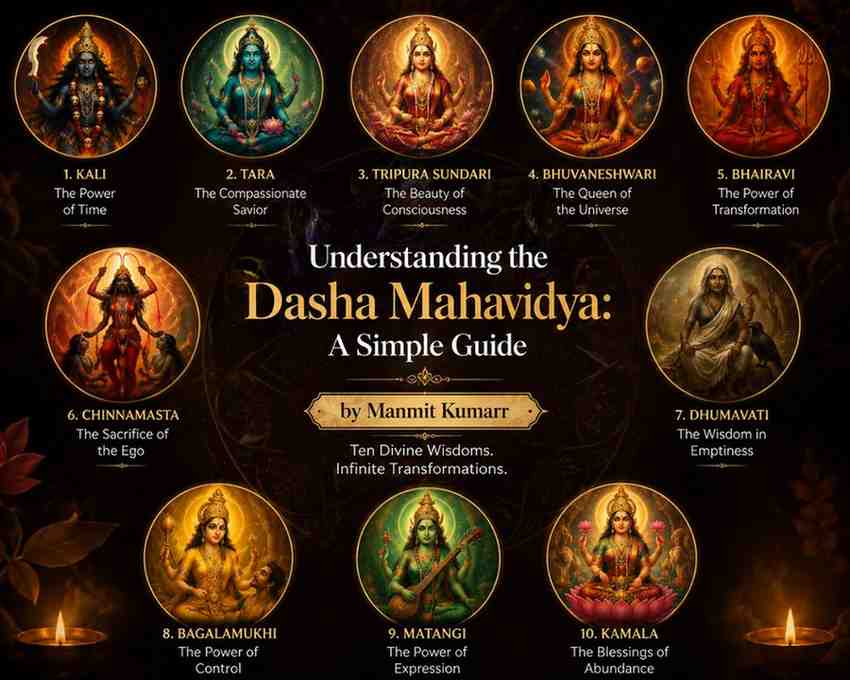
Indian spirituality is deeply rooted in symbolism, sacred knowledge, and timeless teachings that help individuals understand life, consciousness, and inner transformation. Among the most respected and powerful spiritual traditions is the concept of the Dasa Mahavidya, a group of ten divine wisdom goddesses who represent different aspects of existence, emotional evolution, and spiritual awakening.
The word “Dasa” means ten, while “Mahavidya” translates to great wisdom or higher spiritual knowledge. Together, the Dasa Mahavidya refers to the ten wisdom forms of the Divine Mother. Each goddess reflects a unique cosmic energy and carries profound spiritual meaning. These divine forms are not simply mythological figures from ancient scriptures; they are also seen as symbolic representations of human emotions, psychological states, life experiences, and the journey toward self-realization.
For many spiritual seekers, learning the Dasha Mahavidya names becomes the first step toward understanding deeper spiritual truths and discovering the transformative energies connected with each goddess. Every Mahavidya has a distinct appearance, symbolism, mantra, and spiritual lesson that continues to guide devotees even in modern times.
The Dasa Mahavidya tradition is closely associated with Shakti worship in Hindu spirituality. Shakti represents the divine feminine energy that powers creation, preservation, and transformation throughout the universe. According to spiritual traditions, the ten Mahavidyas emerged as manifestations of the Divine Mother during a cosmic event involving Lord Shiva and Goddess Sati.
Each Mahavidya represents a different dimension of consciousness. Some forms appear fierce and intense, while others are calm, compassionate, nurturing, and graceful. Together, these ten wisdom goddesses symbolize the complete spectrum of life experiences, including creation, destruction, healing, knowledge, silence, beauty, power, fearlessness, and liberation.
The ten Mahavidyas are generally known as:
Each goddess has unique symbolism and spiritual significance that helps seekers understand different aspects of life and personal growth.
Among all Mahavidyas, Kali is perhaps the most recognized and powerful form. She represents transformation, fearlessness, destruction of ego, and liberation from illusion. Her fierce appearance symbolizes the removal of negativity, ignorance, and false identity.
Although Kali may appear intense, her deeper spiritual meaning is connected with freedom and awakening. She teaches individuals to let go of fear, attachment, and limitations. Many spiritual seekers connect with Kali during periods of emotional struggle, major life changes, or inner transformation.
Kali reminds people that destruction is not always negative. Sometimes old patterns, toxic emotions, and limiting beliefs must end to create space for growth and renewal.
Tara is associated with compassion, protection, wisdom, and guidance during difficult times. She is often viewed as a spiritual mother who helps devotees cross emotional suffering and confusion.
In spiritual symbolism, Tara represents the energy that protects seekers during uncertain phases of life. Many people pray to Tara for emotional healing, clarity, and strength when facing personal challenges.
Her teachings encourage trust, surrender, and spiritual faith. Tara reminds seekers that even during darkness, divine guidance remains present.
Tripura Sundari, also known as Shodashi Mahavidya, symbolizes beauty, harmony, balance, and divine consciousness. She represents the perfect union of spiritual wisdom and worldly experience.
Unlike fierce forms such as Kali or Bhairavi, Shodashi reflects grace, peace, and inner fulfillment. Her teachings focus on balance in life, emotional stability, self-awareness, and spiritual refinement.
Many seekers are drawn toward Shodashi Mahavidya when exploring meditation, inner peace, and higher consciousness. She teaches that spirituality does not require rejection of beauty or worldly life. Instead, balance and awareness can transform ordinary experiences into sacred ones.
Bhuvaneshwari is known as the goddess of space, creation, and universal consciousness. She symbolizes the infinite nature of existence and the nurturing energy of the cosmos.
Spiritually, Bhuvaneshwari represents openness, acceptance, and emotional expansion. Her teachings encourage individuals to rise above limitations and develop broader awareness.
Devotees often connect with Bhuvaneshwari to cultivate emotional healing, stability, and a deeper connection with universal energy.
Bhairavi represents fierce determination, discipline, courage, and spiritual power. She is associated with intense transformation and the strength needed to face inner fears and weaknesses.
Bhairavi teaches seekers that spiritual growth requires sincerity, discipline, and inner commitment. Her energy helps individuals overcome laziness, fear, and emotional instability.
Many spiritual practitioners view Bhairavi as the force that pushes people toward higher awareness through personal responsibility and inner strength.
Chinnamasta is one of the most mysterious and symbolic forms among the ten Mahavidyas. She represents self-sacrifice, awakening, transformation, and the balance between life force and spiritual wisdom.
Her imagery may appear intense, but spiritually it symbolizes the cutting away of ego and attachment. Chinnamasta teaches that true awakening often requires surrender and deep inner transformation.
For advanced spiritual seekers, her teachings reflect the idea that spiritual consciousness rises when ego-centered thinking dissolves.
Dhumavati represents silence, detachment, endings, and the hidden wisdom found in loneliness and stillness. She is often associated with phases of uncertainty, loss, or emotional emptiness.
However, her deeper meaning is highly spiritual. Dhumavati teaches that even difficult experiences can become powerful sources of wisdom and maturity.
In modern life, many people experience emotional burnout, isolation, or confusion. Dhumavati reminds seekers that inner clarity often emerges during quiet and reflective phases of life.
Baglamukhi Mata is one of the most widely worshipped Mahavidyas for protection against negativity, obstacles, enemies, and harmful influences. She is associated with the power to stop destructive forces and create stability.
Many devotees chant Baglamukhi mantras during periods of conflict, legal challenges, emotional stress, or uncertainty. Spiritually, her teachings are connected with self-control, focused speech, and mental discipline.
Rather than promoting aggression, Baglamukhi symbolizes the ability to remain calm, protected, and centered during difficult situations.
Matangi Mahavidya is associated with wisdom, communication, creativity, music, and self-expression. She represents inner intelligence and the ability to express truth with clarity and awareness.
Many spiritual seekers who are involved in teaching, writing, public speaking, or creative arts feel deeply connected with Matangi’s energy. She encourages authentic expression and intellectual growth.
Matangi also symbolizes the importance of listening to one’s inner voice and developing deeper mental clarity.
Kamala represents abundance, prosperity, happiness, and spiritual fulfillment. She is often compared with Goddess Lakshmi because of her connection with wealth and blessings.
However, Kamala’s teachings go beyond material success. She emphasizes gratitude, emotional richness, inner contentment, and spiritual abundance.
Kamala reminds individuals that true prosperity includes peace of mind, healthy relationships, compassion, and spiritual balance.
Modern life can often feel emotionally exhausting, fast-paced, and mentally overwhelming. Many individuals are searching for deeper meaning, emotional healing, and inner peace beyond material success.
This is one reason why interest in the Dasa Mahavidya continues to grow today. These divine forms reflect real human emotions and life experiences such as fear, transformation, grief, strength, desire, wisdom, healing, creativity, silence, and empowerment.
Rather than seeing the Mahavidyas only as distant religious figures, many modern spiritual seekers now understand them as symbolic energies that mirror the inner journey of human consciousness.
For example:
These teachings remain highly relevant because they help individuals understand themselves more deeply.
One of the most beautiful aspects of the Das Mahavidya tradition is that beginners can approach it gradually and respectfully. There is no pressure to master every teaching immediately.
Many people begin their journey by:
Over time, seekers naturally feel drawn toward the Mahavidya whose energy resonates most deeply with their life experiences and emotional journey.
Spiritual growth within this tradition is not about fear or rigid rules. It is about awareness, self-reflection, sincerity, and inner transformation.
Today, many spiritual teachers and guides are helping modern audiences understand ancient teachings in a practical and grounded way. Instead of presenting spirituality as something distant or overly complex, they focus on emotional healing, self-awareness, mindfulness, and personal transformation.
The Mahavidya tradition becomes more meaningful when approached with respect, patience, and proper understanding. Rituals and practices may vary, but the core purpose remains inner awakening and spiritual balance.
Spiritual mentors like Manmit Kumarr encourage seekers to approach these teachings with openness and awareness. The emphasis is not only on rituals or external worship but also on understanding personal growth, emotional balance, and higher consciousness.
The Dasa Mahavidya represents far more than mythology or symbolic worship. These ten divine wisdom forms offer profound insight into the many dimensions of human consciousness, emotional evolution, and spiritual life. From fierce transformation to compassionate healing and graceful abundance, each Mahavidya teaches a unique lesson about life, awareness, strength, and awakening.
With sincerity, patience, and the right guidance by Manmit Kumarr, the ancient wisdom of the Dasa Mahavidya can become a powerful source of clarity, balance, emotional healing, and spiritual understanding in modern life.

© 2025 Crivva - Hosted by Airy Hosting Managed Website Hosting.