The Himalayas do not whisper. They call loudly. And for those ready to answer, the journey of ebc with island peak climbing becomes one of the most powerful adventures on Earth. It is not only about walking to Everest Base Camp. It is also about pushing higher, climbing Island Peak, and standing above 6,000 meters where the world feels silent and endless. With careful planning and expert support from Igloo Himalaya Treks, this challenging expedition becomes safer, smoother, and deeply meaningful from the first step to the summit.
A Journey That Begins in the Clouds
The adventure starts in Kathmandu, Nepal’s busy and colorful capital. Here, trekkers prepare gear, meet guides, and feel the excitement building. Soon, the journey takes a short but thrilling flight to Lukla. The small airport sits between mountains and feels like the gateway to another world.
From Lukla, the trail begins gently. You walk through green hills, stone paths, and small villages where prayer flags move in the wind. The sound of rivers follows you, and suspension bridges swing across deep valleys below. Every step feels like you are entering a different rhythm of life—slower, quieter, and closer to nature.
The early days of the trek are filled with forests of pine and rhododendron. You pass friendly locals, yak caravans, and stone houses that seem untouched by time. The air is fresh, and the mountains slowly grow bigger with every hour of walking.
The Heart of the Everest Region
As you move deeper into the Khumbu region, the landscape changes. Trees become fewer, and the mountains become more powerful. The trail leads you to Namche Bazaar, the busy Sherpa town surrounded by giant peaks. This is an important stop for rest and acclimatization.
From Namche, the views open wide. Everest appears in the distance, along with Ama Dablam, Lhotse, and other iconic peaks. The feeling of standing in this natural amphitheater of mountains is unforgettable.
Tengboche is another special place on the route. Here, a famous monastery sits peacefully with Everest in the background. The sound of monks chanting adds calm energy to the cold mountain air. It is a place where trekkers often pause and reflect.
Everest Base Camp: Standing at the Foot of Giants
Reaching Everest Base Camp at 5,364 meters is a moment that stays in memory forever. The trail becomes rocky and icy as you approach the Khumbu Glacier. Prayer flags mark the path, and the air becomes thinner.
Base Camp itself is not a permanent village. It is a temporary settlement used by climbers during expedition season. Yet, it feels alive with energy and hope. Tents line the glacier, and climbers from around the world prepare for their summit attempts.
Standing here, you feel the true scale of nature. Everest rises above you like a silent giant. The Khumbu Icefall stretches out like frozen waves. It is both beautiful and powerful, reminding every trekker of nature’s strength.
Trek and Climb Statistics
The full ebc with island peak climbing journey is long and physically demanding.
- Average duration: 18 to 22 days
- Total trekking distance: Around 130 to 150 kilometers (round trip)
- Maximum elevation: 6,189 meters at Island Peak Summit
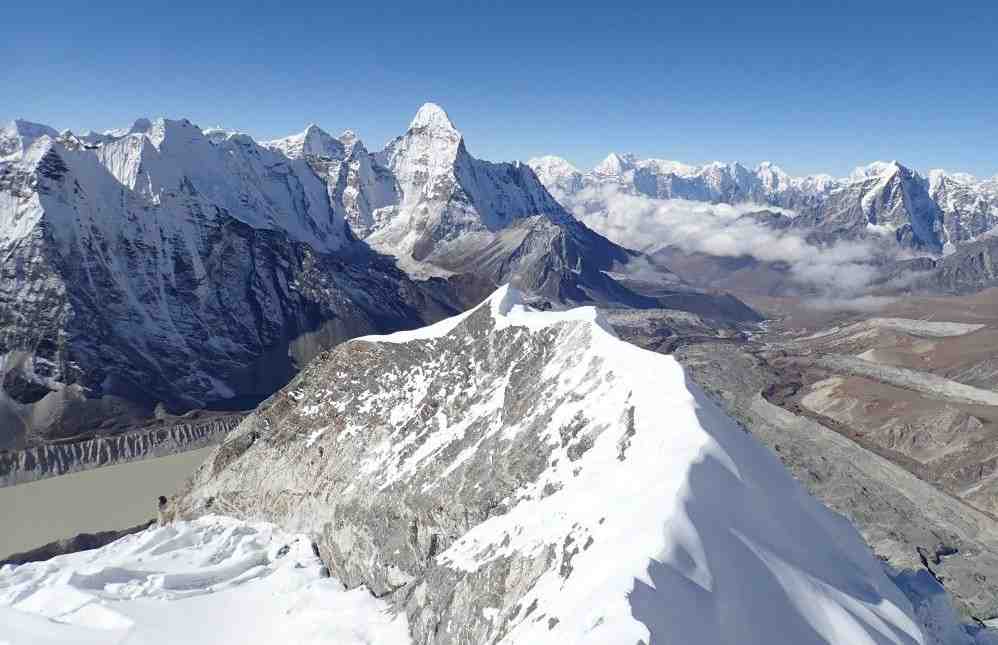
Island Peak (also called Imja Tse) is one of the most popular climbing peaks in Nepal. It is often used as a training peak for higher Himalayan climbs. The summit climb includes glacier walking, fixed rope sections, and steep icy slopes.
From the top of Island Peak, trekkers see Everest (8,848.86m), Lhotse (8,516m), Makalu (8,485m), and many other Himalayan giants stretching across the horizon.
Life at High Altitude
As you climb higher, life becomes simpler. Days are focused on walking, eating, resting, and adjusting to altitude. The air gets thinner, and every step requires more effort.
Teahouses along the route provide basic but warm shelter. Wooden rooms, shared dining halls, and hot meals create comfort in the cold environment. Popular foods include dal bhat (rice and lentils), noodles, soups, and tea.
Nights are quiet. The sky is filled with stars so bright they feel close enough to touch. The silence of the mountains is deep and peaceful. Many trekkers say this is when they feel most connected to nature.
The Challenge of Island Peak Climbing
After reaching Everest Base Camp, the journey continues toward Island Peak Base Camp. This is where trekking turns into real climbing.
Island Peak is not technically extreme, but it requires courage, fitness, and basic mountaineering skills. Climbers use ropes, harnesses, crampons, and ice axes. Guides teach how to move safely on ice and steep slopes.
The summit push usually begins very early in the morning. It is cold, dark, and quiet. Headlamps light the way as climbers move step by step upward. The final section is steep and challenging, but the reward is beyond imagination.
Standing on the summit at 6,189 meters is an emotional moment. The wind is strong, the air is thin, and the world below looks endless. Everest stands proudly in the distance, reminding climbers how far they have come.
Physical and Mental Preparation
This expedition is not a casual trek. It requires strong physical preparation and mental focus. Training before the journey is important. Walking, hiking, cardio exercise, and stair climbing help build stamina.
Altitude is the biggest challenge. The body must slowly adjust to lower oxygen levels. That is why the itinerary includes rest days in places like Namche Bazaar and Dingboche.
Mental strength is just as important as physical fitness. There are moments of fatigue, cold, and doubt. But steady pacing and determination help trekkers continue forward.
Cultural Beauty of the Everest Region
Beyond mountains and glaciers, the Khumbu region is rich in culture. The Sherpa people are known for their kindness, strength, and deep connection with the mountains.
Along the trail, you see prayer wheels, mani stones, and colorful flags that carry prayers into the wind. Monasteries like Tengboche offer peaceful moments for reflection.
Local hospitality makes the journey warmer. Even in remote areas, trekkers are welcomed with smiles, tea, and stories of mountain life.
Travel Support with Igloo Himalaya Treks
A journey like ebc with island peak climbing requires expert guidance. This is where Igloo Himalaya Treks plays a key role.
They provide complete expedition support, including trekking permits, experienced guides, climbing Sherpas, accommodation arrangements, and safety equipment. Their team carefully plans acclimatization schedules to reduce altitude risks.
They also assist with training advice, gear preparation, and emergency support if needed. Their focus is always on safety, comfort, and creating a meaningful Himalayan experience.
With their support, trekkers can focus on the journey instead of worrying about logistics.
The Final Reward of the Himalayas
When the journey ends, trekkers do not return the same. They return stronger, calmer, and more confident. Standing at Everest Base Camp and reaching Island Peak summit becomes a life achievement.
The memories stay forever the sound of wind on high ridges, the glow of sunrise over Everest, and the feeling of standing above 6,000 meters in silence.
The Himalayas teach patience, respect, and courage. They show that true adventure is not just about reaching the top, but about every step taken along the way.
With guidance from Igloo Himalaya Treks, the ebc with island peak climbing expedition becomes more than a trip, it becomes a powerful life story written in the highest mountains of the world.