


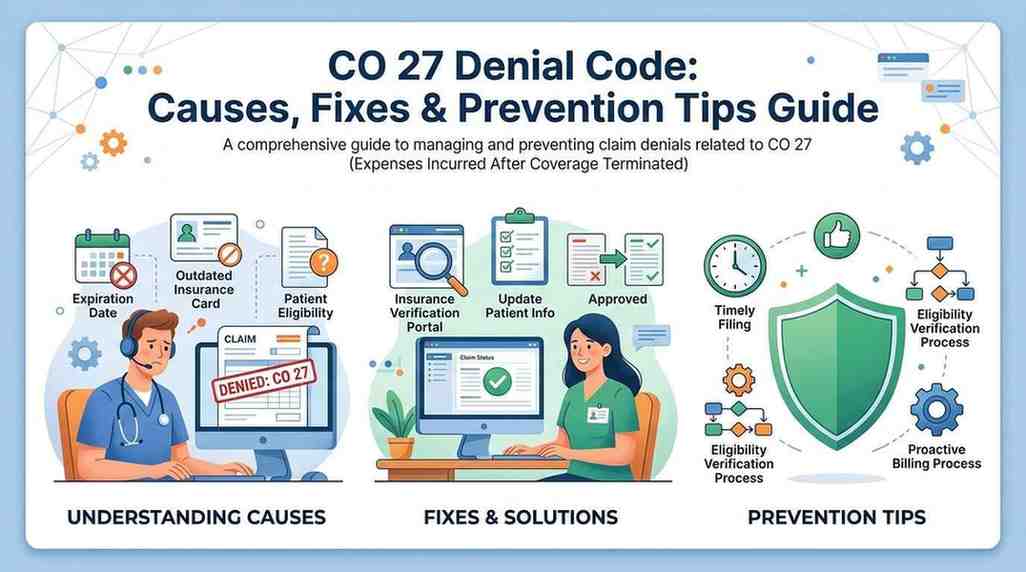
Medical claim denials continue to create major financial stress for healthcare providers across the United States. Among the many denial codes used by insurance companies, the CO 27 Denial Code is one that often leads to confusion, delayed reimbursements, and unnecessary administrative work. When billing teams fail to identify the root issue behind this denial, practices may experience repeated payment delays and rising accounts receivable balances.
Understanding why this denial happens and how to resolve it quickly can improve revenue cycle performance and reduce operational frustration. Providers who build strong billing workflows and accurate documentation practices are far more likely to prevent these denials before claims are submitted.
This guide explains the meaning of this denial code, the most common causes, practical fixes, and prevention methods that healthcare organizations can implement to protect revenue and maintain cleaner claims processing.
The CO 27 Denial Code usually indicates that expenses incurred after insurance coverage ended are not covered by the payer. In simple terms, the insurance company believes the patient’s policy was inactive on the date services were provided.
This denial often appears when eligibility information is outdated, policy termination dates are incorrect, or billing staff submit claims without verifying active coverage. Since insurance plans frequently change due to employment updates, policy renewals, or eligibility adjustments, providers must confirm coverage before every patient visit.
Although this denial may appear straightforward, resolving it can become complicated if communication gaps exist between patients, providers, and insurance companies.
Denied claims affect more than reimbursement timelines. They also increase staff workload, create patient dissatisfaction, and slow down overall revenue cycle operations.
When practices repeatedly receive this denial, staff members must spend additional time reviewing eligibility records, contacting insurance companies, correcting claims, and appealing decisions. These extra tasks reduce productivity and increase administrative costs.
Small practices are especially vulnerable because limited billing resources make denial management harder to handle efficiently. Larger organizations may also struggle if eligibility verification processes are inconsistent across departments.
Delayed payments can eventually affect cash flow stability, staffing decisions, and operational growth.
Understanding the most frequent reasons for this denial helps billing teams identify problems faster and reduce recurring issues.
One of the most common causes is outdated insurance information in the patient record. Patients may change insurance providers without informing the healthcare office, or staff may accidentally enter incorrect policy details during registration.
Even a small typo in member identification numbers or coverage dates can trigger a denial.
Insurance companies deny claims when the patient’s policy ended before treatment was provided. This situation often occurs when patients lose employer sponsored insurance coverage or fail to renew individual plans.
If eligibility checks are skipped before appointments, claims may be submitted for inactive policies.
Late claim submission can sometimes create confusion regarding active coverage periods. Insurance payers may reject claims if filing dates exceed contractual limits or if policy records no longer match the original service date.
Timely claim submission remains essential for preventing avoidable denials.
Patients covered under multiple insurance plans may experience coordination issues if primary and secondary payers are not correctly identified. Incorrect payer sequencing can lead to claim rejection and eligibility confusion.
Accurate coordination of benefits verification is critical for clean claim processing.
Front desk staff play an important role in preventing billing denials. Missing policy updates, incorrect demographic entries, or failure to scan current insurance cards can lead to inaccurate billing information.
Strong training and standardized intake procedures significantly reduce these risks.
Resolving denied claims quickly requires a structured approach. Billing teams should avoid rushing into appeals without first identifying the exact reason behind the denial.
Start by reviewing the patient’s insurance information for the date of service. Confirm whether coverage was active when treatment occurred.
Verify the following details carefully:
If incorrect data was submitted, update the patient file immediately.
Speak directly with the payer to understand why the claim was denied. Sometimes eligibility systems contain outdated information that requires manual correction.
Document all payer communication details, including representative names, reference numbers, and call summaries for future tracking.
If coverage truly ended before the visit, discuss payment responsibility with the patient professionally and transparently. Many patients are unaware that their policy became inactive.
Offering payment plans or financial counseling may improve patient satisfaction and collection success.
Once eligibility information is confirmed, correct any inaccurate details and resubmit the claim promptly. Ensure all supporting documentation is included to avoid repeat denials.
Clean claim resubmission improves approval chances and reduces processing delays.
If the denial occurred in error despite active coverage, file a formal appeal with supporting evidence. Include eligibility verification records, authorization details, and proof of active coverage.
Well organized appeals often achieve faster resolution outcomes.
Prevention is always more effective than reactive denial management. Healthcare organizations that invest in proactive eligibility verification processes typically experience fewer payment disruptions.
Eligibility should be verified before every appointment, even for returning patients. Insurance status can change unexpectedly between visits.
Automated eligibility verification tools can help staff confirm coverage quickly and accurately.
Registration staff should understand the financial impact of inaccurate patient intake information. Ongoing training improves data accuracy and strengthens communication with patients regarding insurance updates.
Clear workflows reduce preventable mistakes.
Patients should be reminded regularly to provide updated insurance details. Appointment reminders can include requests for current insurance cards and demographic verification.
This small step helps reduce claim rejection rates significantly.
Faster claim submission minimizes confusion regarding coverage timelines and improves reimbursement speed.
Delays in billing create unnecessary risks for denial complications.
Modern billing systems can identify eligibility problems before claims are submitted. Automated claim scrubbing and payer rule validation tools reduce human error and improve clean claim rates.
Technology driven workflows help organizations maintain consistent billing accuracy.
Denial prevention requires coordination across multiple departments, including scheduling, registration, coding, billing, and collections. Weak communication between these teams often contributes to recurring reimbursement problems.
Organizations with strong revenue cycle management processes monitor denial trends regularly and implement corrective action plans quickly. Data analysis helps identify recurring payer issues and operational weaknesses.
Experienced billing partners such as Avenue Billing Services often help healthcare organizations strengthen denial management strategies while improving reimbursement performance and operational efficiency.
Eligibility related denials can be especially difficult for pediatric providers because children may frequently move between Medicaid programs, employer plans, or dependent coverage changes.
Accurate patient registration becomes even more important in pediatric settings where guardians manage insurance information on behalf of minors. Specialized billing support can improve claim accuracy and reduce administrative pressure for providers focused on child healthcare.
Many healthcare organizations rely on professional pediatric billing services to manage eligibility verification, payer communication, coding compliance, and denial resolution more effectively.
Healthcare billing requirements can vary depending on payer policies, state regulations, and regional insurance programs. Providers operating across multiple states often face additional administrative complexity when managing claims and eligibility verification.
Organizations serving large patient populations in high volume markets frequently invest in specialized billing support to maintain compliance and reimbursement accuracy. For example, practices seeking dependable Medical Billing Services in California often prioritize billing partners with strong payer knowledge, regulatory awareness, and denial prevention expertise.
Healthcare organizations should not treat denial management as a short term task. Sustainable financial performance requires a long term strategy focused on prevention, education, and operational consistency.
Successful denial reduction strategies often include:
Insurance regulations and payer policies change frequently. Ongoing staff education ensures billing teams remain updated on current requirements and best practices.
Knowledgeable employees make fewer costly mistakes.
Monthly denial analysis helps organizations identify recurring trends and operational gaps. Audits provide valuable insight into which payers, departments, or workflows create the highest denial risk.
Tracking denial patterns improves decision making.
Patients who understand their insurance responsibilities are more likely to provide accurate information and respond quickly to billing requests.
Transparent financial communication improves the patient experience while supporting reimbursement success.
Healthcare leaders should monitor important billing metrics regularly, including:
Consistent monitoring supports continuous improvement.
Insurance denials remain one of the biggest challenges in healthcare revenue cycle management. Eligibility related issues can disrupt cash flow, increase administrative burden, and create unnecessary stress for providers and patients alike.
The good news is that most of these denials are preventable with accurate eligibility verification, stronger registration procedures, faster claim submission, and better communication across departments.
Healthcare organizations that prioritize proactive billing strategies are far more likely to maintain steady reimbursements and healthier financial performance. By investing in staff training, technology, and structured denial management workflows, providers can reduce avoidable claim rejections and create a more efficient billing operation for long term success.

© 2025 Crivva - Hosted by Airy Hosting Managed Website Hosting.