

Most men buy a wedding kurta the same way they buy a one-time prop. They chase maximum “wedding effect” in one shot: heavy embroidery, highly specific colors, extreme shine, and styling that works only in a narrow setting. In photos, it looks impressive. In the real world, it becomes difficult to place. You do not casually wear a heavily embellished kurta to a friend’s engagement, and you do not wear a loud color again when your next event has a different family aesthetic.
There is also the “pairing trap.” Many kurtas are sold as a complete set, and the buyer mentally locks the kurta to that pajama, that dupatta, that footwear. If the set feels too specific, the whole outfit becomes hard to repeat. Rewearability improves when you treat the kurta as a core piece, not a finished costume. A good kurta should look correct with at least two different bottoms and at least two different footwear directions.
Finally, fit decisions often ruin rewearability. A kurta that is too long, too loose, or too tight might look acceptable in one function but feels wrong in another. Contemporary wedding dressing rewards disciplined proportions. A clean, tailored silhouette gives you more environments where the kurta feels appropriate.
A wedding kurta for men becomes repeatable when the fundamentals are chosen with discipline. The checklist below is not theoretical. It reflects how outfits behave across multiple weddings.
Silhouette is the strongest indicator of whether a kurta will look current a year later. Slim-fit does not mean body-hugging. It means the kurta follows the body with control: clean shoulders, tidy sleeves, and a torso that does not balloon when you sit.
For most men, a knee-length or slightly above-knee length is the safest modern proportion. Extremely long kurtas tend to look dated quickly and can make the body look shorter. Extremely short kurtas can look too casual unless the fabric and styling are very refined. The middle zone, tailored well, stays relevant across seasons.
If you want a wedding kurta for men that you will actually wear again, prioritise a silhouette that can look formal with a jacket and still look relaxed without it. That flexibility is the entire point.
Fabric is where rewearability is quietly decided. A fabric that creases aggressively will annoy you after the first wear. A fabric that feels itchy will never be chosen again when you have other options. A fabric that looks flat under light will photograph poorly, which pushes you back into buying new outfits again.
For repeat use, silk blends, premium cottons with texture, and high-quality viscose blends work well because they hold structure. Linen can work for daytime functions, but only when blended and finished properly, otherwise it creases too easily and looks unplanned.
If you want the kurta to survive multiple weddings, check how it behaves when you move your arms, sit down, and walk. Comfort is not separate from style. A man who is physically comfortable looks more composed, and that composure makes even a simple kurta look premium.
Heavy embroidery is the most common reason a kurta becomes single-use. A kurta with dense work might look perfect for one wedding ceremony, but it becomes hard to reintroduce into another event without looking like you are repeating the same “main character” outfit.
For rewearability, prefer one of these approaches:
Minimal embroidery with strong fabric texture
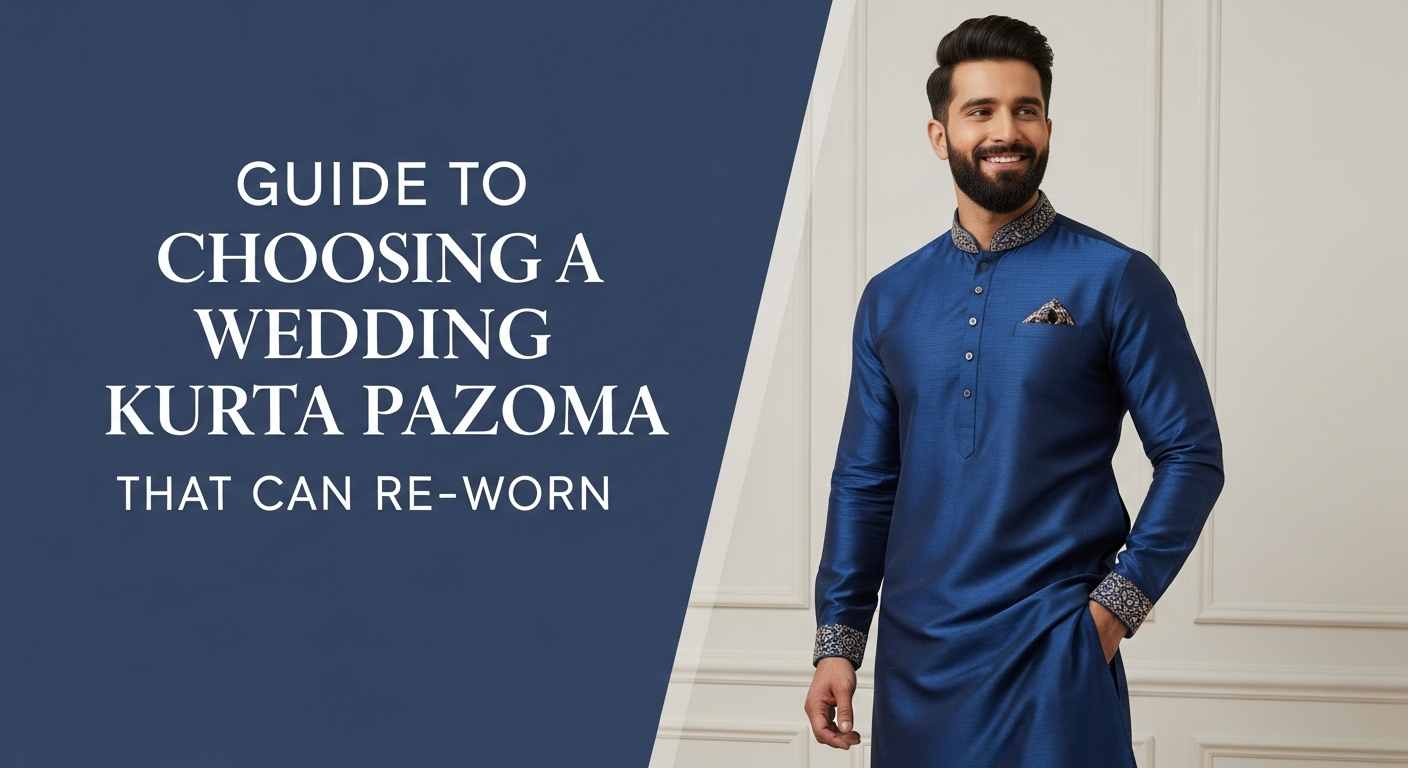
Placement embroidery around placket, collar, or cuffs
Subtle tonal threadwork that reads premium up close
This style direction keeps the kurta wearable across different levels of formality. You can elevate it with a jacket for a reception, or keep it clean for an engagement. It stays useful because it stays adaptable.
Color is where most men either win long-term or lose instantly. Highly specific colors can look spectacular once and then feel impossible to repeat. Rewearable colors are those that work under different lighting and can pair with neutral bottoms.
The most reusable categories include:
Off-white, ivory, cream, and beige families
Deep tones like navy, bottle green, maroon, charcoal
Muted pastels such as powder blue or soft peach, when fabric quality is high
A black kurta for men can also be a repeatable asset, particularly for receptions and evening weddings, as long as the fabric shine is controlled and the tailoring is sharp. Black becomes non-reusable only when the kurta has excessive glossy finish or too much visible ornament.
If you want maximum flexibility, build your kurta color around the idea of “pairing freedom.” Can it work with an off-white pajama and also with a darker trouser? Can it accept a neutral jacket without conflict? If the answer is yes, you are buying a kurta that will move.
The fastest way to waste money is to buy a kurta set and then mentally freeze it as one outfit. A rewearable kurta should work with:
At least two bottoms (off-white pajama, beige churidar, or tapered trousers)
At least two footwear options (mojari and a clean loafer direction)
Optional layering (Nehru jacket or structured bandi)
This modular approach is what makes a kurta for men wedding purchases behave like wardrobe building, not single-event shopping.
If you want proof that a wedding kurta pajama can be reused, the easiest method is to plan three looks at the time of purchase. That planning forces you to choose the right base piece.
Keep the kurta as the focus. Pair it with a neutral bottom, add simple footwear, and stay restrained on accessories. This makes the outfit look premium without looking overly ceremonial.
If your kurta is deep-toned, use an off-white or beige bottom. If your kurta is light, use a slightly deeper neutral bottom to add structure. The goal is polish without intensity.
Add one formal signal. This can be a Nehru jacket, a tonal stole, or more traditional footwear. The kurta stays the same, but the layer changes the context.
This is where a controlled embroidery kurta shines. It reads ceremonial when layered, and it remains wearable when the layer is removed later.
Go sharper. Use deeper footwear, add a structured jacket or bandhgala-inspired layer, and keep the look tonal. Reception styling rewards discipline. It is not the place for random contrast.
If you are wearing a black kurta for men or navy, keep the layering clean and avoid loud accessories. The outfit will look modern and expensive without heavy work.
A wedding kurta often fails future use because of small mistakes that seem harmless at purchase time.
If your kurta is purchased only to look impressive in one moment, you are buying a prop. The moment ends. The kurta loses its place. Rewearable pieces are designed for movement and multiple contexts.
High shine can look premium in the store and harsh under wedding lighting. Controlled sheen is the goal. A kurta with controlled sheen stays usable. A kurta with aggressive gloss feels outdated quickly.
Fit is not optional in modern wedding wear. Even an excellent fabric looks average in a loose, shapeless silhouette. If you want a kurta you will wear again, ensure the shoulder, sleeves, and length are correct. Small tailoring changes increase the life of the garment.
If the kurta needs heavy accessories to look complete, it will be difficult to repeat. A reusable kurta should look finished with minimal effort. Accessories should elevate, not rescue.
Rewearability improves when you can compare multiple silhouettes, fabrics, and color pairings before you commit. That is why Nawab Parker becomes relevant in this specific context. The Boring Road showroom carries a wide spread of men’s ethnic styles, including silk kurta sets, Indo-western options, and kurta pajama with jacket looks, which makes it easier to choose a modular kurta rather than a single locked set.
If you are shopping locally and you care about fit, trial rooms and quick tailoring support matter because a rewearable kurta relies on clean proportions. The availability of sizes up to 5XL also changes the outcome for many buyers, because a good fit is what makes the same kurta work again across events. For shoppers searching kurta shop in patna or kurta pajama shop in patna, that showroom experience is a practical advantage when you are aiming for repeat use rather than one-time impact.
There is also a broader use-case. If you are coordinating wedding outfits across locations, PAN-India delivery helps families align looks without relying on inconsistent stock in different cities. That supports the modern reality of weddings, where relatives often shop from different places but want the final outfits to feel coordinated.

© 2025 Crivva - Hosted by Airy Hosting Managed Website Hosting.