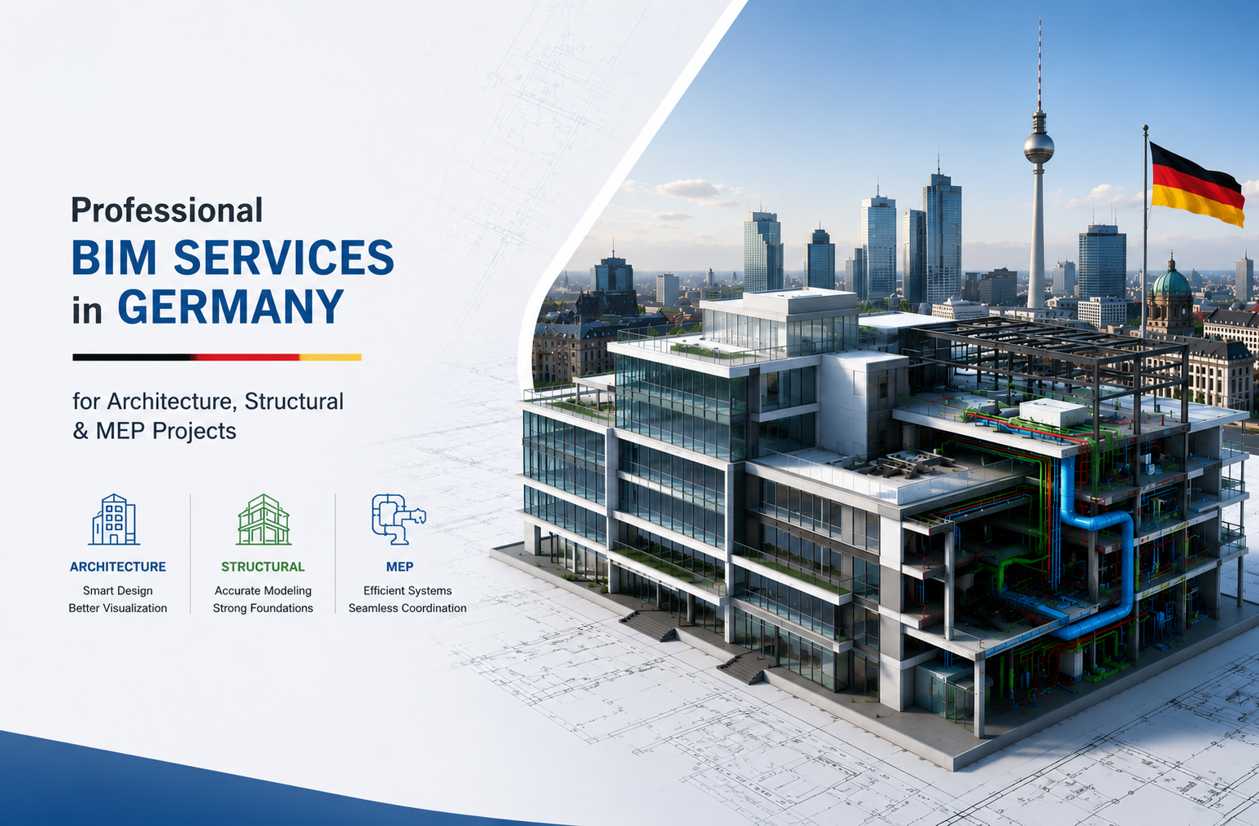
The architecture and construction industry is in the midst of a dynamic transformation that involves new technology, innovation, introduction to new services, and more. As a matter of fact, digital transformation in the economic market is the center of revolution in various industries, including AEC. Over the years, it has witnessed some significant changes that have benefited architects, engineers and other professionals in the sector. Earlier, the architecture and construction industry catered to manual or traditional practices lacking accuracy. However, with changes in time and technology, the architecture sector witnessed some technological revolution that altered the working approach for architects, designers, and engineers.
When computer technology was introduced in the late 1970s, the AEC sector experienced a drastic change in computer-aided drafting (CAD), which shifted AEC professionals from paper to computer screens with 2D design views. This was a major change for architects and engineers. With that in mind, software like AutoCAD was introduced to simplify the design process and easily provide CAD services.
As the growth in the AEC industry continued, technological advancements were further developed. Later on, building information modeling services were introduced, and it quickly became the center of every construction project. The continuous revolution emerged with CAD to BIM services. Later on, the CAD to BIM increased the possibilities of developing new architectural designs and the chance to reduce the scope of errors. This transition quickly became the AEC industry’s paradigm shift, resulting in a fluent construction process, minimized errors, quality-driven results, and a collaborative approach. Let’s explore in detail CAD to BIM and how it has quickly become a groundbreaking approach in the architecture and construction industry.
When the inception of CAD was introduced in the AEC sector, professionals quickly adapted the technology and served a holistic approach to the design process. CAD services simplified the process compared to traditional architectural methods in earlier days. Moreover, it also allowed AEC professionals to design floors and other construction components precisely as CAD software delivered 2D drawings, ensuring accuracy and more efficient project results. During the early inception of CAD, it was in high demand and was also used in automotive and aerospace sectors that demanded sheer 2D drawings. The transformation from paper to screen greatly impacted the architecture and construction industry. Despite being in high demand, CAD services had their own limitations, constrained to complex projects. Some of the limitations included;
However, these limitations continued the prominent use of CAD. The further development in the technology came with a groundbreaking service called CAD to BIM services, which contributed more to construction projects than 2D CAD. As the technology improved and advanced, BIM services quickly gained the spotlight in the AEC industry as they resulted in different perspectives for architects, engineers, and other collaborators.
The introduction of BIM technology changed how architects and engineers design projects. Today, in the realm of architecture and construction, BIM needs no introduction. The revolutionary technology reshaped how the projects are perceived as well as constructed. Moreover it gave an edge to construct new design ideas and a sharp turn in creativity. Since the BIM model offers a 3D view of the project, it also consists of minor details that help professionals build the infrastructure more accurately, efficiently, and reliably. In contrast, it also entails a long list of advantages, including,
This list of benefits can go long. However, CAD users were quickly convinced by the process and BIM results as BIM services enhanced CAD drawings, centralized and accurate for the project. Furthermore, this gave birth to CAD and BIM conversion services, which are today one of the most highly used services in the AEC sector. The conversion of 2D CAD to 3D BIM models has effectively resulted in a variety of design approaches and possibilities for making the complex construction process into a simplified one. The CAD to BIM conversion model seamlessly provides a data-rich, intelligent BIM model that results in an excellent approach for construction projects. Moreover, the use of CAD to BIM services gave a beneficial result in the modern architecture realm, such as
With a wide range of benefits of CAD to BIM, AEC professionals can accurately deliver the design and maintain a smooth workflow. However, implementing this process with an in-house team of professionals can be tedious. Rather, it is much more efficient and advisable to outsource CAD conversion services from a reliable BIM company whose experts can maintain accuracy and deliver the project within the desired deadline.
CAD to BIM services demand for sheer expertise and knowledge as well as the latest use of technology. The accuracy and efficiency of the project model require expert attention to incorporate all the vital details. All this can be a time-consuming process and expensive for firms to build an in-house team of professionals. The added expense of resources, infrastructure, and technology can be cumbersome for architecture firms. Moreover, it can disturb the business workflow and might not get accurate results. Hence, BIM outsourcing services providers can efficiently take care of the project and provide top-notch quality, precision, efficiency, and creativity in the construction project.
The outsource CAD conversion team can also be a cost-effective option for firms. As more construction projects adopt BIM technology, the growing demand has resulted in a surge of outsourcing CAD to BIM services that saves time and money. Moreover, the services promote collaboration among the architects, engineers, and contractors, which results in reduced errors and overtime delays in the construction projects. Furthermore, it also results in many benefits, including,
Since the inception of CAD and BIM technologies in the AEC sector, how professionals initiate and end projects have been entirely reshaped while maintaining their efficiency and quality. The CAD to BIM conversion only aims to deliver the outcomes with better visualizations for stakeholders, entailing all details. Moreover, BIM outsourcing services promote quality-driven outcomes for AEC firms to remain competitive in the market.

© 2025 Crivva - Hosted by Airy Hosting Managed Website Hosting.