

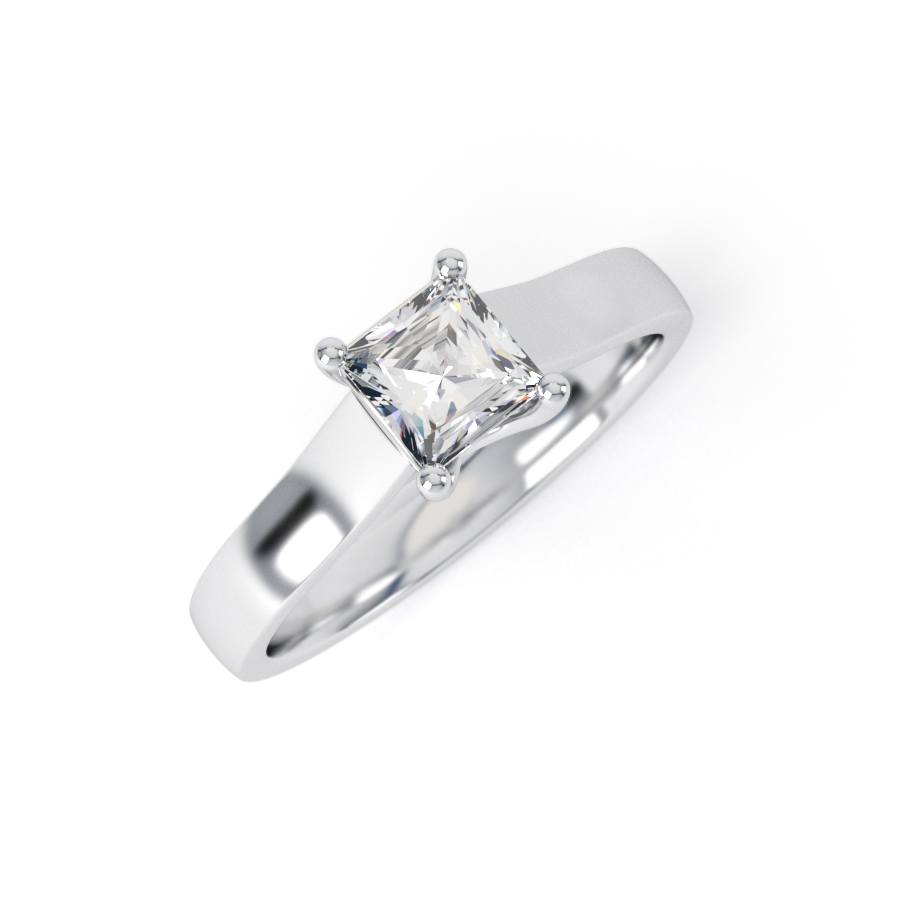
Buying diamond engagement rings doesn’t require spending three months’ salary. That rule, still quoted today, was invented by a De Beers advertising campaign in the 1980s. The real question isn’t how much you spend — it’s how smartly you spend it. Here’s what experienced buyers know that first-timers often don’t.
There’s no universally correct amount to spend on an engagement ring. What matters far more is that the ring genuinely reflects your partner’s taste and that buying it doesn’t put you in financial stress at the start of a life together.
A well-chosen ring at £2,000 will always outperform a poorly chosen one at £8,000. Focus first on the ring she’d love, then work backwards to optimise within your budget.
Diamonds are priced in tiers at round numbers — 0.50ct, 1.00ct, 1.50ct. A 0.98ct stone is visually identical to a 1.00ct stone but can be 15–20% cheaper. Buy just under these thresholds and keep the difference.
Diamonds graded D, E, and F are colourless — and you pay significantly for that distinction. A G or H grade diamond looks white to the naked eye in almost all settings. The exception? If set in platinum or white gold, G–H is fine. In yellow gold, you can go to I or J comfortably.
An SI1 or VS2 diamond is eye-clean — meaning any inclusions are invisible without magnification. VVS1 and VVS2 grades are spectacular under a loupe, but your partner won’t be wearing a loupe. Save that budget for cut quality or carat weight instead.
Cut quality. Always. A poorly cut diamond looks dull and lifeless regardless of its other grades. Prioritise an Excellent or Ideal cut above everything else — it’s the single biggest factor in how much a diamond sparkles.
And always buy certified. GIA or IGI certification ensures the grades you’re paying for are real, not inflated by an in-house or unknown grading lab.
Lab-grown diamonds are chemically and physically identical to mined diamonds. They’re not simulants like cubic zirconia — they’re real diamonds created in controlled conditions rather than extracted from the earth.
They typically cost 50–70% less than equivalent natural stones, which means significantly more diamond for your budget. They are GIA-certifiable, optically identical, and ethically unambiguous.
The trade-off is resale value — natural diamonds retain theirs better. But for most couples, a ring is not a financial instrument. It’s a symbol.
Pre-owned engagement rings are another smart avenue. Art deco and Edwardian settings in particular are extraordinarily detailed — the craftsmanship on antique rings often exceeds what’s produced today at comparable price points. Buying vintage also avoids any mining ethics concerns entirely.
Reputable jewellers who specialise in this space — like the experts behind Marlow’s Diamonds’ engagement ring range — can help you navigate certification, ethical sourcing, and value optimisation in a way that generic retailers simply can’t.
One factor many buyers overlook is timing. Like most luxury goods, diamond prices are influenced by seasonal demand, retail cycles, and even broader economic conditions. If you can plan ahead, you can often secure better value without compromising on quality.
The period between late January and early March is typically quieter for jewellers following the holiday and New Year rush. This can be a good time to negotiate or access a wider selection before demand picks up again. Similarly, late summer can offer opportunities, as it falls between peak engagement seasons.
It is also worth paying attention to retailer promotions. While genuine discounts on high-quality diamonds are rare, settings, mounting costs, or added services such as resizing and maintenance are sometimes included as part of seasonal offers. These added benefits can improve overall value even if the diamond price itself remains steady.
If you are not working to a fixed proposal date, patience becomes a real advantage. Monitoring inventory, comparing options over a few weeks, and waiting for the right stone at the right price can make a noticeable difference. In a market where small variations in grade can shift pricing significantly, timing your purchase carefully is another way to stretch your budget intelligently.
While most buyers focus heavily on the diamond itself, the setting plays a major role in how the ring looks and how far your budget goes. A smart choice here can make a modest stone appear significantly larger and more impressive without increasing the cost dramatically.
Halo settings are one of the most effective ways to maximise visual impact. By surrounding the centre diamond with smaller stones, they create the illusion of a much bigger centrepiece. This allows you to choose a slightly smaller diamond while still achieving a bold, eye-catching look. Similarly, pavé bands add extra sparkle along the shank, enhancing the overall brilliance of the ring without requiring a larger centre stone.
Another approach is to consider elongated diamond shapes such as oval, pear, or marquise. These shapes tend to look larger than round diamonds of the same carat weight due to their surface area and proportions. When paired with a well-designed setting, they can deliver excellent presence at a lower cost.
Metal choice also affects perceived value. White gold offers a similar appearance to platinum but at a lower price point, allowing you to allocate more of your budget towards the diamond itself. Yellow and rose gold settings can also make slightly lower colour grade diamonds appear warmer and more appealing, which helps you save without compromising on aesthetics.
Ultimately, the goal is to create balance. A thoughtfully chosen setting enhances the diamond, protects it for everyday wear, and elevates the overall design. When done right, it ensures that every pound spent contributes directly to how the ring looks and feels, rather than simply increasing specifications on paper.
Buying on a budget doesn’t mean compromising on meaning or beauty. It means understanding where the value actually lies — and spending accordingly. Cut first, certification always, and carat weight last.
Consumer guidance from Which? UK on engagement ring buying offers further independent advice on avoiding common retail traps.

© 2025 Crivva - Hosted by Airy Hosting Managed Website Hosting.