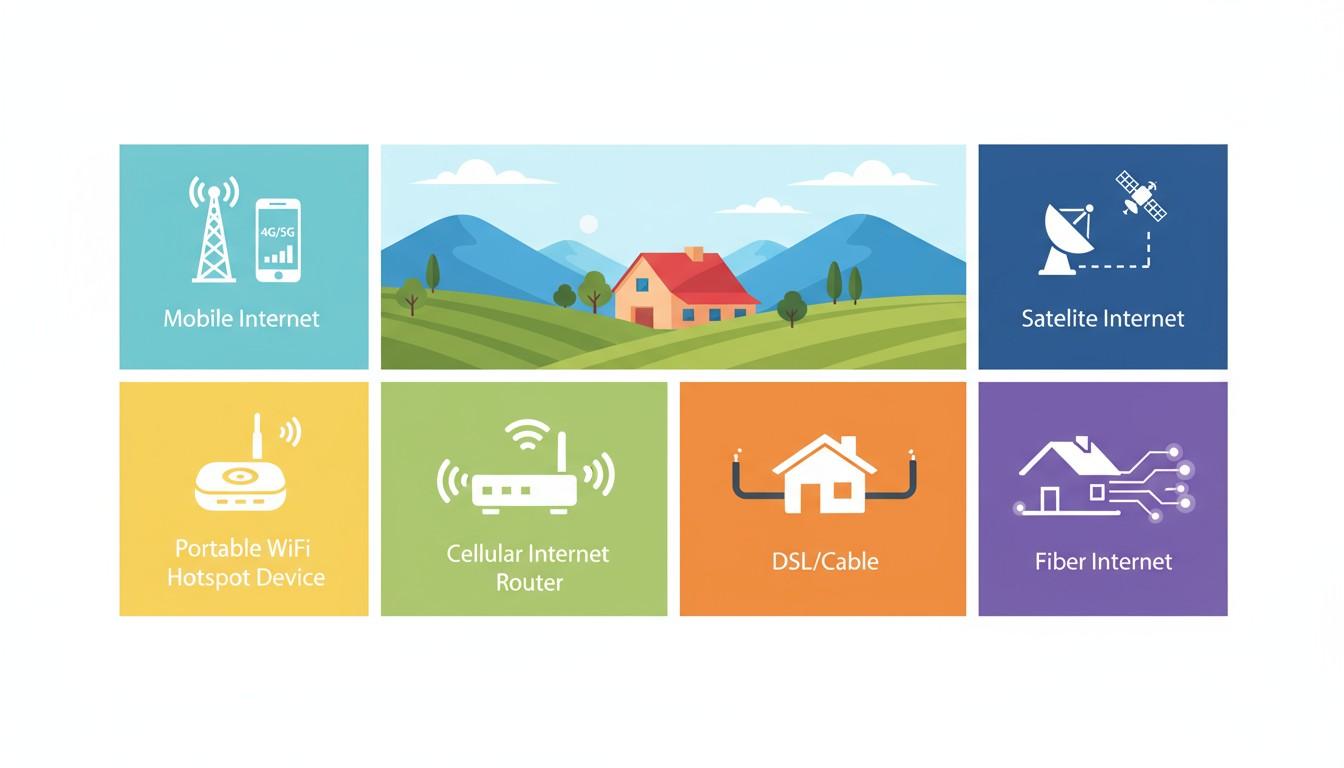
If you’ve ever tried to stream a movie, join a Zoom call, or send a large file from a rural area, you know the struggle is real. Buffering screens, dropped connections, and slow speeds can turn simple online tasks into tests of patience. So what are the best internet options for people living outside big cities? How can you get reliable, high-speed internet even miles away from town?
So what are the best rural internet options for people living in rural areas? How can you get reliable, high-speed internet even far from town?
Let’s break it down.
Despite rapid advances in technology, millions of Americans still lack access to dependable broadband. Rural areas often have fewer providers, older infrastructure, and less incentive for companies to invest in upgrades.
Typical problems include:
If you are fortunate enough to live in an area with strong 5G coverage, this could be one of the best internet options for rural areas right now.
How it works:
5G home internet uses nearby cell towers to send broadband directly to your router, with no cables or phone lines needed. You plug in a small receiver or modem, and just like that, you have Wi-Fi throughout your home.
What you can expect:
Real-world insight:
If your home already has a strong 5G mobile signal, there’s a good chance 5G home internet will work well too. However, in very remote areas with a weaker signal, you might be better off using LTE or fixed wireless service.
Before 5G came along, 4G LTE was the main option for rural and mobile internet, and it still is.
How it works:
It connects to existing cell towers, just like your phone, but uses a dedicated router designed for better, more stable reception.
Why it works well in rural areas:
Average speeds: 25–100 Mbps, depending on distance from towers and network congestion.
Fixed wireless is another great choice for people living just outside of town or in small rural communities.
How it works:
Your provider installs a small antenna or receiver on your home that connects to a nearby tower using a wireless signal. Unlike mobile-based LTE and 5G services, fixed wireless often uses dedicated radio frequencies that can offer consistent speeds.
What makes it great:
Speeds: 25–250 Mbps depending on the provider and terrain.
Who it’s best for:
If you live near a small town but not in it, within about 5 to 10 miles, fixed wireless might provide a strong, steady connection without the costs of a cable or fiber installation.
For those who live truly off the grid, satellite internet is often the only practical option.
How it works:
A dish on your home communicates with satellites orbiting the Earth to provide broadband connectivity.
Pros:
Cons:
Yes, DSL and fiber still exist in many small towns, and they can provide excellent performance if available.
DSL (Digital Subscriber Line):
Fiber:
Choosing between all these technologies can feel overwhelming, so here’s a simple way to decide:
Use coverage maps on provider websites such as UbiFi, T-Mobile, Verizon, and HughesNet, or use tools like FCC Broadband Map. Availability changes quickly; an area labeled “no service” last year might have coverage now.
If you’re considering LTE or 5G, run a quick speed test on your mobile phone in different spots around your home. A strong cellular signal likely means a home wireless setup will perform well.
Some services allow for “plug and play,” while others need professional installation. 5G and LTE routers usually allow self-installation, making them perfect for renters or travelers.
Wireless and satellite plans often start around $50–$100/month.
Watch out for data caps or throttling after certain usage thresholds.
Let’s take a closer look at the top rural internet technologies and how they compare in terms of speed, reliability, and availability.
If you live near a 5G-covered area, this is one of the most powerful rural internet options today.
Still a reliable workhorse for remote communities, 4G LTE offers steady performance in areas where 5G isn’t yet available.
Fixed wireless connects directly to a nearby tower using a local antenna.
For those living entirely off the grid, satellite internet is often the only way to stay connected.
Though less common in deep rural zones, DSL and fiber remain top choices where they’re available.
Finding the best internet options for rural and remote areas depends on your location, budget, and how you use the web.
If you can access 5G or fixed wireless, choose those options for their speed without wires.
If not, 4G LTE or satellite internet can keep you connected almost anywhere.
The key is knowing your options and testing what works best where you live. Staying connected should not feel out of reach, no matter where you call home.
The best rural internet options include 5G Home Internet, 4G LTE, Fixed Wireless, Satellite, and DSL/Fiber (if available). Your ideal choice depends on your location, coverage strength, and how you use the internet—whether for streaming, work, or everyday browsing.
Yes! Thanks to 5G and satellite technologies, high-speed internet is reaching even the most remote locations. Services like Starlink and UbiFi provide strong, reliable connections to areas that traditional wired networks cannot reach.
5G home internet speeds typically range from 100 Mbps to 300 Mbps, sometimes even higher with a strong signal. This service is ideal for households needing fast, low-latency internet for work, gaming, and entertainment in semi-rural areas.
Some of the best rural internet providers include T-Mobile Home Internet, UbiFi, Rise Broadband, Starlink, and Nextlink. Each serves different regions, so checking coverage maps for your ZIP code is the best way to find the right fit for your area.

© 2025 Crivva - Hosted by Airy Hosting Managed Website Hosting.