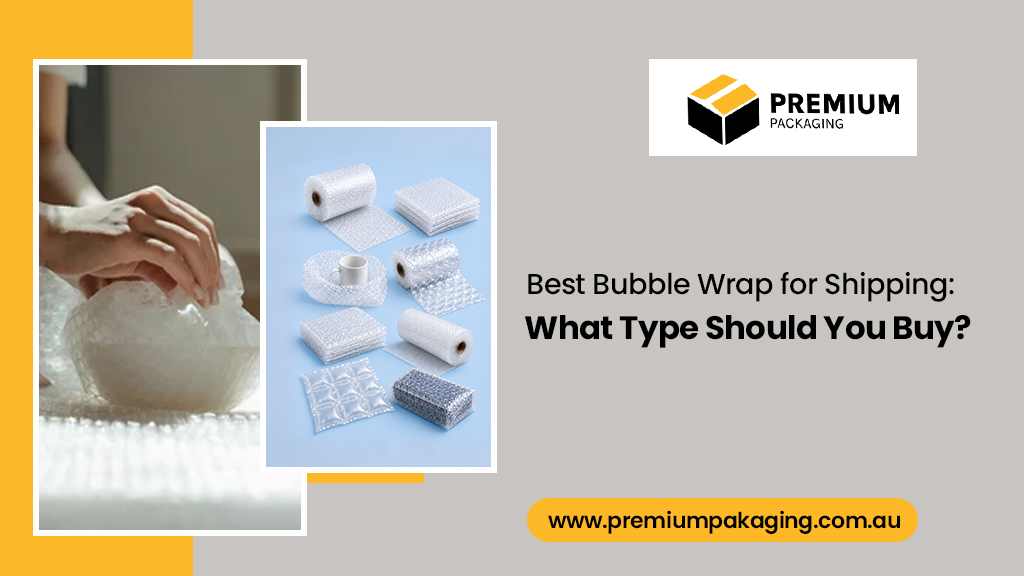
Choosing the wrong bubble wrap for a shipment does not always cause immediate, visible damage. Often, the consequences show up downstream: a returned order, a damage claim, a customer who does not reorder. For Australian businesses shipping fragile or high-value goods, the decision about which bubble wrap to use is a practical one with real operational consequences.
The bubble wrap category covers far more than the standard clear roll most people picture. Premium Packaging supplies a full range of commercial bubble wrap formats, each suited to specific product types, freight conditions, and industry requirements. This guide breaks down each type, explains the key differences, and helps procurement managers, operations teams, and fulfilment managers match the right product to their needs.
Bubble wrap is a polyethylene film product with evenly spaced, air-filled pockets sealed between two layers. When a packaged item experiences impact, vibration, or compression during handling and freight, those air pockets absorb and distribute the force away from the product surface.
The protection it provides depends on three variables: the bubble diameter, the number of layers, and any laminated backing. Getting these variables right for a given product is the difference between a consistent, low-damage dispatch operation and one that generates regular complaints and replacement costs.
For commercial operations, bubble wrap also needs to work within a packing workflow. Roll dimensions, tear consistency, and compatibility with dispensers all affect how efficiently it integrates into a picking and packing bench environment.
The most common question among procurement buyers is whether to stock 10mm or 20mm bubble wrap, or both. The answer depends on the products being shipped.
Quick Reference: Bubble Size Selection
For businesses running high-volume eCommerce fulfilment, 10mm bubble wrap is typically the workhorse format. It wraps tighter, uses less material per item, and keeps parcel weights down. The 20mm format suits distribution operations and manufacturing environments where goods are denser and more exposure to impact is likely.
Premium Packaging supplies a range of bubble wrap types across its protective packaging category. Each format is designed for a specific set of shipping or storage requirements.
The most widely used format across Australian commercial operations. Standard bubble wrap is manufactured from low-density polyethylene and is available in 10mm and 20mm bubble sizes. It suits general product wrapping, void filling within cartons, and surface protection for non-sensitive items across retail, eCommerce, and warehousing environments.
Designed for goods that require a higher level of impact and compression protection. Heavy-duty bubble wrap uses a thicker film and larger air pockets to handle bulkier, heavier, or higher-value items where standard wrap would compress under load or fail to absorb sufficient impact. Suitable for industrial equipment components, large appliances, hardware, and other commercial goods with significant mass or fragility.
A specifically engineered format for businesses that handle, store, or ship electronic components and devices. Standard bubble wrap generates static electricity through friction, which poses an electrostatic discharge (ESD) risk to circuit boards, sensors, memory modules, and other sensitive electronics. Anti-static bubble wrap is manufactured with an additive in the resin that neutralises static build-up.
It is recognisable by its distinctive pink colouring, which serves as a visual marker within warehouse and packing environments to distinguish ESD-protected packaging from standard materials. This wrap is used by electronics manufacturers, technology retailers, IT service providers, and logistics operators handling static-sensitive goods.
This format combines a standard bubble core with a foil outer layer. The foil reflects radiant heat and provides thermal insulation during transit, making it the preferred choice for temperature-sensitive products. It is commonly used by food service distributors, pharmaceutical suppliers, and other operations where maintaining consistent product temperature during freight is a compliance or quality requirement.
A bubble wrap format with a kraft paper outer layer. The paper backing adds rigidity and prevents the condensation that can mark or damage timber, veneer, and high-gloss painted surfaces. It is widely used in furniture removal, manufacturing, and any application where a non-plastic contact surface is preferred. The Kraft layer also accepts labels and markings more readily than plain bubble film.
Foam laminated bubble wrap adds a foam layer to the standard bubble structure, providing additional surface protection and greater resistance to scratching and marking. It is the preferred choice for high-value goods with polished, painted, or coated surfaces, including luxury furniture, artwork, display items, and premium consumer goods. The foam layer distributes pressure more evenly and reduces the risk of bubble impressions on sensitive finishes.
Pre-formed bubble bags offer a fast, efficient alternative to wrapping individual items from a roll. Each bag provides a consistent level of wrap coverage and protects both surfaces simultaneously. Suitable for e-commerce fulfilment environments where speed at the packing bench is essential. Available in a range of sizes to match common product dimensions, reducing material waste and packing time compared to roll-based wrapping.
Bubble mailers are self-contained mailing envelopes lined with bubble cushioning. They replace the need for a separate carton and wrap for lighter items, combining protection with a ready-to-label dispatch format. Suited to postal and courier dispatch of small, lightweight goods such as jewellery, accessories, documents, and small retail items. They reduce packing steps, material usage, and parcel dimensions for freight-cost efficiency.
For businesses that require void fill but are committed to reducing plastic use, Bio Void Fill provides a sustainable alternative. It performs the same function as loose bubble sheeting inside cartons, preventing product movement and absorbing impact, while using biodegradable materials that align with responsible procurement policies. It suits operations with sustainability targets, compliance requirements, or customer expectations around eco-friendly packaging.
| Bubble Wrap Type | Best Application | Bubble Size | Industry Fit |
| Standard Bubble Wrap | General goods, cartons, retail parcels | 10mm or 20mm | e-commerce, retail, warehousing |
| Heavy Duty Bubble Wrap | Bulky, heavy, or high-value goods | 20mm+ | Industrial, appliances, machinery |
| Anti-Static Bubble Wrap | Electronics, circuit boards, devices | 10mm or 20mm | Tech, electronics, IT |
| Foil Laminated Bubble Wrap | Temperature-sensitive products | 10mm | Food, pharmaceuticals, perishables |
| Kraft Laminated Bubble Wrap | Furniture, timber, high-gloss surfaces | 10mm | Furniture, removals, manufacturing |
| Foam Laminated Bubble Wrap | Delicate finishes, polished surfaces | 10mm | Art, luxury goods, cosmetics |
| Bubble Bags | Individual item wrapping at speed | 10mm | eCommerce fulfilment, retail dispatch |
| Bubble Mailers | Lightweight items for postal dispatch | N/A | e-commerce, small parcel logistics |
| Bio Void Fill | Eco-conscious packing and void fill | N/A | Sustainability-focused operations |
For operations with consistent, high-volume shipping requirements, the format and roll dimensions of bubble wrap directly affect packing efficiency. A roll that is too narrow for the products being wrapped increases handling time and material use. A roll that is not perforated adds cutting steps that slow packing benches during peak periods.
Premium Packaging supplies bubble wrap in commercial roll formats designed for bench-top use and integration into fulfilment workflows. A bubble wrap dispenser allows rolls to feed cleanly at the packing station without tangling or uneven tearing, which reduces waste and supports consistent wrapping standards across a warehouse team.
For operations managing multiple product categories, stocking two or three wrap types, each on a dedicated dispenser, is more efficient than switching rolls mid-shift. Anti-static wrap for electronics, standard 10mm for general goods, and heavy-duty for bulkier lines can each be staged at different stations or dispatch areas within the same facility.
Know more https://premiumpackaging.com.au/blog/best-bubble-wrap-for-shipping

© 2025 Crivva - Hosted by Airy Hosting Managed Website Hosting.