


In today’s rapidly evolving digital landscape, businesses are under constant pressure to innovate, improve efficiency, and reduce operational costs. Technology plays a critical role in achieving these objectives, and many organizations are turning to open-source software solutions to gain a competitive advantage. Open-source technologies have transformed the way businesses develop applications, manage data, and deliver services, making them a preferred choice for organizations of all sizes.
Open-source software refers to software whose source code is publicly available for anyone to inspect, modify, and distribute. Unlike proprietary solutions that restrict access and customization, open-source platforms offer flexibility, transparency, and greater control over technological infrastructure. As businesses continue to embrace digital innovation, open-source software has become an essential component of modern IT strategies.
The adoption of open-source software has increased significantly over the past decade. Organizations across industries are leveraging open-source platforms to build websites, manage content, develop applications, and automate business processes.
One of the primary reasons for this growth is the freedom open-source software provides. Businesses can customize applications to meet specific requirements without being limited by vendor restrictions. This flexibility enables organizations to create unique digital experiences while maintaining complete ownership of their solutions.
These advantages make open-source software a practical and sustainable choice for businesses seeking long-term technological growth.
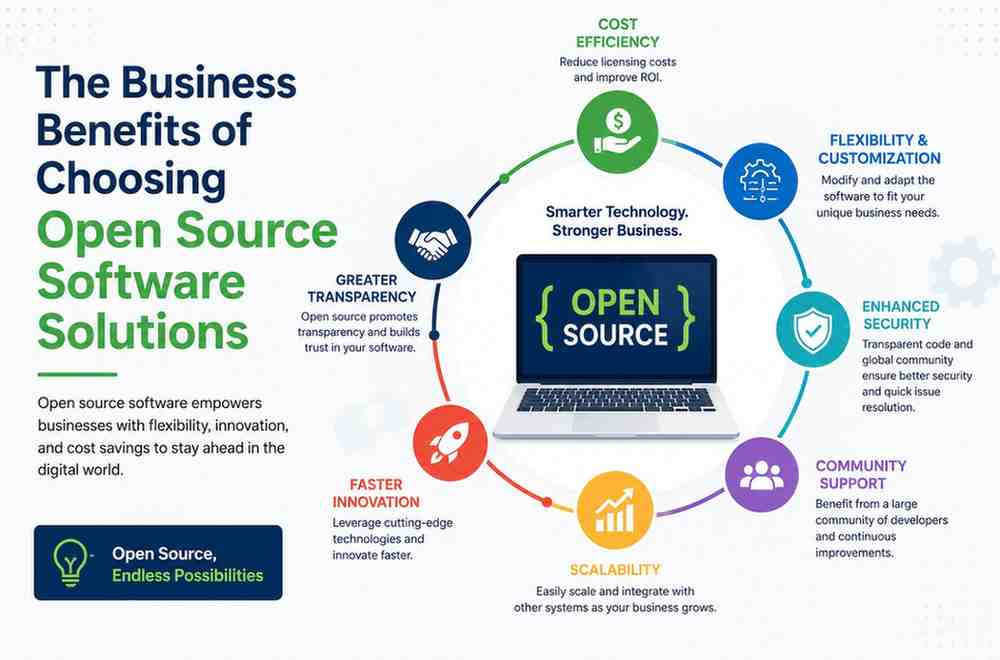
One of the most significant benefits of open-source software is its cost-effectiveness. Proprietary software often requires expensive licensing fees, recurring subscriptions, and additional costs for upgrades or feature enhancements.
Open-source solutions eliminate many of these expenses, allowing organizations to allocate resources toward innovation, employee development, and business expansion. Although implementation and maintenance may require investment, the overall cost of ownership is generally much lower compared to proprietary alternatives.
Businesses can maximize their technology budgets by investing in customization and strategic improvements rather than paying ongoing software licensing fees. This approach often results in a higher return on investment over time.
Every organization has unique operational requirements. Open-source software provides the flexibility needed to adapt systems according to specific business goals and workflows.
Whether a company needs a customized website, enterprise application, customer portal, or content management system, open-source platforms offer the freedom to build tailored solutions. Businesses can integrate third-party tools, develop custom features, and scale functionality as their needs evolve.
Many organizations work with an experienced open source CMS development company to create scalable and feature-rich digital platforms that align with their long-term objectives.
Customized software solutions help organizations remain agile and responsive to changing market conditions. As businesses expand, open-source platforms can be modified and scaled without significant infrastructure limitations.
Organizations worldwide are investing heavily in technology modernization to improve efficiency and enhance customer experiences. Open-source software serves as a strong foundation for these modernization efforts.
Businesses pursuing digital transformation initiatives often rely on open-source technologies because they provide flexibility, scalability, and compatibility with cloud environments. Open-source solutions help organizations automate workflows, improve collaboration, and leverage data-driven decision-making.
Businesses can adapt quickly to changing market demands and customer expectations.
Development teams can deploy new features and applications more efficiently.
Open-source platforms often support extensive integrations with existing systems and technologies.
A common misconception is that open-source software is less secure than proprietary software. In reality, transparency often strengthens security.
Because source code is publicly available, developers and security professionals around the world continuously review and test open-source projects. Vulnerabilities are identified and addressed quickly through collaborative efforts.
This transparent approach allows organizations to implement secure software solutions while benefiting from ongoing improvements and security updates.
One of the defining features of open-source software is its collaborative nature. Thousands of developers contribute to projects by improving functionality, fixing bugs, and creating extensions that benefit the entire community.
This model of collaborative software development accelerates innovation and ensures that technologies continue evolving to meet modern business requirements.
Organizations gain access to extensive documentation, community forums, plugins, and development resources that simplify implementation and maintenance processes.
The collaborative ecosystem surrounding open-source software promotes rapid innovation. Businesses benefit from new features, performance enhancements, and technological advancements without waiting for vendor-controlled release cycles.
Many widely adopted business technologies are based on open-source frameworks and platforms. These solutions support everything from website development to enterprise resource management.
These technologies provide the scalability and flexibility necessary to support modern business operations.
Open-source software has become a powerful tool for organizations seeking cost-effective, scalable, and customizable technology solutions. From reducing software expenses and improving security to supporting digital transformation and fostering innovation, open-source technologies deliver significant business value.
As technology continues to evolve, businesses that embrace open-source solutions will be better positioned to adapt, innovate, and compete in an increasingly digital marketplace. By leveraging the strengths of open-source software, organizations can build future-ready systems that support sustainable growth and long-term success.
As organizations continue to embrace digital transformation, open-source software will play an increasingly important role in supporting business growth and operational efficiency. From cloud-native applications and content management systems to data analytics and enterprise platforms, open-source technologies provide the foundation for future-ready solutions.
Open-source software provides publicly accessible source code that can be modified and distributed by users.
Businesses choose open-source software for flexibility, cost savings, customization, and scalability.
Yes, open-source software benefits from continuous public review and frequent security updates.
Absolutely. Many enterprises use open-source platforms for websites, applications, databases, and business systems.
Its collaborative development model encourages continuous improvements, faster updates, and community-driven innovation.

© 2025 Crivva - Hosted by Airy Hosting Managed Website Hosting.