Ever wondered why your internet feels slow even though you’re paying for a “superfast” plan? Maybe your speed tests look good, but your Zoom calls still freeze, your games lag, or your browser takes forever to load simple pages. If this sounds familiar, the issue might not be your internet speed at all; it could be something deeper. This is where understanding bandwidth and latency really matters.
Most people think that faster internet means a better experience. But speed alone doesn’t ensure smooth connections. There’s a hidden factor, and until you grasp how bandwidth and latency work together, you’ll keep facing the same frustrating problems without knowing why.
Let’s break it down in the simplest, most practical way.
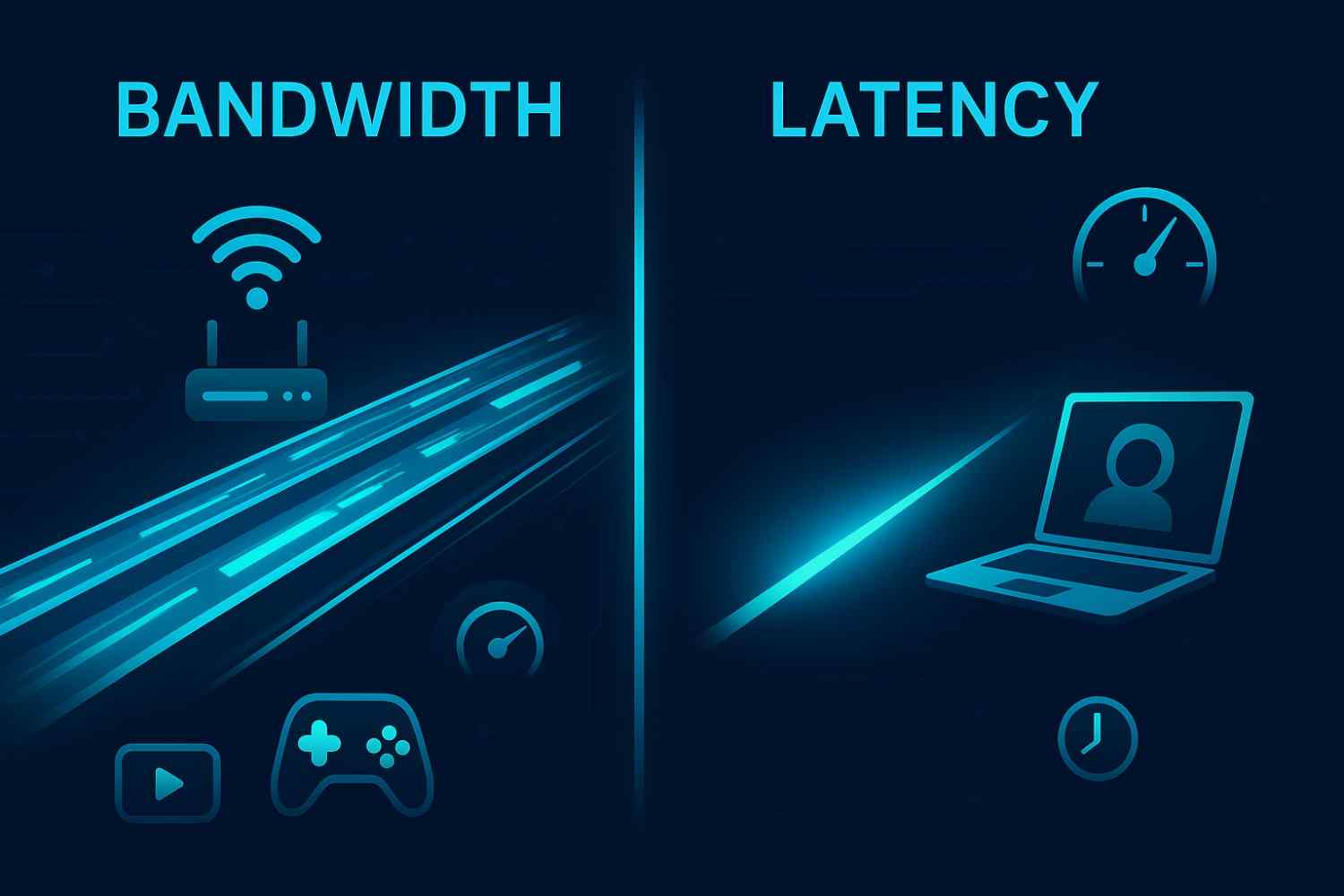
Bandwidth is the maximum amount of data your internet connection can move at one time. Think of it like the width of a highway—the wider the road, the more cars (data) can pass through at the same time.
So, higher bandwidth means your connection can handle:
When your provider says you’re getting “100 Mbps” or “500 Mbps,” that refers to your bandwidth, but it doesn’t cover everything. High bandwidth is good, but it’s just one part of the picture.
If bandwidth is the highway, latency is how quickly the cars move. Latency measures the delay between sending data and getting a response. It’s measured in milliseconds (ms).
You’ll notice latency issues when:
Low latency = fast reactions
High latency = lag
This is why gamers and remote workers often pay more attention to ping (latency) than bandwidth. A high-bandwidth connection with high latency can still feel slow.
A lot of people mix up bandwidth and latency, but they affect your internet experience in completely different ways.
How much data can flow at once.
How quickly that data reaches you.
Even a 1 Gbps plan can feel shaky if latency is high. Conversely, you might have a 25 Mbps connection that feels fast if latency is low. That’s why understanding the difference between bandwidth and latency helps you solve problems more effectively and choose better internet options.
The answer depends on what you’re doing.
If your video buffers, increasing bandwidth helps. If your Zoom freezes for no reason, lowering latency helps. Most people don’t realize that when their “internet feels slow,” it’s almost always a latency issue, not a bandwidth problem.
Imagine your house has 15 to 20 devices connected phones, TVs, tablets, cameras, smart assistants, doorbells, and more. Bandwidth decides how well all these can work together. If too many devices are using bandwidth, your internet slows down simply because there isn’t enough capacity for everyone. That’s a bandwidth crunch.
Gaming delays, audio lags in calls, or slow page loading are usually not caused by a lack of bandwidth. They result from high latency.
High latency often comes from:
Latency is all about reaction time, which makes it much more noticeable in real-time activities.
Different connection types behave differently:
This is why many rural users switch from satellite to wireless LTE; lower latency can significantly improve real-world performance.
Here’s a simple test:
This quick check helps you troubleshoot more effectively.
If you’re running out of capacity, try:
More bandwidth = more device support.
Keeps Wi-Fi free for others.
Cloud sync, software updates, and downloads consume large chunks of bandwidth.
Older routers and modems limit speed.
Mesh systems or placing your router in an open area can boost bandwidth efficiency.
If lag and delays are your issue, focus here:
It refreshes your network and clears temporary delays.
Pause streaming or downloads during important video calls.
Ethernet dramatically lowers latency.
LTE or fiber beat satellites every time.
Move closer to your router or remove interference.
Once latency improves, everything feels faster—even without upgrading bandwidth.
Understanding bandwidth and latency is one of the easiest ways to boost your internet performance without spending extra money. Bandwidth determines how much data can move at once. Latency determines how quickly it responds. When you find a balance between both, you enjoy smoother streaming, better gaming, faster browsing, and reliable video calls.
Whether you’re working from home, gaming, managing smart devices, or streaming nonstop, knowing the difference helps you troubleshoot more effectively and choose the right connection for your needs.
Bandwidth controls how much data your connection can handle at once, while latency measures how quickly data travels. Both affect performance differently depending on the activity.
Lag is often due to high latency, not low bandwidth. Weak signals, outdated equipment, and long-distance routing can delay your connection even if speeds seem fast.
Under 50 ms is excellent for gaming and video calls. Anything above 150 ms can feel slow, especially on real-time applications like Zoom or online games.
Yes, every connected device uses part of your bandwidth, especially if streaming, downloading, or uploading. This can slow down your network significantly.
Use Ethernet, reboot your router, clear network congestion, reduce interference, or switch to a lower-latency internet type like LTE or fiber.

© 2025 Crivva - Hosted by Airy Hosting Managed Website Hosting.