Autism Spectrum Disorder (ASD) presents a wide variety of challenges — sensory sensitivities, difficulties with coordination, delayed speech or motor skills, trouble focusing, and struggles with learning or social interaction. What many parents and caregivers look for is a supportive, holistic intervention that goes beyond “one-size-fits-all.” That’s where IIAHP comes in: with a suite of therapies designed to support neurological development, build coordination, improve sensory processing, and ultimately help children with autism reach their full potential.
In this post, we explore how three key elements — Prism Therapy, Reflex Integration, and Sensory Tools/Integration — work together to make a real difference in a child’s development.
IIAHP’s approach is rooted in a drug-free, neuro-developmental, and sensory-based model. Rather than relying on medications, IIAHP focuses on nurturing the brain’s natural ability to rewire and grow through targeted sensory, motor, visual, and auditory stimulation.
According to IIAHP, early and consistent intervention — customized to each child’s unique strengths and challenges — can reorganize neurological pathways. This can lead to measurable improvements in communication, sensory regulation, coordination, behaviour, and learning readiness.
Given the high variability in autism, this individualized, multi-modal method helps address not just one problem, but the whole spectrum of a child’s developmental needs.
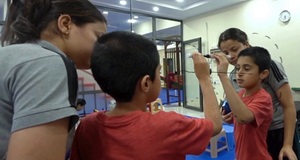
One of the unique therapies at IIAHP is Prism Therapy. This uses specialized prism lenses to influence the brain’s visual and spatial processing. The idea is that many children with autism struggle with visual-spatial awareness, eye coordination, balance, and body perception — skills that are important for movement, coordination, learning, and even social skills (for example, making eye contact or tracking someone in a conversation).
By combining prism lenses with activities like balance board exercises and brain-gym type movement work, Prism Therapy aims to:
In effect, Prism Therapy can open up a “visual-spatial window,” enabling the brain to better interpret what it sees, how the body moves, and how the child relates to the world.
Another core element at IIAHP is Reflex Integration Therapy (sometimes called primitive reflex integration). Early in life, infants have what are known as primitive reflexes — automatic movements or responses that help survival (e.g., sucking, Moro reflex, grasp reflex, etc.). As the brain develops, these reflexes typically fade, replaced by more voluntary, controlled movements.
However, in many children — including some with autism — some of these reflexes persist (are “retained”) far beyond infancy. This can interfere with posture, balance, coordination, focus, speech, fine motor control, and learning readiness.
Reflex Integration Therapy at IIAHP is designed to:
In short, by addressing basic neurological foundation (reflexes and motor coordination), Reflex Integration provides a structural “groundwork” for other therapies (vision, sensory, learning) to build upon.
Sensory challenges are common in autism: children may be over-sensitive or under-responsive to sensory input (sound, touch, visual stimuli, spatial awareness) or may have difficulties integrating different types of sensory information. This can lead to overstimulation, anxiety, meltdowns, difficulties focusing, aversion to textures or sounds, or an inability to participate in everyday activities.
At IIAHP, “Sensory Integration” therapy — often combined with art, tactile activities, vestibular or proprioceptive work — helps children gradually learn to process and tolerate sensory inputs in a structured, supportive way.
Benefits of sensory-based therapy for children with autism include (but are not limited to):
What makes IIAHP’s approach stand out is not simply offering these therapies individually, but integrating them in a multidisciplinary, individualized package.
For many children, this combined, brain-based, neurodevelopmental approach at IIAHP has led to meaningful improvements — sometimes dramatically enhancing their ability to communicate, learn, adapt, and live more independently.
For parents and caregivers navigating autism, the journey can seem overwhelming. But an approach like IIAHP’s — rooted in neuroplasticity, sensory-motor development, and individualized care — offers hope. By addressing the foundational building blocks of brain development (sensory integration, reflex maturation, spatial awareness), there’s a strong chance to lay a foundation for learning, communication, growth, and a better quality of life.
If you’re exploring autism support for your child, consider looking beyond standard therapies — and think about how sensory processing, reflex integration, and visual-spatial awareness might play a role. Because sometimes, growth starts with the small, often-overlooked things: how the brain senses the world, how the body moves, how the eyes perceive.

© 2025 Crivva - Hosted by Airy Hosting Managed Website Hosting.