

Mobile applications continue to play a central role in how businesses engage customers, streamline operations, and launch digital products. At the same time, organizations face increasing pressure to reduce development costs, shorten time to market, and support multiple platforms without maintaining separate codebases.
This has kept hybrid app development relevant even as mobile technologies continue to evolve. Modern frameworks now deliver better performance, improved user experiences, and access to native device capabilities that were once considered major limitations of hybrid applications.
So, are hybrid apps still worth building in 2026? The answer depends on your business goals, budget, performance requirements, and long-term product strategy.
This guide explains what hybrid apps are, their advantages and limitations, when they make sense, how much they typically cost, and whether they remain a smart investment for modern businesses.
What Is a Hybrid App?
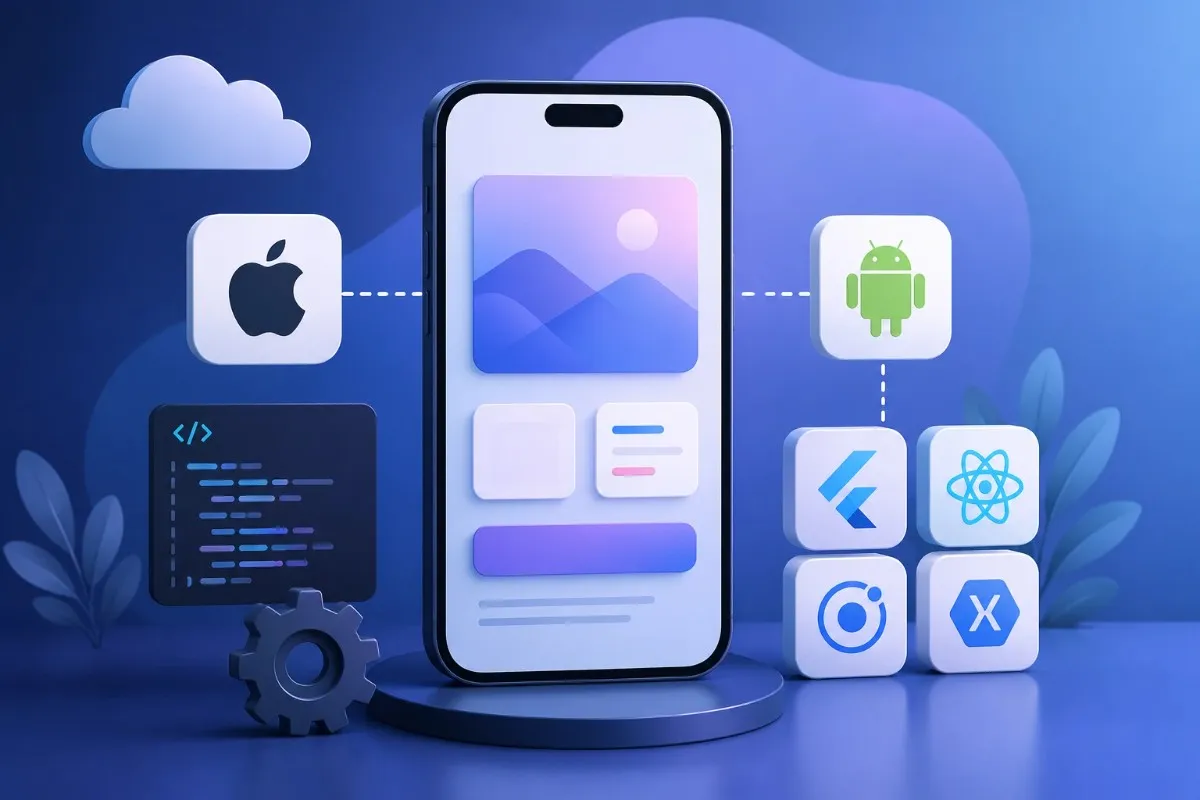
A hybrid app is a mobile application built using web technologies such as HTML, CSS, and JavaScript while running inside a native container. Unlike native apps, which require separate codebases for Android and iOS, hybrid apps share a single codebase across multiple platforms.
Modern hybrid frameworks have significantly improved over the past few years, making it possible to deliver experiences that closely resemble native applications for many business use cases.
Popular ones include:
Flutter
React Native
Ionic
.NET MAUI
These frameworks help developers create applications that work across Android, iOS, tablets, and even desktop platforms while reducing development effort.
Why Hybrid Apps Continue to Grow in 2026?
Businesses are focusing more on speed, scalability, and cost efficiency than ever before.
Several factors continue driving the adoption of hybrid applications:
Faster Time to Market
Launching quickly has become a competitive advantage. Since one codebase supports multiple platforms, businesses can release applications much faster compared to maintaining separate Android and iOS projects.
Lower Development Costs
Maintaining one development team instead of separate platform-specific teams often reduces overall project expenses.
This makes hybrid apps especially attractive for startups, small businesses, and companies testing new ideas.
Easier Maintenance
Bug fixes, feature updates, and security improvements can often be implemented once and deployed across both platforms.
This reduces ongoing maintenance complexity.
Improved Performance
Earlier hybrid apps struggled with speed and responsiveness.
Modern frameworks now provide near-native performance for many business applications, making them suitable for a wide variety of industries.
Benefits of Hybrid App Development
Cost-Effective Development
One of the biggest reasons businesses choose hybrid app development is reduced cost.
Since developers work from a shared codebase, organizations typically spend less on:
Initial development
Testing
Maintenance
Feature updates
Long-term support
This allows businesses to invest more resources into marketing, customer acquisition, and product improvements.
Faster Product Launch
Developing for Android and iOS simultaneously significantly shortens project timelines.
This is particularly valuable when businesses need to:
Launch an MVP
Validate an idea
Enter competitive markets quickly
Meet seasonal deadlines
Consistent User Experience
Modern frameworks make it easier to deliver a consistent interface across platforms while adapting to each operating system’s design guidelines.
Users enjoy similar functionality regardless of their device.
Wider Market Reach
Instead of targeting one operating system first, businesses can reach both Android and iPhone users with a single project.
This increases market coverage from day one.
Easier Feature Updates
Adding new functionality becomes more manageable because developers update one codebase rather than maintaining multiple applications independently.
Challenges of Hybrid Apps
Although hybrid apps have improved significantly, they are not perfect for every project.
Performance Limitations
Apps requiring intensive graphics processing or complex real-time interactions may still perform better with native development.
Examples include:
High-end gaming
AR/VR applications
Advanced 3D rendering
Video editing software
Platform-Specific Features
Some newly released operating system features may become available later in hybrid frameworks.
Businesses relying heavily on the latest device capabilities should evaluate framework support before beginning development.
Additional Optimization
Certain applications require platform-specific adjustments to achieve the best performance across different devices.
This may reduce some of the time savings associated with hybrid development.
When Does a Hybrid App Make Sense?
Hybrid development is an excellent choice in many business scenarios.
It works particularly well for:
Startup MVPs
Startups often need to validate ideas quickly without investing heavily in separate native applications.
Hybrid development enables faster market testing while minimizing risk.
Business Applications
Internal employee apps, customer portals, inventory systems, and workflow management applications usually perform exceptionally well as hybrid apps.
E-commerce Applications
Shopping apps typically focus on browsing products, payments, notifications, and user accounts.
These features are well supported by modern hybrid frameworks.
Booking Platforms
Travel booking, hotel reservations, appointment scheduling, and event management apps can all benefit from shared development.
Educational Apps
Learning management systems, online courses, quizzes, and educational platforms generally do not require heavy device processing, making hybrid development a practical choice.
When Native Development May Be Better?
Hybrid apps are not always the right solution.
Native development may be preferable if your application requires:
Advanced gaming performance
Real-time 3D graphics
Extensive background processing
Complex animations
Heavy machine learning on-device
Advanced augmented reality experiences
Maximum hardware optimization
Choosing the right approach depends on technical requirements rather than trends.
Hybrid App Development Cost in 2026
One of the biggest questions businesses ask is how much a hybrid application costs.
While every project differs, several factors influence overall pricing.
These include:
Application complexity
Number of screens
Features
Third-party integrations
User authentication
Payment gateways
Cloud infrastructure
Backend development
Testing requirements
Maintenance
Typical development estimates include:
Project Type
Estimated Timeline
Simple app
2–4 months
Medium complexity
4–7 months
Enterprise solution
7–12+ months
As functionality grows, so does the overall app development cost due to increased development, testing, infrastructure, and long-term maintenance requirements.
Businesses should evaluate total ownership costs rather than focusing solely on initial development expenses.
Industries Successfully Using Hybrid Apps
Hybrid development has become common across multiple industries.
Examples include:
Healthcare
Appointment scheduling
Telemedicine
Patient portals
Health tracking
Retail
Shopping applications
Loyalty programs
Product catalogs
Mobile payments
Finance
Banking dashboards
Expense tracking
Investment monitoring
Digital wallets
Education
Online learning
Student portals
Assignment management
Virtual classrooms
Logistics
Fleet management
Delivery tracking
Warehouse operations
Driver applications
Trends Shaping Hybrid Apps in 2026
Several technology trends continue strengthening hybrid development.
AI-Powered Features
Businesses increasingly integrate AI capabilities such as:
Chatbots
Personalized recommendations
Smart search
Voice assistants
Hybrid frameworks now support these integrations more effectively than ever.
Better Cloud Integration
Cloud-native architectures simplify:
Authentication
Data synchronization
Push notifications
Real-time updates
Improved Cross-Platform Performance
Framework improvements continue narrowing the performance gap between native and hybrid applications.
Developers now have greater control over rendering, animations, and hardware acceleration.
Enhanced Security
Modern development frameworks offer stronger security support through:
Encryption
Secure authentication
Biometric login
Multi-factor authentication
Secure API communication
Questions Businesses Should Ask Before Choosing Hybrid Development
Before deciding, consider these questions:
Who is the target audience?
Does the app require advanced graphics?
How quickly should the product launch?
What is the available budget?
Will the application evolve rapidly?
Are frequent updates expected?
Is cross-platform support essential?
Answering these questions helps determine whether hybrid development aligns with your business objectives.
Best Practices for Hybrid App Success
Businesses can maximize project success by following several best practices:
Define clear business goals before development begins.
Prioritize user experience over unnecessary features.
Optimize application performance from the beginning.
Conduct testing across multiple devices and operating systems.
Keep third-party libraries updated.
Plan for scalability as user demand grows.
Monitor analytics after launch to guide future improvements.
A well-planned development strategy often has a greater impact on success than the choice between hybrid and native alone.
Final Thoughts
Hybrid applications have evolved considerably over the past decade. Modern frameworks offer faster development, lower maintenance overhead, improved performance, and broader platform compatibility than earlier generations of cross-platform technologies.
For many businesses, hybrid app development
remains a practical choice in 2026 because it balances speed, functionality, and budget. It enables organizations to launch products across Android and iOS with a shared codebase while simplifying future updates and maintenance.
That said, no single approach fits every project. Applications requiring intensive graphics, complex hardware interactions, or cutting-edge device capabilities may still benefit from native development.
Ultimately, the right decision should be based on your product goals, expected user experience, technical requirements, and overall app development cost rather than following industry trends alone. By evaluating these factors carefully, businesses can choose a development approach that supports both immediate objectives and long-term growth.

© 2025 Crivva - Hosted by Airy Hosting Managed Website Hosting.