Enterprise AI is rapidly evolving beyond traditional chatbots and static automation systems. Businesses today are looking for intelligent AI architectures capable of understanding enterprise context, retrieving relevant information, reasoning across multiple workflows, and autonomously executing tasks in real time. This growing demand has accelerated the adoption of Agentic RAG implementation across enterprise environments.
Traditional Retrieval-Augmented Generation (RAG) systems improved AI reliability by enabling large language models to access external knowledge sources before generating responses. However, modern enterprise operations require more than information retrieval. Organizations now need AI systems capable of planning actions, interacting with enterprise tools, automating workflows, and adapting dynamically to business environments.
This is where Agentic RAG is becoming a transformative enterprise AI architecture.
By combining autonomous AI agents with retrieval-augmented intelligence, businesses can build scalable AI systems capable of delivering contextual reasoning, workflow orchestration, and operational automation at scale.
Agentic RAG is an advanced AI architecture that combines Retrieval-Augmented Generation with autonomous AI agents capable of reasoning, planning, memory management, and task execution.
In traditional RAG systems, AI models retrieve relevant information from external data sources and use that context to generate more accurate responses. While this improves factual grounding, these systems often remain reactive and limited to single-step interactions. This limitation is one of the key reasons why businesses are increasingly investing in agentic RAG implementation in enterprise environments to enable more autonomous, context-aware, and workflow-driven AI systems.
Agentic RAG extends these capabilities significantly.
Instead of simply retrieving information, AI agents within the system can:
This enables enterprises to move beyond conversational AI toward intelligent systems capable of supporting actual business operations.
As organizations scale AI adoption, they are increasingly facing limitations with traditional AI implementations.
Static chatbots and isolated AI systems often struggle with:
Agentic RAG solves these challenges by combining enterprise retrieval systems with autonomous AI orchestration.
This architecture allows enterprises to create AI systems that can think, retrieve, reason, and act within enterprise environments.
Businesses are adopting Agentic RAG implementation to:
As AI moves toward autonomous enterprise execution, Agentic RAG is becoming a foundational infrastructure layer for modern organizations.
A successful Agentic RAG implementation requires multiple AI layers working together to deliver contextual enterprise intelligence and autonomous execution capabilities.
The retrieval layer connects AI systems with structured and unstructured enterprise data sources. These may include:
Retrieval systems ensure AI agents can access accurate and up-to-date enterprise information before generating responses or executing workflows.
AI agents act as intelligent orchestrators capable of analyzing goals, planning workflows, making decisions, and executing actions across enterprise environments.
Unlike static AI systems, autonomous agents can:
This makes them suitable for enterprise-scale automation and intelligent workflow execution.
Large language models provide the reasoning and conversational intelligence layer within Agentic RAG systems.
LLMs process enterprise context, interpret instructions, generate responses, and support multi-step reasoning capabilities. Combined with retrieval systems, they significantly improve contextual accuracy and operational intelligence.
Workflow orchestration enables AI agents to coordinate tasks across APIs, databases, communication tools, cloud platforms, and enterprise software systems.
This layer is critical for automating complex enterprise operations involving multiple applications and decision points.
Persistent memory systems help AI agents maintain context across long conversations, operational workflows, and enterprise interactions.
This allows AI systems to provide more personalized, adaptive, and context-aware experiences over time.
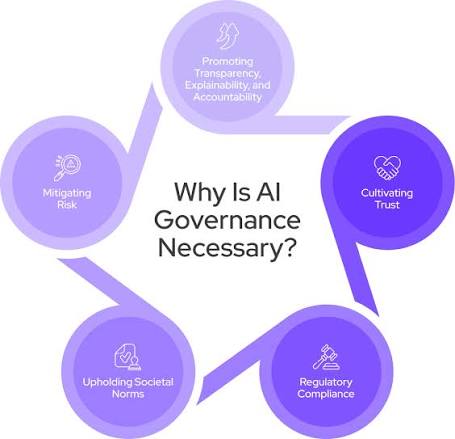
Enterprise AI deployment requires robust governance frameworks to ensure:
Monitoring systems help organizations maintain operational control as AI autonomy increases.
Agentic RAG implementation is rapidly expanding across industries where businesses require scalable intelligence and workflow automation.
Organizations are using Agentic RAG systems to improve internal enterprise search, document intelligence, and employee support systems.
Instead of manually searching through large document repositories, employees can interact with AI agents capable of retrieving, summarizing, and contextualizing enterprise knowledge instantly.
AI agents can retrieve customer-specific data, analyze support history, access enterprise systems, and autonomously resolve customer queries in real time.
This improves response speed while reducing operational pressure on customer service teams.
Healthcare providers are implementing Agentic RAG systems for patient engagement, medical knowledge retrieval, appointment coordination, and operational workflow automation.
AI agents can help healthcare teams access contextual medical information faster while supporting administrative efficiency.
Banks and financial institutions are leveraging Agentic RAG for compliance monitoring, fraud analysis, customer assistance, and intelligent financial operations.
Autonomous AI agents can process large volumes of financial data while improving operational accuracy and efficiency.
Cybersecurity teams are increasingly deploying Agentic RAG systems for threat intelligence analysis, anomaly detection, incident response support, and operational monitoring.
AI agents can retrieve contextual threat data and support real-time security investigations across enterprise environments.
While Agentic RAG offers significant enterprise benefits, implementation requires careful planning and infrastructure readiness.
Enterprise AI systems often interact with sensitive business information, making data security and compliance critical priorities.
Organizations must implement strong governance, encryption, and access control frameworks to protect enterprise data.
Although retrieval systems improve contextual accuracy, enterprises still need validation mechanisms to reduce hallucinated outputs and unreliable reasoning.
Enterprise environments often contain multiple legacy systems, APIs, cloud platforms, and operational tools. Integrating AI agents across these environments can become technically complex.
As AI systems become more autonomous, ensuring operational reliability and workflow consistency becomes increasingly important.
Organizations need observability systems capable of monitoring AI behavior and decision-making processes.
Choosing the right AI implementation partner is critical for successful enterprise deployment.
Businesses should evaluate:
The right AI partner should focus on building operationally intelligent systems aligned with measurable business outcomes rather than deploying isolated AI tools.
Agentic RAG is becoming a foundational architecture for the next generation of enterprise AI systems.
As generative AI, autonomous agents, enterprise search, and workflow orchestration technologies continue evolving, organizations will increasingly rely on AI systems capable of contextual reasoning and intelligent execution.
Future enterprise AI systems will likely become:
Businesses that invest early in Agentic RAG implementation will be better positioned to scale AI transformation, automate operations, and improve enterprise productivity in increasingly competitive digital environments.
Agentic RAG implementation is redefining enterprise AI by combining contextual retrieval, autonomous reasoning, and intelligent workflow execution into scalable operational systems.
Unlike traditional AI architectures, Agentic RAG enables enterprises to build adaptive AI ecosystems capable of supporting real business processes, improving decision-making, and automating complex workflows across departments.
As organizations continue accelerating AI adoption, Agentic RAG will play a critical role in helping enterprises move from isolated AI experimentation toward scalable, production-ready enterprise intelligence systems.

© 2025 Crivva - Hosted by Airy Hosting Managed Website Hosting.