


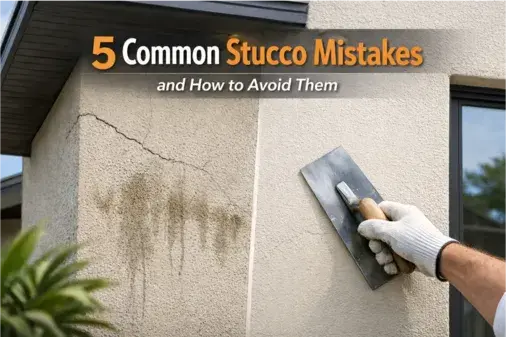
Stucco has been a go-to choice for home exteriors for decades. Its versatility, durability, and unique texture make it stand out among other siding options. However, installing or maintaining stucco incorrectly can lead to cracks, water damage, and a short lifespan. Many of the issues homeowners face aren’t due to the material itself, but because of mistakes during installation or lack of maintenance. Understanding these mistakes can save you time, money, and frustration. Here are five common stucco mistakes and how you can avoid them.
Before applying stucco, the surface needs to be clean, solid, and ready to bond with the new material. One of the most frequent mistakes is rushing this step. Dirt, dust, old paint, or uneven surfaces can prevent stucco from sticking properly. This can result in peeling, cracking, or even entire sections falling off.
How to avoid this:
Clean the surface thoroughly. Remove any dirt, loose paint, or debris.
Repair cracks or holes. Make sure the wall is smooth and solid before applying stucco.
Use a bonding agent or lath system on surfaces like brick or concrete blocks to improve adhesion.
Taking the time to prepare the surface properly ensures that your stucco stays strong and lasts for years.
Stucco is water-resistant, but it is not waterproof. Moisture that gets trapped behind the surface can cause serious problems, such as mold growth, rotting, and structural damage. Many installation issues stem from poor moisture control.
How to avoid this:
Install flashing around windows, doors, and rooflines to direct water away from the walls.
Make sure your property slopes away from the foundation to prevent water pooling.
Apply a weather-resistant barrier under the stucco to protect the wall from moisture infiltration.
Proper moisture control is crucial, especially in areas with heavy rainfall or high humidity. Even the best-looking stucco can fail if water is allowed to sit behind it. For a firsthand account of costly mistakes caused by poor stucco installation, check out this story about what I learned the hard way.
Stucco is made from cement, sand, lime, and water. The right mixture is essential. Too dry, and the stucco cracks; too wet, and it sags or crumbles. Application mistakes, such as uneven layers or rushing the process, can weaken the wall.
How to avoid this:
Follow the manufacturer’s instructions for mixing ratios carefully.
Apply stucco in three layers: scratch coat, brown coat, and finish coat. Each layer needs time to set properly.
Keep a consistent thickness for each coat to prevent cracking or uneven surfaces.
Mix small batches to ensure uniform consistency and avoid drying out before application.
Applying stucco is a skill, and rushing the process or cutting corners will almost always cause problems later.
Stucco expands and contracts with temperature changes. Without control joints, cracks can appear over time, especially on large walls or at corners. Many installers overlook the importance of these joints, which leads to visible cracks that reduce the curb appeal and may cause water problems.
How to avoid this:
Plan where your control joints will go. They should be installed around doors, windows, corners, and long stretches of wall.
Use flexible materials or sealants in the joints to allow movement without cracking.
Follow local building codes for spacing and placement; some areas have specific requirements.
Control joints are a small step during installation, but they can prevent big problems down the line.
Even the best stucco needs regular care. Many homeowners assume that once stucco is installed, it doesn’t require attention. Ignoring maintenance leads to stains, cracks, and other damage that could have been prevented.
How to avoid this:
Inspect your stucco at least once a year for cracks, chips, or discoloration.
Clean gently using a soft brush or low-pressure washer. Avoid harsh chemicals that can damage the finish.
Consider a protective sealant if your stucco is prone to water exposure.
Regular maintenance is much easier and cheaper than repairing major damage caused by neglect.
While DIY projects can be tempting, stucco installation and repair often require professional skills. Experienced contractors know how to prepare surfaces, mix and apply the material correctly, and manage moisture. When hiring a contractor:
Check their previous work and references.
Confirm licensing and insurance.
Ask about their installation process, including moisture barriers and control joint placement.
A professional can save you headaches and ensure that your stucco lasts for decades without major issues.
Choosing the right type of stucco finish is just as important as proper installation. Different finishes—such as smooth, textured, or synthetic stucco—offer varying levels of durability, maintenance, and aesthetic appeal. Smooth finishes provide a clean, modern look but can show cracks more easily, while textured finishes can hide minor imperfections and add character to your home. Synthetic stucco (EIFS) offers better insulation but requires careful moisture management. Understanding the benefits and limitations of each type can help you select a finish that complements your home’s style while ensuring long-term performance.
Stucco performance can be greatly affected by your local climate. In areas with heavy rain, high humidity, or freeze-thaw cycles, improper installation or maintenance can lead to water infiltration and cracking. Similarly, homes in hot, dry climates may experience stucco drying too quickly, leading to shrinkage cracks. Understanding how your environment impacts stucco will help you choose the right materials, finishes, and protective coatings. Consulting with professionals who are familiar with local weather conditions ensures your stucco exterior can withstand the elements for years to come.
Stucco is a durable, attractive, and long-lasting exterior finish, but mistakes in installation or maintenance can quickly ruin its benefits. By focusing on proper surface preparation, moisture management, correct mixing and application, control joints, and regular maintenance, you can avoid common pitfalls and enjoy a beautiful, worry-free exterior.
Taking the time to do it right—or hiring the right professionals—makes all the difference. A well-installed stucco exterior not only enhances your home’s curb appeal but also protects your investment for years to come.

© 2025 Crivva - Hosted by Airy Hosting Managed Website Hosting.