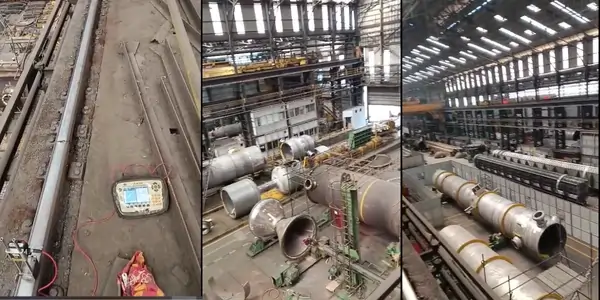
In heavy industries where cranes and material handling systems operate continuously, maintaining proper alignment of industrial tracks is extremely important. One of the most critical maintenance activities is checking straightness of DSL and NON-DSL track capacity 100 Ton. Proper track alignment ensures smooth crane movement, improves operational safety, reduces machine stress, and increases overall equipment life.
Industries handling heavy loads rely on accurate track systems to support crane operations efficiently. Even a minor alignment error in a 100 Ton track system can create serious operational issues such as excessive vibration, uneven load distribution, premature equipment wear, and unexpected production downtime. This is why industries use advanced inspection methods like laser alignment technology to verify track straightness with maximum accuracy.
DSL (Down Shop Lead) and NON-DSL track systems are essential parts of industrial crane operations. These tracks allow cranes to move safely while transporting heavy materials across production units. They are commonly installed in industries where heavy-duty lifting and continuous production operations take place.
These track systems are widely used in:
Since these systems handle extremely heavy loads, maintaining track straightness becomes a critical factor in ensuring safe and efficient crane movement.
Straightness of crane tracks directly affects the overall performance of crane systems. If tracks are properly aligned, cranes move smoothly and carry heavy loads with better stability. Poor alignment can place unnecessary stress on wheels, rails, bearings, motors, and structural components.
For 100 Ton capacity track systems, alignment accuracy becomes even more important because heavy operational loads continuously apply pressure on the complete structure.
Track misalignment can create major operational and safety problems inside industrial facilities. When tracks are not perfectly straight, crane movement becomes unstable, increasing stress on multiple machine components.
If these alignment problems are ignored for long periods, industries may face major repair expenses and safety risks.
Modern industries now prefer advanced laser alignment technology for checking straightness of industrial tracks. Traditional manual measurement methods often fail to provide the accuracy required for heavy industrial applications.
Laser alignment systems provide highly accurate measurements over long distances and help technicians identify even the smallest deviations in track alignment.
For long industrial tracks handling 100 Ton capacity cranes, laser alignment becomes the most effective inspection solution.
Straightness inspection follows a systematic process to ensure complete accuracy and proper alignment correction.
Engineers first inspect the track condition, crane wheels, rail joints, and structural supports. This helps identify visible damage or major alignment issues before measurements begin.
Reference points are set throughout the complete track structure. These points help create accurate measurement positions for straightness verification.
Using advanced laser instruments, technicians measure:
This process helps identify alignment errors across the entire crane track system.
After measurement, engineers analyze collected data to determine the location and severity of misalignment.
Necessary adjustments are performed to correct the identified errors and restore proper track alignment.
A final inspection is carried out to confirm that all corrections meet required industrial tolerances and operational standards.
Regular straightness inspection helps industries avoid unexpected operational failures and expensive repair costs. Preventive maintenance is always more economical than emergency breakdown repairs.
Industries that perform regular alignment inspections experience fewer operational interruptions and better equipment reliability.
Straightness checking of DSL and NON-DSL tracks is essential in industries where crane systems handle continuous heavy-duty operations.
Large industrial operations depend on proper track alignment to maintain smooth workflow and uninterrupted production.
Checking straightness of heavy industrial tracks requires advanced measuring instruments, technical expertise, and highly experienced alignment engineers. In industries where 100 Ton DSL and NON-DSL track systems support heavy crane movement, even minor alignment deviations can directly impact machine performance, safety, and production efficiency.
Professional laser alignment service providers use advanced technology and proven inspection methods to identify alignment errors with extremely high precision and provide accurate correction solutions. Their expertise helps industries maintain proper track geometry and prevent costly operational failures.
1. Laser-Based Precision Measurement
Advanced laser alignment instruments are used to perform highly accurate measurements over long industrial track systems. These tools help detect even the smallest straightness deviations that manual methods often fail to identify.
2. Detailed Inspection and Alignment Reporting
Professional technicians generate complete inspection reports that include measurement data, deviation analysis, error location, alignment condition, and recommended corrective actions for improving system accuracy.
3. Industrial Standard Inspection Procedures
All inspection activities are performed according to required engineering standards and industrial maintenance procedures to ensure maximum operational reliability and compliance with machine tolerances.
4. Accurate Error Detection and Root Cause Analysis
Professional alignment experts not only identify track misalignment but also analyze the actual cause of the problem such as structural settlement, foundation movement, excessive vibration, rail wear, or long-term mechanical stress.
5. Precision Alignment Correction Techniques
After identifying errors, engineers perform necessary correction work to restore proper track straightness. Accurate adjustments help ensure smooth crane movement and balanced load handling performance.
6. Compliance with Safety and Engineering Standards
Heavy industrial crane systems operate under high load conditions, so maintaining proper alignment according to safety regulations and engineering standards is critical for preventing operational risks and equipment damage.
7. Reduced Equipment Downtime
Professional alignment services help industries identify problems before serious breakdowns occur. Early detection reduces unplanned shutdowns and helps maintain continuous production without interruptions.
8. Improved Equipment Reliability and Long-Term Performance
Proper alignment reduces unnecessary stress on crane wheels, rails, bearings, motors, and structural components. This significantly improves machine reliability and increases overall equipment life.
By using professional laser alignment services, industries can achieve higher operational accuracy, better safety standards, lower maintenance costs, and long-term production efficiency, making professional alignment an essential part of heavy industrial maintenance operations.
Checking straightness of DSL and NON-DSL track capacity 100 Ton is an essential maintenance process for industries operating heavy crane systems. Proper alignment ensures smooth crane movement, reduces equipment stress, improves operational safety, and increases production efficiency.
Even small track misalignment can lead to equipment damage, production loss, and expensive repair costs. This is why industries increasingly rely on advanced laser alignment services for accurate inspection and reliable alignment correction.
Regular track inspection and preventive maintenance help industries avoid sudden failures, reduce downtime, and extend equipment life. Investing in professional alignment services ensures long-term operational stability, better machine performance, and overall cost savings for industrial operations.

© 2025 Crivva - Hosted by Airy Hosting Managed Website Hosting.