

Understanding human anatomy is fundamental for students, educators, and healthcare professionals. While textbooks and digital simulations provide theoretical knowledge, nothing replaces the clarity and hands-on learning that comes from physical anatomical models. Among these tools, skeleton models remain one of the most widely used resources for teaching bone structure, muscle attachment points, and joint mechanics. Whether used in classrooms, clinics, or training labs, a well-designed anatomical model bridges the gap between theory and real-world application.
In today’s digital age, virtual anatomy software and augmented reality platforms are becoming more common. However, physical skeleton models continue to play a crucial role because they allow tactile learning. Students can rotate joints, observe angles, and physically interact with anatomical structures. This hands-on engagement improves spatial understanding and memory retention.
An anatomical skeleton model is especially valuable in disciplines such as:
These models provide a three-dimensional representation of bone structures, making it easier to explain complex concepts such as vertebral alignment, joint articulation, and muscle attachment points.
When selecting a skeleton model for educational or professional use, several features determine its usefulness. The best models combine anatomical accuracy with durability and ease of use. Important characteristics include:
Precision in bone shape and proportion is essential for teaching anatomy correctly. Students rely on models to identify landmarks such as the iliac crest, clavicle, scapula, and vertebral processes. Any inaccuracies may lead to misunderstanding.
Models that include intervertebral discs offer additional educational value. These structures help demonstrate spinal movement, compression, and posture-related conditions. This is particularly useful in physiotherapy and chiropractic instruction.
Some skeleton models include painted or textured muscle origin and insertion points. This feature allows students to visualize how muscles connect to bones, improving their understanding of movement mechanics.
Advanced models may also display major nerve branches. These are helpful for explaining nerve compression, sciatica, and other neurological conditions.
Half-size models are ideal for classrooms with limited space. They provide sufficient anatomical detail while remaining portable and easy to store.
Full-size skeleton models are impressive but not always practical. Half-size versions offer several advantages:
Despite their smaller size, modern half-size models maintain anatomical accuracy and structural integrity.
For example, a high-quality anatomical skeleton model with muscle markings and intervertebral discs can deliver comprehensive educational value while remaining compact and easy to handle. Such models are particularly useful for demonstrating spinal mechanics, joint articulation, and muscle attachment zones.
Skeleton models are widely used across multiple levels of education. In introductory anatomy courses, they help students identify bones and landmarks. In advanced medical training, instructors use them to explain pathology, biomechanics, and surgical approaches.
Teachers often use skeleton models to demonstrate bone alignment, joint movement, and posture. Students can observe how the pelvis tilts, how the spine curves, and how limbs articulate.
Healthcare professionals use skeleton models to explain conditions such as scoliosis, herniated discs, and joint degeneration. Visual explanations improve patient understanding and compliance.
Therapists frequently use skeleton models to explain rehabilitation exercises and injury recovery. Showing patients the exact joint or muscle involved improves treatment engagement.
Spinal alignment and vertebral movement are central to chiropractic practice. Models with movable joints and discs help students visualize adjustments and spinal mechanics.
Anatomy is inherently three-dimensional. Flat diagrams in books often fail to convey depth, spatial relationships, and articulation. This is where 3D models become invaluable. A physical skeleton model 3d representation allows users to view structures from multiple angles and understand how bones interact.
Using a skeleton model 3d helps students better grasp:
This depth of understanding is difficult to achieve through two-dimensional images alone.
Skeleton models are versatile tools used in various environments:
Schools, colleges, and universities use skeleton models for anatomy instruction, biology classes, and laboratory demonstrations.
Doctors use them to explain diagnoses and treatment plans. Patients often understand their conditions better when shown visually.
Therapists use models to demonstrate injury locations and rehabilitation movements.
Trainers use skeleton models to teach proper form, posture, and injury prevention.
Students preparing for exams benefit from having a compact model for review and practice.
When selecting a skeleton model, consider the following:
Half-size models with detailed anatomical features provide an excellent balance between functionality and affordability.
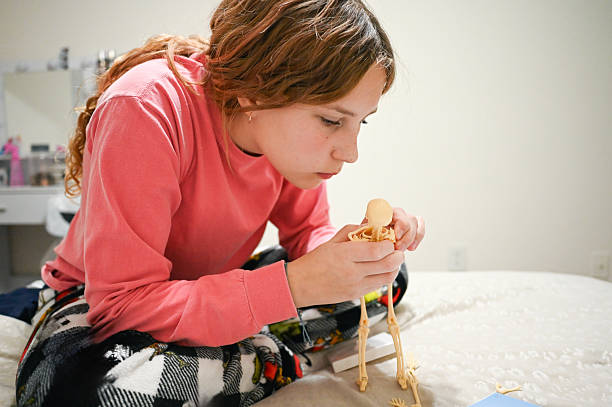
Hands-on learning improves retention. Students who physically handle anatomical models are more likely to remember structures and relationships. Rotating the skull, moving the shoulder joint, or observing spinal flexibility helps create mental connections.
Interactive learning also benefits instructors. They can demonstrate movement, highlight structures, and encourage participation. This makes anatomy lessons more engaging and effective.
Skeleton models are not just for students. They are powerful communication tools in clinical settings. Patients often struggle to understand medical terminology. Showing them a physical model simplifies explanations.
For example, explaining a herniated disc using a model with intervertebral discs allows patients to see how compression occurs. This improves understanding and confidence in treatment plans.
Quality skeleton models are built from durable materials such as PVC plastic. These materials resist wear and maintain structural integrity even with frequent handling. A well-made model can last for years, making it a cost-effective investment.
Movable joints, flexible spines, and sturdy stands also contribute to long-term usability. These features ensure the model remains functional for repeated demonstrations.
Anatomical skeleton models remain essential tools in medical education, clinical training, and patient communication. Their ability to provide hands-on, three-dimensional learning makes them superior to purely digital resources. From classrooms to clinics, these models enhance understanding of bone structure, joint mechanics, and muscle relationships.
Half-size skeleton models, in particular, offer a practical and affordable solution without sacrificing anatomical accuracy. Whether used for teaching, studying, or explaining medical conditions, they deliver significant educational value. With features such as intervertebral discs, muscle markings, and nerve pathways, modern skeleton models continue to support effective learning and professional training across multiple disciplines.

© 2025 Crivva - Hosted by Airy Hosting Managed Website Hosting.