

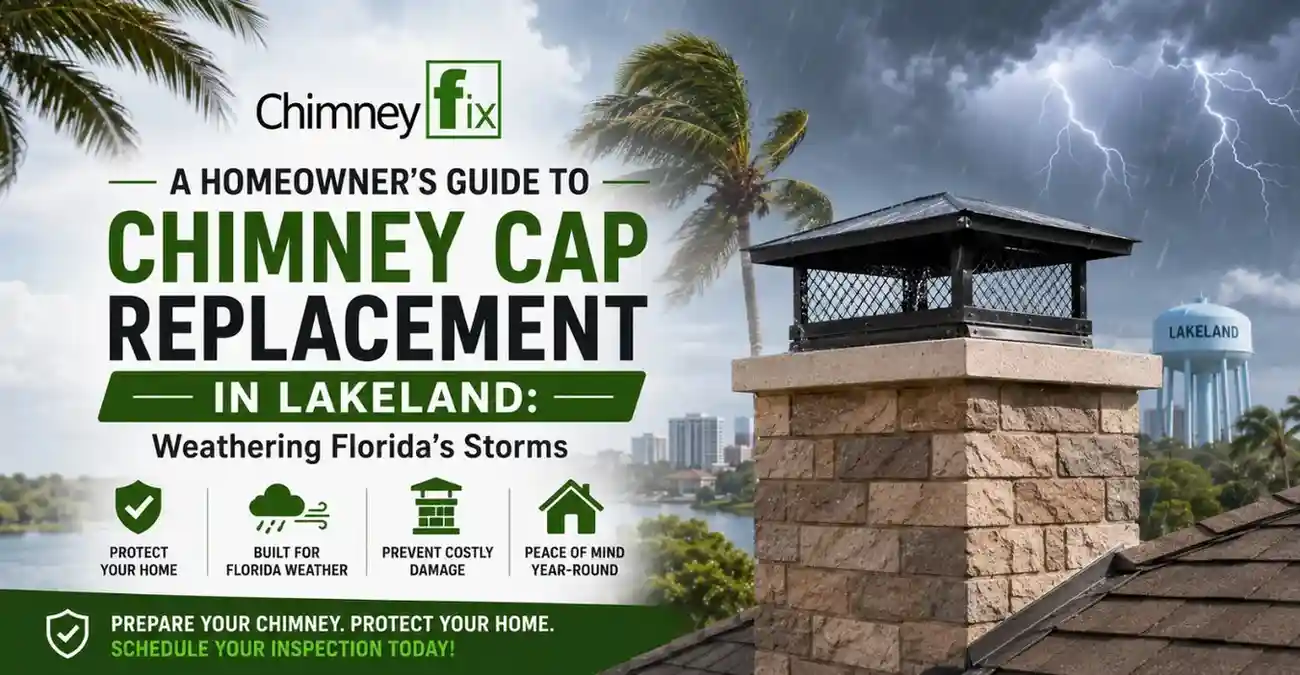
When maintaining a home in Central Florida, the roof usually gets all the attention. Between the brutal summer sun and the torrential afternoon thunderstorms, protecting the top of your house is a constant priority. Yet, sitting just above the roofline is one of the most neglected components of home defense: the chimney cap.
Chimney systems were originally engineered for cold, dry climates. Transporting that architecture to subtropical Florida introduces a unique set of environmental stressors.
Lakeland averages over 50 inches of rain annually, much of it delivered in intense, sideways-blowing summer thunderstorms. Without a structurally sound cap, the chimney flue acts as a massive funnel, directing gallons of water straight into the heart of your home. Rainwater mixes with the residual creosote lining the flue walls, creating a highly acidic paste that corrodes mortar joints, rusts the damper assembly, and ultimately degrades the firebox.
It is not just the liquid rain that causes issues; the ambient humidity in Polk County is a silent masonry killer. Brick and mortar are porous materials. When humidity is trapped inside a dark, uncapped flue, it creates a perfect microclimate for toxic mold and mildew. This often presents as a musty odor emanating from the fireplace during the humid summer months—a clear indicator that the flue is not properly protected or ventilated.
Central Florida is teeming with wildlife looking for a dry, elevated place to nest. Raccoons, squirrels, and bats frequently view an uncapped chimney as an ideal hollow tree. More importantly, the region is home to Chimney Swifts. These birds are protected under the federal Migratory Bird Treaty Act. If a flock of Swifts builds a nest in your uncapped chimney, it is federally illegal to remove them until the hatchlings leave the nest weeks later. A heavy-duty chimney cap with a built-in spark arrestor mesh is the only guaranteed way to prevent your chimney from becoming an accidental wildlife preserve.
Not all chimney caps are created equal. A high-quality installation relies on three distinct components working in tandem to protect the flue.
The solid top panel is the primary defense against vertical rain and downdrafts. It must be sized correctly—oversized enough to shield the flue opening, but not so large that high winds catch it like a sail. A poorly designed lid can actually create a vacuum effect, pulling smoke back into the house.
The sides of the cap consist of a heavy-gauge wire mesh. This serves a dual purpose. First, it prevents burning embers from escaping the flue and landing on your roof or nearby dry brush (hence the name “spark arrestor”). Second, it acts as an impenetrable barrier against the wildlife mentioned above. The mesh must be tightly woven enough to block bats and large insects, but open enough to allow smoke and toxic gases to vent freely.
The base is where the cap anchors to the chimney crown or the extending flue tile. In a region prone to hurricane-force wind gusts, the mounting mechanism is critical. Pressure screws, heavy-duty masonry anchors, or custom-flanged bases ensure the cap remains seated during severe weather events.
Because chimney caps are situated high out of sight, they often fail quietly. However, the chimney structure will invariably show symptoms if the cap is compromised. You can often spot these signs from the ground or inside your living room.
The most obvious sign of cap failure is standing water or damp ash inside your fireplace after a heavy rainstorm. If the metal damper directly above the firebox feels wet or is difficult to open due to rust, the moisture is coming directly down the flue.
Grab a pair of binoculars and inspect the top of your chimney from the yard. If you see brown or orange rust streaks running down the exterior masonry, your current cap—likely made of cheap galvanized steel—is actively deteriorating. As the metal oxidizes, it bleeds rust down the brickwork, which is exceptionally difficult to clean off and indicates the cap’s structural integrity is gone.
If you notice chalky, white stains on the exterior of your chimney, you are looking at efflorescence. This occurs when water infiltrates the masonry. As the moisture eventually evaporates through the brick, it leaves behind crystallized mineral salts. While efflorescence itself is harmless, it is a massive red flag that your chimney system is absorbing water, likely due to a failing crown or missing cap.
A functioning cap acts as a windbreaker. If you frequently experience strong downdrafts blowing cold air and ash into your living room on windy days, the cap is either missing or improperly designed for your specific local wind patterns.
Many homeowners assume that a missing piece of metal at the top of the house is a minor issue. Unfortunately, in masonry, minor water intrusion compounds rapidly.
When a chimney goes uncapped, water saturates the terra cotta flue tiles. Over time, this moisture degrades the structural integrity of the liner. If the liner fails, the intense heat and combustible gases from your fireplace can transfer directly to the combustible wood framing of your home, creating a severe fire hazard.
Replacing a standard terra cotta liner or retrofitting a stainless steel liner can cost thousands of dollars. Comparatively, installing a custom-fitted cap is a fraction of the cost and serves as the ultimate preventative measure. When it comes time to address these issues, finding a contractor who understands both the local weather variables and masonry physics is essential. If you require a chimney cap replacement Lakeland, the inspection leading up to the installation is just as crucial as the hardware itself. The sweeping professional must ensure no trapped moisture or nesting materials are sealed inside the flue during the new installation.
When upgrading your cap, the material you choose dictates how long the repair will last. Standard big-box store caps are not built for decades of abuse.
Builder-grade caps are almost always galvanized steel. While cheap, they are highly susceptible to rust, particularly in humid environments. A galvanized cap in Central Florida will typically begin rusting within three to five years, leading to the masonry staining discussed earlier.
For the vast majority of residential homes, stainless steel is the optimal choice. It will not rust, can withstand severe weather, and typically comes with a lifetime warranty from the manufacturer. For coastal areas or regions with extreme humidity, opting for 304 or 316-grade stainless steel provides maximum corrosion resistance.
Copper caps offer unparalleled aesthetic appeal and exceptional durability. While significantly more expensive than stainless steel, copper does not rust. Instead, it slowly oxidizes over time, developing a classic green patina that adds immense architectural character to high-end homes and historic properties.
A professional chimney upgrade is not a plug-and-play operation. It requires precise measurements and an understanding of fluid dynamics to ensure the fireplace drafts correctly.
The Initial Assessment: A technician should evaluate the entire upper structure, not just the cap. They will check the concrete chimney crown for hairline cracks and inspect the topmost flue tiles.
Measuring: Flues come in a vast array of shapes—square, rectangular, round, and oval. Furthermore, many Lakeland homes feature multi-flue chimneys (e.g., one flue for the fireplace, one for the furnace). A custom top-mount cap is often required to cover the entire chimney crown and protect all flues simultaneously.
The Sweeping Protocol: A reputable technician will never install a new cap over a dirty flue. A full sweep ensures that highly flammable creosote and debris are removed before the system is permanently sealed from the top down.
Anchoring: Using high-grade masonry anchors and waterproof, heat-resistant silicone sealants, the new hardware is mounted securely to withstand hurricane-force wind shear.
For authoritative guidelines on proper venting clearances and maintenance schedules, the Chimney Safety Institute of America (CSIA) provides excellent baseline resources for homeowners looking to understand the technical requirements of solid fuel venting.
Your chimney is one of the most structurally complex features of your home, designed to safely funnel toxic gases and extreme heat out of your living space. Leaving it exposed to Florida’s aggressive weather cycle is a gamble with both your property value and your family’s safety.
By recognizing the early visual cues of water damage and investing in professional-grade, weather-resistant hardware, you stop structural degradation in its tracks. A chimney cap is not an accessory; it is the primary shield defending your masonry.
The team at ChimneyFix is dedicated to elevating the standard of masonry and fireplace safety across Central Florida. Specializing in advanced diagnostics, water leak resolution, and comprehensive chimney inspections, ChimneyFix pairs CSIA-certified expertise with a deep understanding of Florida’s unique climate demands. Whether engineering custom top-mount draft solutions or restoring historic fireboxes, ChimneyFix provides homeowners with transparent, long-lasting structural defense.

© 2025 Crivva - Hosted by Airy Hosting Managed Website Hosting.