

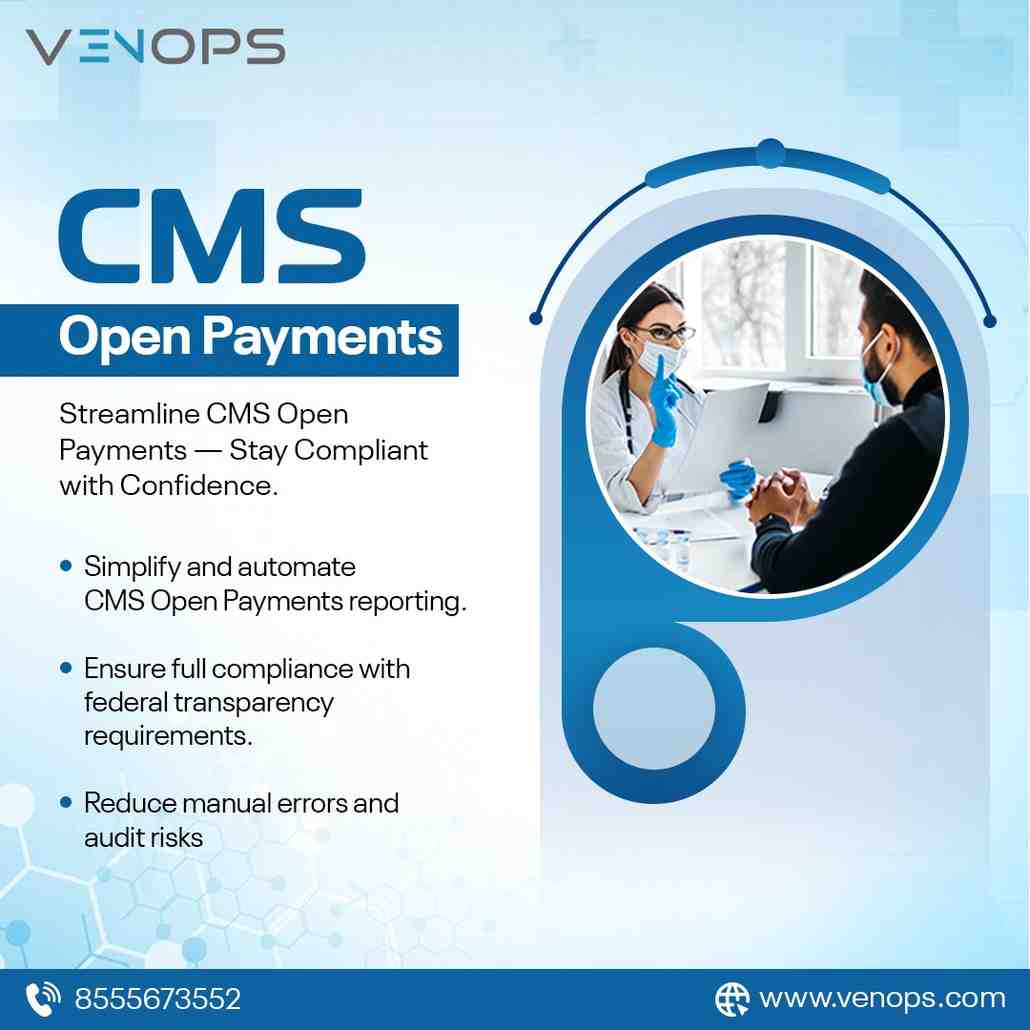
Healthcare transparency has become an important part of the medical industry. Patients, healthcare providers, pharmaceutical companies, and regulatory authorities all want clear visibility into financial relationships within the healthcare ecosystem. To support this goal, the Centers for Medicare & Medicaid Services (CMS) created the Open Payments program.
CMS Open Payments is a national transparency initiative that helps the public understand financial relationships between healthcare providers and healthcare manufacturers. The program requires applicable manufacturers and group purchasing organizations (GPOs) to report payments and transfers of value made to physicians, teaching hospitals, and certain healthcare professionals.
In this guide, we will explain what CMS Open Payments is, why it matters, reporting requirements, compliance challenges, and best practices for successful reporting.
CMS Open Payments is a federal transparency program established under the Physician Payments Sunshine Act. The program collects and publishes information about financial relationships between healthcare providers and medical product manufacturers.
The primary goal is to increase transparency and help patients make informed healthcare decisions.
Through Open Payments CMS reporting, organizations disclose information related to:
This information is published annually and made available to the public through the Open Payments database.
The healthcare industry involves many interactions between physicians and manufacturers of drugs, medical devices, biological products, and medical supplies.
While these relationships often support innovation and patient care, transparency is important to maintain trust and avoid potential conflicts of interest.
CMS introduced Open Payments to:
The program allows patients to see financial relationships between healthcare providers and healthcare companies.
Several organizations are required to submit reports through the Open Payments system.
These include companies involved in:
Organizations that negotiate purchasing agreements for healthcare providers may also have reporting obligations.
Payments made to the following individuals or organizations may need to be reported:
Organizations should carefully identify recipients and ensure accurate data collection throughout the reporting period.
Open Payments CMS requires reporting of various payment categories.
These include:
Research-related funding associated with clinical studies and scientific investigations.
Examples include:
Manufacturers must report ownership interests held by physicians or their immediate family members.
This category includes:
The reporting process involves several important steps.
Organizations gather payment and transfer-of-value data throughout the year.
Collected data is reviewed for completeness and accuracy.
Organizations upload payment records through the CMS Open Payments system.
Healthcare providers can review submitted information and raise disputes if inaccuracies are found.
After validation and dispute resolution, CMS publishes the information in the public Open Payments database.
Many organizations face challenges when preparing Open Payments reports.
Incomplete or inaccurate records can lead to reporting errors.
Common problems include:
Open Payments requirements can be difficult to interpret and apply consistently.
Organizations often manage thousands of transactions across multiple departments.
Meeting annual reporting deadlines requires strong planning and coordination.
Organizations can improve compliance by following these best practices.
Create documented procedures for:
Keep detailed records of all reportable transactions.
Important information includes:
Technology can help reduce manual effort and improve accuracy.
Automation can support:
Periodic reviews help identify compliance gaps before reporting deadlines.
Staff members involved in payment processing and compliance should understand reporting requirements.
Organizations that maintain strong compliance programs can experience several advantages.
Accurate reporting helps avoid penalties and compliance issues.
Transparent reporting builds trust with healthcare providers and patients.
Organizations often improve internal data governance while preparing Open Payments reports.
Companies that demonstrate strong compliance practices are viewed more favorably by stakeholders.
Healthcare compliance requirements continue to evolve.
Future trends may include:
Organizations that invest in modern compliance solutions will be better prepared for future regulatory changes.
Venops provides compliance and regulatory technology solutions that help organizations manage complex reporting requirements more effectively.
By implementing structured workflows, data management practices, and compliance-focused solutions, organizations can improve reporting accuracy and streamline Open Payments processes.
Businesses can benefit from:
A proactive compliance approach helps organizations stay prepared for evolving healthcare transparency requirements.
CMS Open Payments plays a vital role in promoting transparency across the healthcare industry. By requiring manufacturers and group purchasing organizations to disclose financial relationships with healthcare providers, the program helps strengthen trust and accountability.
Successful Open Payments CMS reporting requires accurate data collection, strong internal controls, employee training, and effective compliance processes. Organizations that adopt best practices can reduce regulatory risk, improve operational efficiency, and maintain confidence among stakeholders.
As healthcare regulations continue to evolve, companies that invest in compliance technology and reporting excellence will be better positioned for long-term success. Venops supports organizations in navigating these challenges and building effective compliance programs that align with modern regulatory expectations.
CMS Open Payments is a federal transparency program that tracks and publishes financial relationships between healthcare providers and healthcare manufacturers.
Applicable manufacturers and group purchasing organizations (GPOs) must report eligible payments and transfers of value.
Consulting fees, travel expenses, meals, research funding, grants, speaker fees, ownership interests, and other reportable transfers of value.
It promotes transparency, improves public trust, and helps patients understand financial relationships in healthcare.
Data accuracy issues, complex regulations, large data volumes, and reporting deadlines are common challenges.
By maintaining accurate records, using automated solutions, training employees, conducting audits, and implementing clear compliance policies.
Venops provides compliance-focused solutions that help organizations improve data management, reporting accuracy, and regulatory compliance processes.

© 2025 Crivva - Hosted by Airy Hosting Managed Website Hosting.