

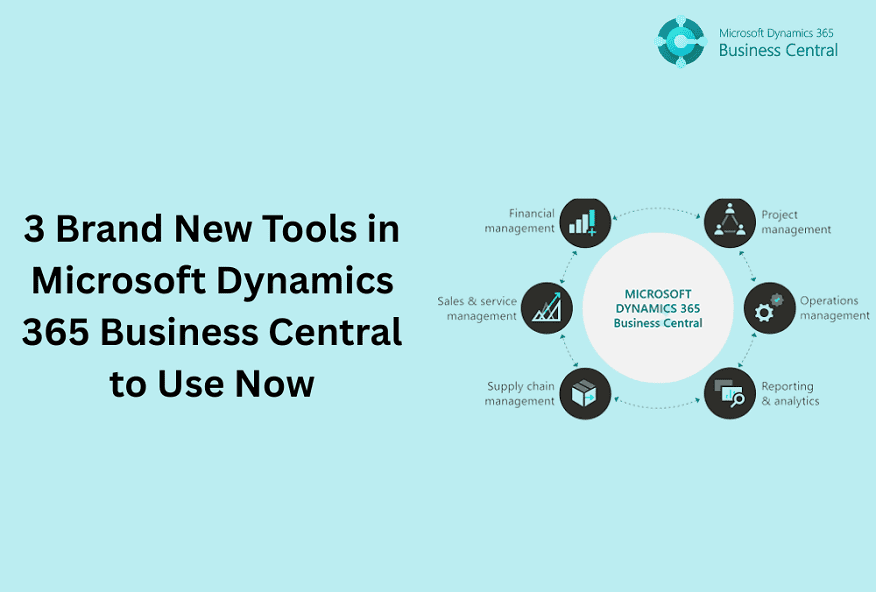
Microsoft Dynamics 365 Business Central is getting a major boost with its 2025 release waves, bringing powerful AI-driven agents, tighter integration with the Power Platform, and enhanced tools for supply chain and warehouse operations. These updates are not just incremental — they reflect Microsoft’s vision of enabling small and midsize businesses (SMBs) to work smarter, automate complex processes, and scale without friction.
In this blog, we’ll deep-dive into three of the most impactful new tools in Business Central, explain how they can transform your operations, and highlight how TechWize can help you adopt and maximize them effectively.
One of the most immediate benefits in the 2025 release wave 1 is Copilot’s ability to assist with routine data entry. Business Central can now suggest values for fields based on prior patterns, company data, and context — reducing manual workload and improving accuracy.
For example, when you’re entering a purchase order or sales line, Copilot may offer suggested items, quantities or pricing. Users can choose to accept or modify these suggestions, giving them speed without losing control.
Copilot in Business Central now offers a summarization feature — you can ask it to condense data on a record (like a customer card, a long sales order, or a financial document) into key bullet points, so you don’t have to wade through every field manually.
This makes it easier for decision-makers and users to quickly grasp the most relevant insights, improving response time and reducing cognitive overhead.
Beyond the basic AI-assist features, Business Central’s agents bring powerful automation capabilities. The Sales Order Agent, for example, can read customer emails, extract order details, match them to existing customers, and even check inventory availability before drafting an order.
On the payable side, the Payables Agent can pull in vendor invoice attachments from email or SharePoint, interpret them, and create purchase invoice records in Business Central — drastically cutting down manual AP work.
Additionally, Copilot helps with sustainability accounting: it can suggest estimated greenhouse gas emissions into your sustainability journals using built-in logic, thereby supporting organizations that are serious about tracking their environmental impact.
Business Central’s 2025 roadmap includes tighter integration with Power Automate, enabling “human-in-the-loop” workflows, generative AI actions, and intelligent document processing.
This means businesses can build automated pipelines — for example, when a sales order is received, Power Automate could trigger validation steps, send notifications, and offer approvals — all without writing traditional code.
A significant development in the 2025 wave 2 is the introduction of a Model Context Protocol (MCP) server for Dataverse, which allows Business Central data to be used more intelligently by AI agents.
Essentially, this protocol helps agents fetch, reason over, and act upon live business data stored in Dataverse. This unlocks a more real-time, context-aware AI experience across Power Platform and Business Central.
Analytics is another big area of investment. With the 2025 release wave 2, Microsoft is enhancing Power BI embedding inside Business Central.
Thanks to this, users get real-time, actionable BI dashboards without leaving their ERP interface — whether it’s financial performance, inventory trends, or operational KPIs, actionable insights are always just a click away.
While the 2025 release wave 2 plans focus more on supply chain enhancements, Microsoft is improving warehouse and inventory processes — particularly in manufacturing and subcontracting scenarios.
Although detailed mobile-scanning upgrades are not deeply documented in the release plan, partners and analysts expect that the ongoing supply chain investments will improve mobile workflows, given Microsoft’s consistent focus on usability and real-time data.
One of the most promising features in this wave is quality management. According to Business Central’s roadmap, an extension for quality checks will allow inspection of both inbound goods and in-house manufactured items.
These checks can generate Quality Certificates or Certificates of Analysis, which is crucial for regulated industries or enterprises demanding high-quality standards.
In practical terms, this means better traceability, tighter control over lot and batch handling, and more confidence in the quality of items going in and out.
With subcontracting capabilities also getting a boost, Business Central will support receiving finished goods from external partners — with full item tracking — directly into your inventory.
This means that stock visibility will improve significantly, enabling businesses to make better decisions about warehouse allocations, reorder points, and logistics. Add in Power BI embedding, and you have a powerful system for real-time visibility across your inventory landscape.
At TechWize, we believe that technology should empower people, not overwhelm them. When it comes to adopting these new Business Central features, our team offers end-to-end support:
The 2025 release waves for Microsoft Dynamics 365 Business Central are more than just updates — they’re a turning point. With intelligent Copilot agents, deep Power Platform integration, and enhanced warehouse and quality capabilities, Business Central is evolving into a truly proactive, AI-powered ERP.
These tools reduce manual drudgery, improve decision-making, and help scale processes without proportionally scaling effort. But to capture the full value, organizations need more than technology — they need strategy, governance, and adoption support.
That’s where TechWize comes in. Whether you’re just starting with Business Central, or looking to modernize your ERP operations, we can guide you in implementing and customizing these powerful new features. Let us help you harness the future of Business Central — now.

© 2025 Crivva - Hosted by Airy Hosting Managed Website Hosting.