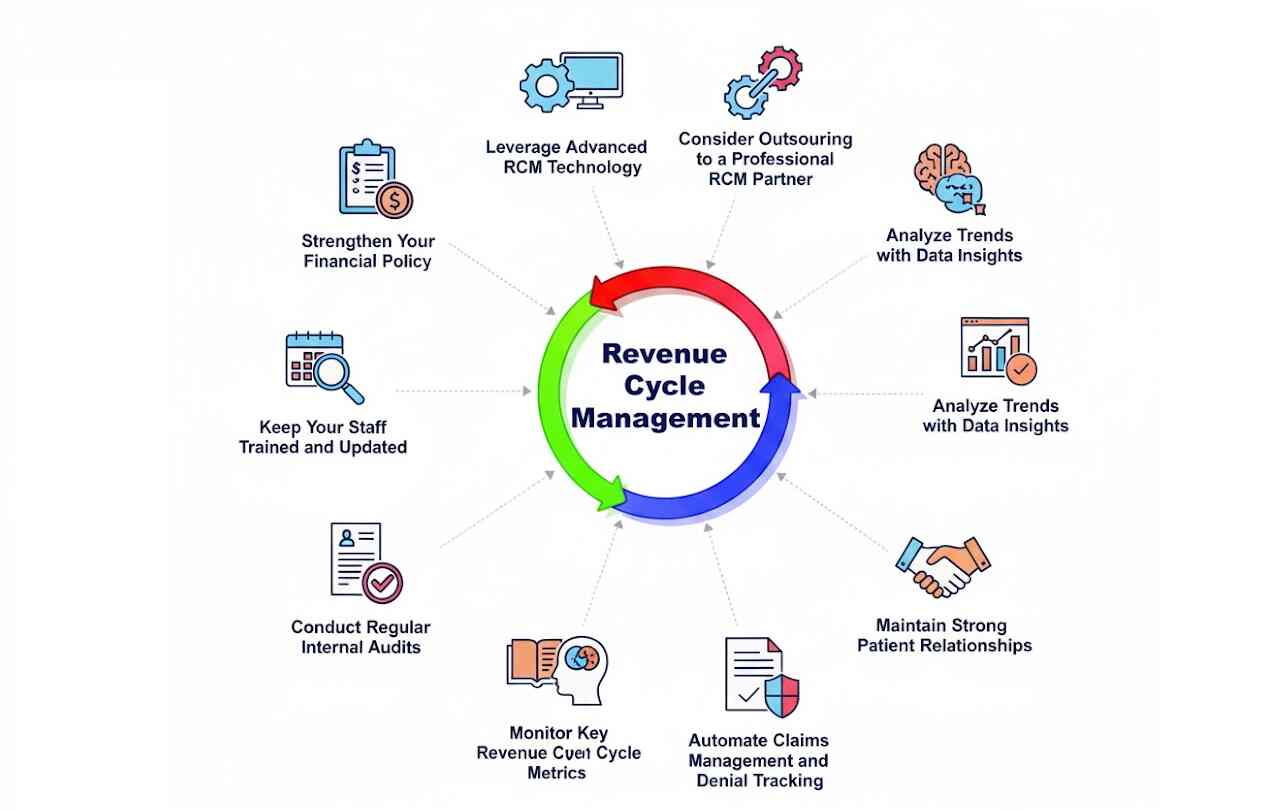
In today’s complex healthcare environment, the success of any medical practice depends heavily on how well it manages its Revenue Cycle Management (RCM) process. From patient registration to final payment collection, each step must be accurate, compliant, and efficient. Unfortunately, small errors like incorrect coding, missed claims, or delayed follow-ups can lead to major financial setbacks.
It’s about creating a seamless process that supports financial stability, patient trust, and sustainable growth. Whether you’re a small clinic or a large healthcare organization, here are 11 proven tips to help you master your revenue cycle in 2025.
A clear and transparent financial policy sets the foundation for strong revenue management. Patients should always understand their payment responsibilities before they receive care.
Practices that consistently communicate expectations up front experience fewer unpaid balances and smoother collections.
In 2025, RCM technology has evolved far beyond basic billing software. AI-driven tools now automate tasks such as eligibility verification, coding assistance, claim scrubbing, and denial prediction.
Modern RCM systems integrate with Electronic Health Records (EHR) to provide real-time data, flag missing documentation, and reduce claim rejections.
By upgrading your billing platform, you can:
If your current system isn’t providing actionable insights, it’s time to consider a smarter, cloud-based solution.
Your RCM performance is only as strong as the people behind it. With new payer rules, ICD-11 implementation, and ongoing CMS updates, continuous staff training is essential.
Provide regular workshops and access to certification courses in:
Well-trained billing staff can prevent errors that lead to claim denials, delayed reimbursements, or compliance penalties.
Tracking Key Performance Indicators (KPIs) gives you a clear picture of your financial health. Important metrics to monitor include:
Use a dashboard that automatically updates these metrics and highlights red flags such as increasing denial trends or longer AR days. Reviewing your KPIs weekly or monthly allows you to make data-driven decisions that directly improve cash flow.
Your front desk team plays a vital role in your revenue cycle. Most claim errors start at the front end. Incorrect patient information, missed eligibility checks, or outdated insurance details can cause costly rework.
Train your front desk to:
A small investment in front-end accuracy can save thousands of dollars in reprocessing claims later.
Claim submission and follow-up are time-sensitive and complex. Automating these tasks ensures speed and consistency.
Modern RCM systems can:
Automatically scrub claims for coding or compliance errors before submission.
Track denials by category, such as coding, documentation, or payer-specific issues.
Trigger alerts for unpaid claims that exceed a set timeframe.
By using automation, practices can reduce manual workload by up to 40% and increase revenue recovery.
Healthcare data analytics can transform your billing strategy. By analyzing trends across your claims and payments, you can identify hidden revenue opportunities.
Look for:
Implementing predictive analytics allows practices to anticipate denials, adjust coding practices, and improve financial forecasting. Data-driven decision-making is now a critical component of successful RCM.
Financial transparency builds trust, and trust leads to faster payments.
Make sure your patients:
Offer flexible payment plans and communicate reminders through text or email. A patient who understands their bill is more likely to pay on time and return for future care.
An internal audit helps you find gaps in your workflow before they become revenue losses. Conduct quarterly or biannual audits focusing on:
Internal audits are not about assigning blame; they’re about identifying weak spots, improving efficiency, and maintaining compliance.
Insurance payers constantly update their reimbursement rules, medical necessity criteria, and coding guidelines. Missing even a small change can lead to increased denials or reduced payments.
Keep a close eye on:
Automated payer management tools can track these updates in real-time and alert your billing staff to necessary adjustments. Staying proactive ensures you get reimbursed accurately and quickly.
Outsourcing your billing and revenue cycle management can be a game-changer, especially for small and mid-sized practices that struggle with staff shortages or increasing claim complexity.
An expert RCM company like Best Medical Billing – BMB offers:
By outsourcing, providers can focus more on patient care and less on chasing claims. You also gain access to advanced analytics, experienced billers, and up-to-date compliance expertise without the overhead of managing an internal billing team.
Outsourcing can reduce operational costs by up to 30% while improving collection rates and cash flow.
In 2025, healthcare finance is more dynamic than ever. Between changing payer rules, patient payment responsibility, and evolving technology, a well-managed revenue cycle is critical for success.
Implementing these 11 strategies, from refining your financial policies to adopting automation and outsourcing, can dramatically improve your cash flow and operational efficiency.

© 2025 Crivva - Hosted by Airy Hosting Managed Website Hosting.